Working in danger zones with the world's most vulnerable is no picnic. Bob Papworth discovers the world of travel management in the not-for-profit sector...
On the evening of Wednesday, November 26, 2008, crack teams of jihadist quasicommandos, armed with automatic weapons, grenades and incendiary devices, attacked multiple sites in the southern quarter of Mumbai.
Firing and bombing indiscriminately, the terrorists - later linked to a group known as the Deccan Mujahideen - stormed two of the city's top hotels and took guests and staff hostage, while fires raged around them.
As news of the atrocity broke here in the UK, the travel management community swung into action, racing against time to identify, locate and contact clients' travellers, re-booking them into hotels a safe distance from the continuing bloodbath, and beginning the laborious out-of-hours process of booking emergency repatriation flights.
One travel management company (TMC), having successfully located some 20 volunteer charity workers - all mercifully unharmed - then proceeded to contact the organisation they worked for to impart the good news. The charity in question (which for obvious reasons will have to remain nameless) didn't even know they were in Mumbai.
Happy ending aside, it's a salutary tale - and while it underscores the vital importance of traveller tracking systems in general, it also highlights the enormous difficulties faced by the not-for-profit (NFP) sector and those who work alongside it.
By the very nature of what they do, charitable organisations tend to operate in volatile and sometimes downright dangerous environments.
Because their raison d'être is charity, budgets are invariably tight; what money there is needs to be channelled into relief operations, not frittered away on what look like administrative niceties.
And because many of their fieldworkers are volunteers, they cannot be subjected to the same rules, regulations, terms and conditions, that are commonplace in the commercial world.
The whole point of Médicins sans Frontières is the 'sans Frontières' bit - start putting barriers in the medics' way, and they're liable to be less enthusiastic about offering their services.
However, while Mumbai may be a dangerous place, at least it is a modern city with excellent communications and transport links; a great many charities operate in less-developed countries, and often in the remoter regions of those countries, and when disaster strikes, it has a nasty habit of doing so in places nobody - even in the travel industry - has heard of. The Boxing Day tsunami of 2004 destroyed much of Banda Aceh, which few of us had heard of; the Pakistani floodwaters have been threatening the lives of thousands in the Kohistan region, which is not well known; and the Niger famine is not exclusive to the capital Niamey - but few of us could name any other population centre in that country.
An aid worker with a major international relief agency, who again has to remain anonymous, told Buying Business Travel: "The big problem for us is that our people go where they think they're needed, and they don't necessarily tell us before they go.
"Sometimes we have several people turning up in the same place, having travelled in from different points, without realising that the others were doing the same thing. It can be a bit of a mess sometimes, and we really need to get a handle on it." That 'handle' can be difficult to grasp, and the UK travel management community's two top specialists in the NFP sector are understandably keen to make the point that this is no ordinary business.
"The culture of most nongovernmental organisations [NGOs] is that they do not like to dictate from the top - they have an implicit trust in their staff," says Steve Summers, chief operating officer at Key Travel. "They trust everyone knows the policy and works in the best interests of the charity. We provide them with the information to make the right decisions, and to challenge some of their habits. NFPs are less dictatorial and people are left to make their own decisions."
The cynics among us will have picked up on that word 'trust'; 'trusting' one's staff is one thing, but 'trusting' that they know the policy? In the commercial world, policy is something you hammer home, day in, day out. Then again, if you're going to be 'less dictatorial' about it - and charities have no choice in the matter, because of the very nature of their business - 'trust' becomes all-important.
Paul Allan, chairman of Ian Allan Travel, openly admits that when his company began to get involved in the NFP sector, even he had no idea what a 'missionary fare' was (it is a discounted fare offered by airlines to humanitarian organisations). "We have really grown up over the past 10 years in terms of our experience; you need people who know what charities want, how they work, and how best to meet their needs," he says. "It's an education from both sides - we learn a lot from them, and hopefully they learn a lot from us, but their main task is to get people on the ground, and they don't want to have to spend time booking air tickets or hotel rooms.
"The charity wants to be on the ground, getting the tents up, getting the water purification plants in, distributing the clothing and medical supplies - not worrying about travel arrangements. And that's what we do well."
These guys know what they're talking about. Ian Allan Travel has well over 30 NFPs and NGOs on its books, including the likes of VSO (Voluntary Service Overseas), and the British Red Cross; Key travel clients include Oxfam, Save the Children and Tearfund.
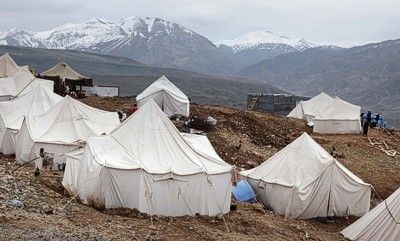
Paul Allan concedes that it's not always a mad dash from this earthquake to that mudslide. "A lot of the bigger charities have people out there on the ground anyway. More often the not, the task is not just 'move in, get the tents up, and move on' - these people have a permanent presence, working in areas like Ethiopia or Sudan where there is a constant need."
However, it's exhausting and emotionally-draining work, and even 'permanent' teams have to be rotated on a regular basis.
"Then again, when a disaster does occur, the charities have got to get out there," says Allan. "While they may have people on the ground all the time in some places, if something major occurs, they have to be there - and support teams have to be flown in - as fast as possible."
It's not just about air fares - and both Allan and Summers are full of praise for airlines who will, by and large, pull out all the stops to help in the event of a crisis. However, getting there is one thing - once there, relief workers on the way into crisis zones need vehicles (and in Somalia a Vauxhall Corsa equivalent will not suffice) while those on the way out need halfway decent hotel rooms, hot showers, and buckets of reassurance that they have a confirmed reservation for the flight home.
And then there's the paperwork. Security specialists Anvil Group cites a case where a team of expatriate workers in east Africa were evacuated to a neighbouring country after an attempted coup - only to discover that, as they had no visas, they were deemed to be illegal immigrants.
"Of course it's not just about air fares," says Allan. "Like any other organisation, a charity needs a whole range of travel components - hotel rooms, hire cars, rail tickets, the lot - so they need to be dealing with a specialist TMC. You're looking at things like baggage charges, extended stays, that sort of thing - they need someone who can pull all that together for them, to deal with someone who is specialising in that area.
"Suppliers are generally good - they recognise the humanitarian need, and generally rise to the occasion. they are fairly careful about selling missionary fares, for obvious reasons, which is another reason why NFPs ought to use specialist companies like ours who have access to those kinds of deals."
And both Allan and Key travel's COO Steve Summers are convinced that the charities they work for are getting sharper - because they have to.
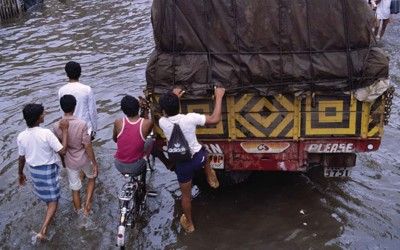
Little more than half a century ago, if something went horribly wrong in Haiti or Côte d'Ivoire, it was a French problem; India belonged to the Brits (at least until 1947); the Germans were responsible for Tanganyika and Bechuanaland; and the Belgians shouldered the Congolese burden. today, no such colonial obligations exist. When hit by a killer wall of water, Banda Aceh, once under the auspices of the Dutch East India Company, becomes an international concern. Relief agencies need to be here, there, and everywhere, quickly, and at minimal cost.
"Do they know where their staff are? I would say they are generally behind the game on that point - surprisingly, given the places that they go to," says Summers. "but then they have a culture of putting themselves in the line of fire. we should not paint a bleak picture. are very loyal customers, they remember how we went that extra mile - it's a pleasurable client base to work with. And they are learning fast.
"Are very interested in getting value - they understand the value argument very well. cost-saving is uppermost in the chief executives' minds. What we are trying to do, certainly not in our own interests, is to manage their costs down significantly.
"Of course we could do a lot more if the nature of the business was different. If you had more regular travel patterns, that would allow you to come back and renegotiate corporate deals - but no, that cannot happen, because that's the nature of the business."
A lot of the challenges come from basic understanding.
Allan says: "I think they are learning to use MI [management information] - a lot of them were not fully aware of what they could do with the information. plus they had very little idea of the technology that was available to them - in terms of tracking passengers and so on - they were not particularly good at that." Summers agrees. "We are getting a lot more buy-in as to how we can use management information," he says. "If it's booked through us, we will collate the MI.
"Many NGOs now do have a very large international presence and we are seeing an increasing desire to manage global spend; instead of looking at ex-UK, I am looking at maybe 15 points globally.
"There are still challenges. For example, they are extremely prone to changing their tickets - when a disaster happens they grab the first and most flexible fares they can lay their hands on, and then worry about them later.
"Surprisingly, given their culture, very few of them have worked out their environmental ethics in terms of travel. In a few cases they are focusing on their emissions, but there are many others who haven't made that decision. We give them carbon reporting, but few of them know what to do with it." This is a sector, then, that has only a nascent interest in MI, no discernible travel pattern, little or no control over its travellers, insists on last-minute trips to the back of beyond (and then some), and demands an enormous amount of TLC, all on an eye-wateringly tight budget.
Come on, guys, where's the sense in that? "Of our top 10 routeings, five are in Africa - places like Nairobi, Kinshasa, Kigali and so on," says Steve Summers.
"Our staff are constantly putting together five-stop itineraries involving places you've never heard of - and they love it.
"The big thing to remember is that this is not a 'me' thing - people elect to work in this sector because they believe in the value of what they are doing."
Flying Start
British Airways has forged a global charity partnership with Comic Relief with a pledge to raise up to £8 million over the next three years.
The Flying Start campaign was launched by actors Bill Nighy, arguably best known for his Pirates of the Caribbean role as the tentacle-faced Davey Jones, and Nick Frost (Ed in Shaun of the Dead) who were flown to Kenya to visit the of the charity's children's projects there.
In its 25-year existence, Comic Relief has raised more than £620 million, mostly through its Red Nose Day and Sport Relief alternate-year fundraising initiatives.
British Airways, which last year raised more than £5 million from passengers, staff and other donors, supports a wide range of children's charities. Earlier this year, the airline flew a search-and-rescue team and two relief flights loaded with aid equipment for the survivors of the Haiti earthquake.
Willie Walsh, British Airways' chief executive, said: "Our partnership with Comic Relief will bring new help and support to underprivileged children in the UK and around the world through funds we raise in the air, on the ground and online.
We have a great tradition of giving and, with our customers and our people, we will raise much needed funds."