Duty of care laws oblige companies to protect all employees, but Beverley Fearis finds out just who needs most looking after ...
They are more vulnerable, more of a target, and more open to risk while on a business trip. So should you, the responsible corporate travel manager, and particularly in light of corporate manslaughter and duty of care laws, be doing more to protect your male business travellers?
Yes, you didn't misread that - male, not female. It wasn't a typo. For many years, corporate travel websites, forums, conferences, seminars and magazines (this one included) have discussed and debated the safety and security needs of female business travellers, especially when travelling alone. But have we missed something?
Caroline French, corporate travel manager at mobile satellite giant Inmarsat Global Ltd, thinks we might have. According to French, even when you take into account the higher ratio of male travellers at Inmarsat, more incidents are reported (and more insurance related claims are made) by the guys.
This, she believes, either highlights that women don't like to make a fuss and are therefore less likely to report an incident, or suggests that female travellers are simply more careful while away from home. "As a woman, you're more likely to pre-book your taxi from the airport, or a client is more likely to arrange a car for you," says French. "Women are naturally more cautious."
So, could it be that the industry has been focusing its attentions on the wrong sex? Are women less likely than their male counterparts to take a short cut through an ill-lit car park, to venture out alone late at night and find themselves in a less salubrious part of town, or to let their guard down after a boozy night at the overseas conference?
Do women, due to their inherent awareness of being the 'weaker' sex, take fewer risks and better protect themselves against the potential hazards that might arise when away from home?
Jacquie Rogers, general manager at the BT Convention Centre Liverpool, says even without the advice and handholding of a travel manager, women generally give more careful consideration to safety on a business trip.
"We have a female-strong sales team here and when booking hotels, we always look at the safety aspects. We would look at Tripadvisor, go by word of mouth, and try to use recognised chains. If the price is too good to be true, it's likely to be in a dodgy area."
Juliet Price, head of business intelligence and marketing for hotel booking agency Hotelzon, agrees. "I think women buy a hotel by location and men will buy by price," she says. "Women are generally more resourceful about where they are going to stay and will make sure the hotel is in a safe part of town." She says the Corporate Manslaughter and Corporate Homicide Act has prompted more companies to formalise their hotel policy for all travellers, but particularly in respect of their female travellers.
More policies now stipulate that women should not be accommodated on the ground floor or at the end of a corridor, or that hotels must have receptions manned 24-hours. Price has also noticed an increasing number of corporates are requesting hotels with 24-hour room service, and with tea and coffee facilities in the room, aimed at lone female travellers who prefer to steer clear of hotel bars or restaurants. With expense budgets being tightened, they are also looking for hotels whose restaurant prices are within the dining allowance, so that travellers do not have to venture outside the hotel to keep within the spending limit.
Hotels are, thankfully, now fully aware of the security needs of lone women travellers, says Price - except in one respect. "While most front offices seem to have learned not to announce your room number on check-in, I still get asked for my room number by bar staff, and they will often confirm it out loud," she says. "It puts women off, although I think generally women travellers are much more responsible about drinking on business trips anyway."
The consumption of alcohol, says Simone Buckley, co-founder of travel management consultants Bouda, is a key factor when it comes to ensuring traveller safety. "It's amazing that when we go to meet a company's human resources team, we open up a dialogue about their policy towards alcohol and they look at us with complete surprise as if they have never even considered it," she says. "Alcohol consumption by an employee on company business, whether at a client lunch or on an overseas trip, must be managed and written into the policy. It's amazing how many business people drink on a night flight, have a sleep, and then pick up a car at the airport the next morning. They think they've had a full night's sleep as it's the next day, but in fact it's only been five hours and they're still over the limit."
Until there is case law, she points out, there is no way of knowing if a company would be held responsible under the Corporate Manslaughter Act if an employee died as a result of an alcohol-related incident while on a business trip. It's a particularly grey area if the drinking is done in their 'free' time on the trip. "Companies need to take control of that liability and at least get their employees to sign a form to say they accept responsibility if they drink more than stipulated in the policy," she says.
According to Buckley, advice about sexual health and sexual conduct is another area lacking in attention from HR and travel management departments. "Should companies provide sexual advice for travellers?" she asks. "Is it important that companies publish and stand by a firm moral policy around workplace relationships? Young females entering the workplace, especially in roles where they are staying in hotels overnight on business trips or at overseas conventions, can be vulnerable to senior manager or client approaches. In some companies this isn't tolerated but in others, it is."
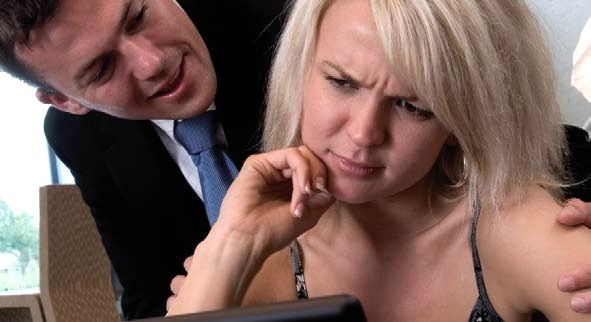
Unwanted sexual advances, says Buckley, are perhaps one of the most common problems encountered by women on business trips. "Although," she adds, "I'm sure you also get cases where young men have to deal with unwanted advances by more senior female colleagues. And then have young employees in remote places, often unmarried, who might procure something they're not supposed to procure. No-one ever thinks to give them any advice.
"Duty of care of employees applies whether you are male or female and it doesn't matter how senior or junior you are, or what role you have. There are both irresponsible men and women. The focus has always been on looking after the women, but nobody has really looked at the dangers for men. Both need to be considered in this day and age."
According to Will Hasler, business travel manager for PricewaterhouseCoopers LLP, all travellers, male or female, need the same level of protection. Where companies go wrong, he believes, is when they focus their attention on executives who are travelling for the first time, or to far-flung places. "It's the frequent travellers who are most at risk," he says. "The more often they fly to a destination, the more likely they are to be off their guard. Problems are just as likely to occur when travelling to, say, a European country that is considered safe.
"Everybody has lapses in concentration and you can't be continuously on your guard. Our security team talk to our staff, particularly during the Christmas party season or during the World Cup. We put out messages like 'Great goal, but where's your laptop?' We're mindful that travellers know the dangers, but you can't teach grandmother to suck eggs." Fair point, but maybe it's grandfather we should worry about...