The London 2012 Olympic Games will be an extraordinarily memorable event - and hopefully, as London's infrastructure prepares to take the strain, for all the right reasons says Bob Papworth.
SAY WHAT YOU LIKE about Wenlock and Mandeville - and one suspects that many of you will have done so already - but they mark a welcome return to an age when Olympic mascots made some semblance of sense.
The Germans were being eminently rational back in 1972 with Waldi, a rainbow-hued sausage-dog who became the emblem of the Munich Games; not to be outdone, four years later, the Canadians followed suit with Amik, a beaver, to represent Montreal. Dachshunds are tenacious and agile, and beavers are renowned for their work-rate - the Olympian connotations are all too obvious.
Thereafter, however, the mascot makers gave up on symbolism, resorting to the cute and cuddly (Moscow's Misha in 1980, and Seoul's 1988 Tigger-lookalikes, Hodori and Hosuni) or the downright weird (the abstract Izzy, representing Atlanta in 1996, and the doll-like Athena and Phevos, from Athens in 2004).
Wenlock and Mandeville are a different proposition, however. They're still pretty left-field, but they're far from cuddly. And while they have no apparent links to athleticism, they clearly reflect London's approach to the Olympics, as they only have one eye apiece.
Their vision, like that of the organising authorities, may be seen as somewhat impaired.
However, much as it goes against the sceptic grain, the nay-sayers among us have to concede that the capital's preparations for next year's Olympic Games at least seem to be running smoothly.
After the initial smutty sniggering at the 2012 logo (Google it - well, if you look at it in a certain way) and despite the unseemly wrangling over which a Premiership club gets to demolish the brand-new £500 million stadium, the re-development of the Olympic site - or Stratford, as it used to be known - appears to have been extraordinarily trouble-free.
Of course it's way over budget, but then we cynics expected nothing less. And there are still 500 or so days in which it could still go horribly wrong, but all the indications are that, from an organisational point of view, the 30th modern Olympiad could actually work.
Which is more than the rest of us will be able to do.
Like their monocular mascots, London's Olympic organisers seem to have adopted a singularly one-eyed approach to the whole shebang.
The Games will take precedence over everything else, and day-to-day business life - on which the capital's fortunes are founded - comes somewhere behind water polo (swimming with a ball) and rhythmic gymnastics (dancing with ribbons).
"The Olympics are billed as 'the greatest show on earth' and I am sure the Games will turn out to be a never-to-be-forgotten event - although I am concerned that, in business travel terms, they may be memorable for all the wrong reasons," says Richard Boardman, managing director of travel management company Reed & Mackay.
"The organisers may be pulling out all the stops to make it a huge success, but they seem to have overlooked the fact that, as one of the world's most important commercial and financial capitals, London needs to be able to get on with 'business as usual'.
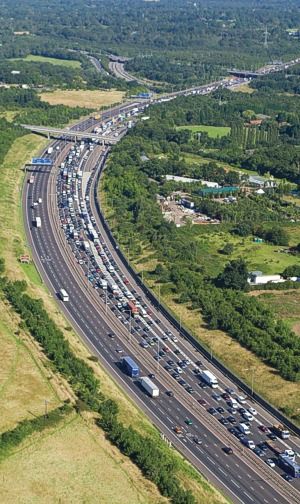
"Block-booking tens of thousands of hotel rooms for competitors, fans, dignitaries and officials will not only create capacity problems, it will also inevitably push room rates through the roof. Closing off key east-west routes as the exclusive preserve of Olympic traffic will make getting around the capital extremely difficult, if not impossible.
"London's travel and transport infrastructure can barely cope at the best of times, and those improvements that are being made look certain to prove inadequate."
Boardman concludes: "I suppose we should be thankful that the Games are being staged at a time when business travel traditionally tails off, but it still seems to me that we could be sacrificing London's commercial reputation on the altar of a one-off event with no long-term business benefits."
He has a point - in fact, he has several points.
The London Organising Committee of the Olympic Games (LOCOG) is said to have blocked off more than 65,000 hotel rooms. London's current total room-count is around 100,000, a figure which is predicted to rise to 120,000 by the time the opening ceremony takes place on July 27 next year.
And although LOCOG says it will release unused rooms back into the system once it has a better handle on its real requirements, the fact remains that it will have taken out half the capital's overnight capacity. Room rates aren't going anywhere but north. At the same time, the organisers have identified key east-west routes that will be reserved exclusively for Games traffic.
"London's roads must cope with the demands of shuttling 15,000 athletes and officials, media and VIPs between 30-plus venues in guaranteed times," according to www.thisislondon.co.uk "This can only be achieved with the imposition of lanes dedicated to official Games vehicles in the so-called Olympic Route Network."
These are not just glorified bus lanes - entire streets will be out of bounds to all but Olympics-accredited vehicles, principally luxury coaches and VIP-packed limousines.
Rumour has it - and at this stage it is only rumour - that London's cabdrivers are so incensed that some, at least, are considering a blockade.
LOCOG wants mere mortals to walk, cycle or use public transport. With their key routes commandeered, buses are clearly out of the question.
That leaves London's Underground, which bulges at the seams on a normal day; add an estimated 250,000 extra passengers into the system-wide equation, and the adjectival phrase 'pear-shaped' doesn't begin to cover it. Just to add to the corporate travel woes, there is a distinct lack of clarity over what is going to happen in London's skies.
On the one hand, security concerns will almost certainly dictate that some sort of airspace closures will be enforced; on the other, airlines - particularly at London City Airport - are clamouring to know how many extra flights they can lay on to cope with the predicted surge in demand.
"The real problem is that the Civil Aviation Authority does not seem to have made its mind up about what it is going to do," said one industry leader (who, for obvious reasons, prefers to remain anonymous). "Airlines are desperately trying to plan ahead, but there's no sense of urgency from the authorities."
Peter Muller, divisional managing director at ATPI, highlights another worry. "Beijing [which hosted the 2008 Games] built a massive new airport, and when you went through, it was phenomenally well organised; but here [in London] you can't even get a new runway, let alone an airport.
Immigration, and the security around immigration, with its present infrastructure, is going to be a real crunch point."
ATPI, whose events division is notably sports-centred, was heavily involved with the Beijing Olympics, giving Muller a unique insight into 2012's potential pitfalls.
"Getting around is undoubtedly going to be a problem - there is no doubt the Olympics are going to cause havoc," he warns. "From an event organiser's perspective you have to secure passes to use the Olympic Lanes, which enable you to deliver people directly to the stadium and pick them up from there.
"In Beijing the Olympic Lanes worked pretty well, except for the closing ceremony which, because of the fireworks, attracted a huge crowd outside the stadium. We had to bus people in four or five hours early to a site near the stadium, and then walk them in.
"Because of the nature of the government in Beijing, they could simply order cars off the road - it did wonders for their congestion and their pollution - but that's not going to happen here."
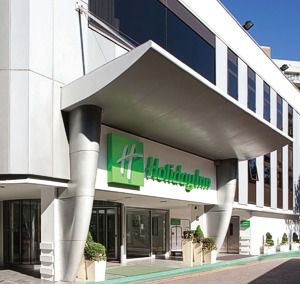
Hotel accommodation is going to be another sticking-point. "For the Beijing Olympics, there was an awful lot of construction in terms of building new hotels specifically for the Games, and I don't think we are seeing that level of construction going on in London," he says.
"We, as a business, did something like 10,000 room nights in Beijing and what we saw there was that to get the best hotels we had to secure early; but by the time you actually got to the Olympics, there was still quite a lot of low-cost accommodation available, largely because tourism pretty much died out - so what they won on the swings they lost on the roundabouts, as it were.
"There was possibly even a slight over-supply of hotel rooms, but I doubt whether we will see that in London because there isn't the same level of new hotel building."
The capital's problems will be further exacerbated by its proximity to key source markets in Europe, and the fact that London is comparatively well-known.
"We think we will do a lot more day trips - for example, with the winter Olympics in Turin, we were taking people out in the morning and bringing them back late in the evening because there was not the hotel capacity," the ATPI boss says.
"Our traditional corporate packages are usually four to five nights, plus Olympic tickets, hotel accommodation, transfers and off-site entertainment - dinners and cocktail parties, for example, which are not necessarily linked to the Games themselves.
"In London, I think we will be doing more short stays because everyone has been to London, so there isn't the urge to go and look at Buckingham Palace or the Houses of Parliament, whereas in Beijing everyone wanted to go and see the Great Wall.
"We did something like 70,000 tickets for Beijing and we are looking at trying to double that for London, primarily because people will be coming for shorter periods of time." Muller concludes: "If you are a Londoner with no deep interest in the Olympics, it's probably a good time to take a two- or three-week holiday; but the Olympics is a unique, one-off event - it's quite unlike anything else I have done in my entire life.
"The Olympics is very different to any other sporting event - if you take the World Cup, for example, you go along and support England, but once they're knocked out you basically lose interest.
With the Olympics, of course you're cheering on the British contestants, but ultimately you want to see the fastest man in the world run 100 metres, regardless of his nationality.
"My gut feeling is that Londoners haven't got a clue what is going to hit them in 2012 - it's going to turn into one massive three-week party.
"From a business perspective, it's a huge opportunity for us, but also for business in general, and it's a wonderful opportunity for London.
My view is that 2011 is going to be another tough year - there's still a certain amount of doom and gloom out there - but the Olympics will change all that.
"Personally, I can't wait for it."
OLYMPIAN FIGURES
500+ days to go
The 30th modern Olympiad runs from July 27 to August 12. The subsequent Paralympic Games run from August 29 to September 9.
9.2 million tickets
With prices ranging from £20 to £2,012, tickets worth a total £500m are on public sale.
120,000 rooms
London's estimated hotel capacity by the time the Games open. Some further 30,000 beds will be available in student halls of residence.
7 minutes
The projected journey time from King's Cross/St Pancras to the Olympic Park using the new high-speed Javelin train service.
1 hour ... or more
Anticipated 'additional' delays on London Underground's key Jubilee and Central lines over the Games' duration.
10,500 athletes
Drawn from 205 nations, 2012 Olympians will compete in 650 events covering 26 sports. The Paralympics involve 20 disciplines.
250,000 spectators
A quarter of a million enthusiasts are expected to pack the Olympic Park every day. Peak global television audience is expected to reach four billion.
3,000 staff
Chaired by Lord Coe, the 3,000-strong London Organising Committee of the Olympic Games, LOCOG, is now recruiting a further 80,000 unpaid helpers.
47 medals
Britain's athletes will almost certainly need to improve on their Beijing haul of 47 gongs if they want to get an even better result than their impressive fourth place in the 2008 medals chart.
9.58 seconds
Usain 'Lightning' Bolt's current 100m world-record, 0.11 seconds faster than his Beijing gold medal-winning performance.