Recently, some of the larger TMCs have been turning their attention to SMEs - but with smaller companies already established in this market, who will win the ensuing battle? Mark Frary reports
Travel management programmes for small to medium sized enterprises (SMEs) are like buses. You wait for ages and then several come along at once.
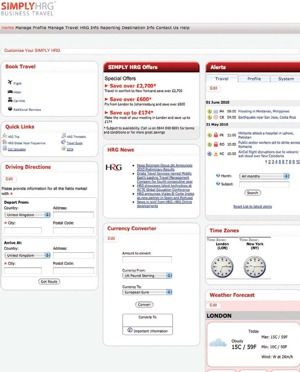
September 2009 saw the launch of Simply HRG, offering companies "the opportunity to benefit from many of the same advantages as larger multinationals, ensuring travel budgets go further through quality service, convenience and global support" and access to "HRG UK's buying power".
The new year saw another new service launched - this time by FCm. Its Corporate Traveller, actually a relaunch of its existing SME service, promises "24/7 service, global buying power and flexible payment options" with "no contracts".
Fast forward to February 2010 and the launch of aXcent by American Express, a programme promising "enhanced services focusing on delivering a comprehensive travel management programme that is local in its delivery and flexible in its design". It is intended for companies spending up to £3 million a year on travel.
Not to be left out, Carlson Wagonlit unveiled CWT Connect Now in March, an "end-to-end travel management solution created to meet the specific needs of small and mid-size enterprises" and with "access to CWT-negotiated fares, multiple forms of payment such as direct bank transfers, a simple pricing model and implementation within 24 hours".
Never before have SMEs had such choice when it comes to looking after their travel arrangements. Yet how do those travel management companies which have a long tradition in handling SMEs see this?
Hillgate Travel's business development manager Andrew Burch likens the move of the mega-TMCs into the SME market to the Tesco Express phenomenon. "They are offering the same products as in the supermarkets but in smaller quantities or with not as much choice," he says.
Burch suggests that the launch of the services around the turn of the year says one thing - they were all hatched in response to the economic crisis in a bid to shore up revenues. "It has taken them 12 months to get the marketing right," he asserts.
Not so, says Carlson Wagonlit's director of marketing for the UK, Helen Cahill. "The new tools on the market have been portrayed as a scramble for the SME market, but we are constantly looking at what we offer to all segments of the market. By launching CWT Connect Now we are updating our offering for clients with more simple travel programmes. This is not about entering a new market for us - it was on the drawing board before the downturn and we remained committed to it throughout."
But are SMEs really any different from other companies? Hillgate's Burch thinks not. "Any company that needs to differentiate between levels of travel spend is really hiding a weakness in their armoury. TMCs like Hillgate have only one class of service whether a client spends £20m a year or has a single person booking travel for two VIPs," he says.
Yet there clearly are variances in how different-sized companies approach travel. One of the big differentials between large corporates and SMEs is that the latter tend not to have a dedicated travel or procurement department and that travel is often looked after by an executive assistant to the CEO or a PA.
Because of their smaller travel spend, they tend not to be able to command significant discounts with travel suppliers directly but, instead, look to the TMC to achieve bargaining power in negotiations.
RFPs are also out. Instead, SMEs are as likely to employ the same travel agent they've used for the last 20 years, or a TMC they have been recommended by another company. "They have a completely different outlook," says American Express' head of sales for UK and Ireland, Mark Douglas. "They are looking much more at the level of service received. However, fundamentally, there is little difference between SMEs and larger clients. They want a controlled programme, they want savings and they want good service."
He argues that aXcent is aimed at providing local service. "We will deal with these mid-market companies within the own country, in their own language. We are not proposing to operate out of centralised hubs - local service is important and these companies want to be served locally. Whether it be the initial booking or the booking online, they want to talk to somebody within their own country and in their own language."
Carlson Wagonlit's Helen Cahill agrees on service. "Working with a TMC should be about service rather than trying to match according to size," she says. "Smaller TMCs like to paint a grim picture of large TMCs in order to win the business, but that is far from the reality. CWT's offices are made up of small teams of consultants and, yes, we have more of these teams than other TMCs, but they are dedicated consultants who know and understand their individual clients' needs."
She points out that in the UK, 60 per cent of the company's clients spend less than £225,000 annually.
"When we look at a prospective client's requirements we look at their needs, rather than how much they spend, in order to recommend the right products and service levels," she says. "It is likely that the majority of CWT Connect Now customers will have a smaller spend as it is more suited to a simple travel policy, and the tendency is for policies to become more complex as spend grows."

Hillgate Travel's Andrew Burch believes the mega- TMC model falls down because of the level of service demanded by SME clients, which is hard to manage with the largely call-centre driven operations of the multiples: "A mega- TMC will assign a person for an hour a day, or a day a month, for account management but that doesn't work."
He cites the recent volcanic ash crisis as evidence of the difficulties. "The ash cloud situation created tremendous problems for the big guys - they just couldn't cope," he says, despite claims to the contrary by the mega-TMCs, who say they handled the ash crisis remarkably well in the circumstances.
Amex's Douglas argues that aXcent can handle just this sort of issue. "Knowing where your travellers are at any point in time is something that companies take very seriously. If you book on the internet, the company doesn't know where you are at a touch. If you have booked independently, the kind of support you get on the road is pretty close to nil. Events such as the volcanic ash clouds and other natural disasters and terrorist acts have brought this into focus."
He also says that because Amex owns its own emergency operation, it has access to bookings, profile and company policy at any time of the day or night.
He says that rather than technology depersonalising the service, it helps tailor it at the same time as keeping costs down. "The technology means we can bring up a profile and the policy so we can deal with it on a personalised basis. The technology is an enabler as opposed to making the service faceless," he says.
The appeal of such service may be about gaining better visibility of spend in an economic environment where costs have to be cut or controlled. "Many of these companies have tried to cut back on their spend, in some cases imposing a complete ban on travel," says Douglas. "Now they are going to want to invest their travel spend wisely. What we are giving them is visibility on where the money is being spent.
"At the same time, we must not lose sight of the fact that the finance director doesn't want to hinder what the travellers are doing because they are travelling for a reason."
The aXcent programme gives SMEs access to American Express' online booking tool Axiom. "It is the same tool as on offer to the large market, with no restrictions on what they can and can't do; it will be loaded with our preferred rates and give access to our preferred hotels and airline programmes in the same way," says Douglas. "The tool can also be branded with the company logo and be configured to deliver company messages. We can provide clients with tried and tested communications templates and timelines to ensure the implementation of new systems and servicing is successful. Mid market companies can be making savings on their travel within four weeks."
HRG's director of sales UK, Matthew Pancaldi, says: "In the current climate there is a need to make sure that the cost of service and cost of travel is as effective as possible.
"Simply HRG offers both a phone and an online service. It is tailored around what the customer wants.
Some are looking for a simple online booking solution, while others want to make complex multi-sector bookings to a number of destinations, with some complex fare auditing to achieve the lowest fare, and need a lot more time on the telephone."
The online offering is a replica of HRG Online and it has access to all the GDS fares, plus links to low-cost carriers that are accessible via the internet.
Pancaldi says there is a slightly higher fee for the telephone service but that it can reap dividends. "Depending on the complexity, the return on that investment is substantial - you might save hundreds of pounds on the fare."
Burch is not convinced. "The SMEs will soon realise it is just a name," he says. "There is no evidence to suggest they have special rates or deals, or can offer cost savings."
Yet, like the plethora of buses introduced on popular routes, there will always be passengers who will try them out, especially if the ticket price is right.
Wii need to travel

It is hard to imagine that the company behind the hugely popular Wii games console, which has got the world prancing about their living rooms waving their arms around, could be considered an SME - but with around 25 regular travellers, the UK arm of Japanese electronics firm Nintendo is just the right size for these services.
Nintendo UK uses Corporate Traveller, FCm's newly rebranded SME offering, to handle its travel, but was already an FCm client before the change at the turn of the year. Corporate Traveller is designed for companies spending between £5,000 and £2 million per annum on travel and offers personal account managers, online booking tools and a transaction fee-based service with no fixed contract.
Chrissy Owen, PA to the general manager of Nintendo UK, says the company's travel is handled at one point of contact by a small team in nearby Woking, and that its requirements are mainly centred on air travel, with flights to the company's European headquarters in Grossostheim, Germany.
Owen says that she rates Corporate Traveller for being able to understand the large volumes of terms and conditions attached to discounted air fares and also for its help in sourcing meetings venues. Most of Nintendo's bookings are handled by email, with some by phone.
Owen says that Corporate Traveller provides management information in the form of total travel spend and breakdown by department. "I really like Corporate Traveller because the people are so personable. They know the profiles of my travellers and I don't have to constantly tell them that a particular individual prefers the upper deck or a window seat," she says.
Owen adds that the company was particularly helpful in the recent ash crisis. "I wanted to send them all bunches of flowers," she says. "Our MD was stuck in Germany and they got him home even though it wasn't particularly easy."