Many travel managers are still struggling to decide what to do with new businesses entering the business travel space. These businesses, only a few years old, have torn up the rule book for major travel categories such as ground transportation and accommodation.
There is a lot about them to make travel managers happy. Travellers love these services because of the ultra-convenient apps and personalised products they offer and they are often cheaper than established hotels or taxis. Yet, although Uber has now handled two billion rides in 506 cities and Airbnb took 79 million bookings in 2015, many travel managers still don't feel they can give employees a straightforward green light to use them.
Looking for a label
Are Uber and Airbnb a threat to managed travel programmes or an opportunity — or both? Are they safer than their traditional alternatives, or more risky? It is hard to answer these questions when we cannot even find a good name for them. The original term used was "sharing economy", referring to the initial idea of owners sharing assets when not using them for themselves. But that really isn't accurate any more. An increasing number of apartments on Airbnb are no longer lived in by their owners, while Uber and Lyft vehicles are often operated exclusively as full-time taxis. Even if all the characteristics of the sharing economy haven't disappeared yet, they soon will. Lyft has said that in five years' time it expects most of its rides to be in driverless cars.
The categorisation problem is not a trivial one. They always say in business that what gets measured gets managed. My experience is that it is what gets labelled which gets managed too. The lack of a satisfactory label signifies how these companies still don't fit the models companies use to manage their travel.
What we learned from business travellers
But while we all work on coming up with a new name for these "disruptors" (to use another fashionable term), perhaps it is more important concentrate on the underlying issues. For me, the most important of all is the fact that your travellers want to use these companies and will probably use them whether you like it or not. The de facto situation on the ground takes precedence over any arguments. This crucial point became clear to us in a recent study.
Lesson one — employers don't know what to do
Businesses remain divided over what action to take. Only 38% of travellers said their employer lets them use sharing service providers. Another 22% said they are not allowed, while 27% said they are not allowed to use them today but believe it is planned eventually to give permission.
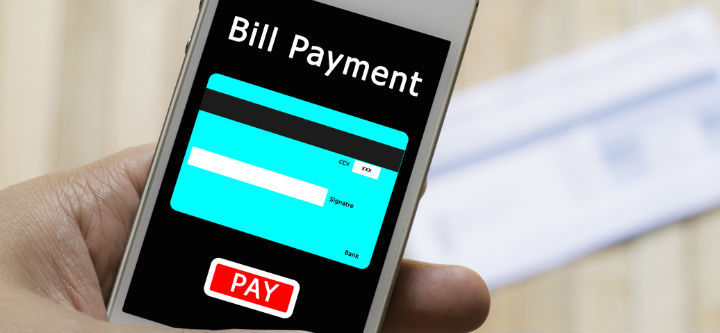 Easy, mobile-based payment is one of the reasons why new suppliers have gained traction with travellers ©SinjiPhotographer/iStock
Perhaps even more revealing is that 13% gave no answer — a refusal rate that is higher than normal. It suggests some travellers don't know what their company's policy is on this issue, and in turn that suggests there may not be a policy, even though this is a topic for which clear direction is badly needed.
Lesson two —travellers demand access to the sharing economy now
Even if travel managers aren't convinced of the value of the new players, their travellers are. No fewer than 66% of the business traveller respondents said they want more access to sharing services. 82% saw sharing services as an advantage over conventional alternatives in terms of cost, 84% in terms of traveller satisfaction and 78% in terms of safety.
This last figure is particularly revealing. Travel managers have been doing a lot of risk assessment of companies like Uber and Airbnb. Put in simple terms, they want to know what happens to the employer if one of their employees is badly injured or dies in an Uber car or an Airbnb apartment.
The liability issues are complicated and go to the heart of continuing corporate ambivalence towards the new disruptors. But their response to the safety question shows business travellers don't see it that way. Liability matters are invisible to them. What they see is an opportunity to hail an Uber cab from an office or restaurant instead of while walking the streets, and to receive the name and photo of the driver before they are collected. They see an apartment which they have viewed the rooms of online and where they also have an opportunity to chat online to the owner in advance of booking and check guest reviews. They see two great apps where looking and booking are fast, easy and, unlike some corporate travel booking tools which have hardly changed their appearance in 20 years, a pleasure to use.
So my message is that whether travel managers like the new disruptors or not is beside the point. Your travellers will use these services no matter what the policy rules are. It is time to work with these companies because at least that way you stand a better chance of tracking and guiding your travellers rather than losing visibility completely.
We will all need to change
The question therefore shifts to how to work with them. The disruptors are aware of this question too. They know they don't fit into normal managed travel processes so they are making efforts to be more corporate-friendly.
But the new players will only become more corporate-friendly where changing their process doesn't conflict with their fundamental business model.
That's why we in the corporate travel business (by which I mean travel managers and their managed travel service providers) are also going to have to change. Uber, Lyft, Airbnb and others are just the start. They are the flag-bearers for an entire new wave of suppliers and booking channels which will make business travel much more diverse than it has ever been before. Diversity is good but fragmentation is bad. To manage that diversity and prevent it becoming fragmented, travel managers will need to be supported by service providers and systems capable of much greater integration and flexibility than in the past.
Payments will help you manage diversity
Payment has an important role to play. No matter what is being sold, and the channel it is being sold through, there is always one constant: it needs to be paid for. I believe a payment solution will become travel aggregator par excellence, the hub through which data is logged, travellers monitored and travel programmes will still be capable of being managed in a much more complex world.
That's what I call a real "sharing" service. One important way in which this seamlessness connectivity will be created is a subject I have written about before for BTiQ: invisible payments. You register your card with a supplier only once and then payments are automatically made through that card for all subsequent transactions. Making payment for a service as simple as the booking process which precedes it ensures travellers will choose the easiest route to completing the transaction and that means the invisible corporate payment option. It guarantees that you capture the data and keep an eye on what your travellers are doing; therefore everyone wins.
Payments will be at the heart of the new, more flexible travel management which the new disruptors are ushering in faster than some people may realise.