Business Travel iQ
The difference is the channel. Hotel distribution is taking a different route.
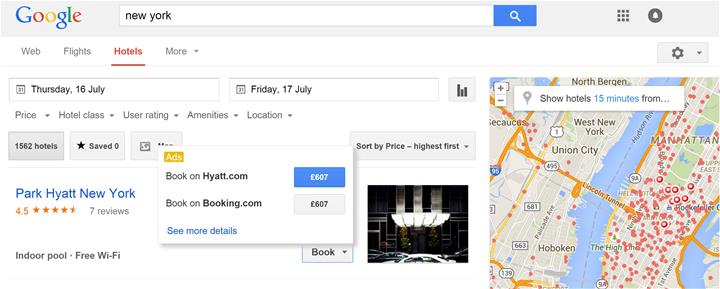
Without any fanfare Google's hotel site went from being a mere information portal that directed interested parties to either the hotel's own site or an OTA for the booking itself to one that would also take bookings for some of the properties (mostly North American, but also London and Paris) listed.
This is something that the travel world has long expected Google to do so no surprises there.
The surprise, however, might be in its project partner — Sabre's — comments: that being able to book 'direct' would lower the 'abandonment' rate, ie losing the booking altogether.
Continued below
This analysis should soothe suppliers' fears of losing bookings.
Although it is a different supplier sector, it does nothing, however, as a counter-argument to Lufthansa's plans for a distribution cost charge (DCC). Instead it outlines Lufthansa's contention that more control will lead not only to more bookings but to more revenue — that is to say, ancillary sales — per passenger.
The argument is not new. At last year's CAPA conference in Dublin, Travelport's Ian Heywood argued that airlines needed to change their mode of measurement from revenue per seat to revenue per passenger. The new metric only emphasises how important that extra revenue is becoming to airline's balance sheets.
Why is this not getting the attention and opprobrium that the Lufthansa initiative has precipitated?
Several reasons.
Firstly, it seems that we don't want the same price in different channels for hotels (this could be explained by commissions) while we do want the same airline content in all channels.
Secondly, Lufthansa is an established corporate supplier — many still think of Google as only a search engine.
And that is probably the point — Google is still under the travel industry's radar.
To paraphrase what Bill Gates once famously said, the competitors you should fear are the ones that you don't yet even recognise.