It's no secret that the travel industry is under pressure from all sides. On a macro level, the pound is falling to record lows, squeezing the monetary value of travel organisations and the pockets of those that use them. There is a great deal of uncertainty about exactly what kind of Brexit we are going to get and the impact that this will have on foreign workers, the single market and the free movement of people. Underpinning this, there is an ongoing atmosphere of security fears, fuelled by the terrible recent events in Belgium and France.
It's by no means a terminal stage for the travel industry as a whole and it will impact how travel managers work in the environment too. But one thing is abundantly clear: only the companies that innovate, and drive this innovation through technology, will survive and flourish. And that's where automation, and in particular intelligent and learning-focused systems, are coming to the fore.
Automate to innovate
Machine learning has flourished in other industries. But what initial reactions did people have to the movie trailer release for Morgan — created entirely by an AI bot in a world first?
"That's weird."
Which is a fair comment for a film trailer about a bio-engineered super child pulled together purely through machine learning analysing previous trailers. Computers can now write, read, learn and speak. And for some, this is pretty scary — people are terrified that bots will snatch their jobs and eventually take over the world and render humans useless (films like i, Robot haven't helped this). And many industries also feel the same.
However, rather than taking this approach and inherently distrusting supermarket coffee machines and your smartphone, when it comes to machine learning, it's clear that the travel industry needs to take a deep breath and explore intelligent automation and the benefits that can come from it.
Look to how, on a day-to-day basis, data use is already having a positive impact on how we all live. Online shopping is the perfect example: a quick trip to the Amazon homepage when signed into your account now yields results based on your purchasing history, tailoring the products showcased. This in turn cuts down on the time spent browsing for exactly what it is you need, freeing up that most precious of resources — your time. Similarly, think about sites such as Expedia. It is well-documented that it analyses the behaviour of users on its site to streamline the booking experience into the smoothest possible journey.
The benefit to travel managers
It's not just consumers who benefit. Those working in travel do too. Unsung heroes in many an organisation, travel managers and purchasers know only too well how precious their time is and how important the user experience is. They are often faced with a huge and daunting amount of data in their attempt to build the perfect trip.
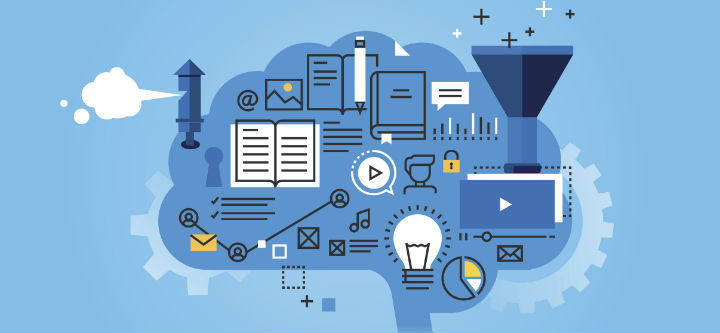 Machine learning automatically considers lots of factors ©Varijanta/iStock
Take an international conference that you need to send several staff to — what kind of accommodation are they after? What level of luxury are they expecting (and deserving of!) for their travel to and from the event? Will they need time to prepare or can they land the morning of the event and hit the ground running?
Frequently these questions are also exacerbated by people incorporating annual leave into the trip and flying a partner or friend out to meet them once the work aspect of the trip is done and dusted. Travel managers need to make crucial decisions about each of these areas, all the while ensuring that the trip is good value for money, risk-free for their colleagues and compliant with company policy.
But now, more and more frequently, employees are booking their own travel. Apart from the fact this could fall in or outside of approved policy, they will often visit comparison sites and two or three different direct websites while they search for the best deals — often across multiple devices. Once more, machine learning can begin to analyse this data, finding patterns which will allow travel managers to capture as much useful data as possible and show where actionable change can take place for the benefit of the travel policy.
Machine learning has the capability — and is already being used in some cases — to benefit those working within travel, allowing them to source exactly what they need to make sense of the thousands of options available to them and to capture the bookings made by colleagues taking charge or their own travel and accommodation.
Automation in general is well-known for the strength of its quantitative analysis; being able to analyse huge amounts of data in a very small period of time. This in turn allows travel managers to get results far quicker and more cheaply than if this analysis was undertaken manually. Couple this data-processing power with a system that can learn and tailor itself to your specific travel needs and the benefits of this approach are clear to see.
Quality AND quantity
Of course, people have reservations towards machine learning due to the relationship those using it have with the system. A powerful automated system is a lot like upgrading your car from a Daewoo to a Maserati. It's hugely powerful, and will get you to your destination in a much shorter time, but if you don't pay attention and actively drive the machine then you can face disaster. Yes, machine learning technology can do a great deal of the heavy lifting, but it needs a steady hand on the tiller to garner the best results, let alone avoid any real issues arising.
Education on exactly what machine learning can bring to the travel table has to be the first priority for anyone looking to implement the system. You wouldn't want to try driving a supercar without getting your driving license first. Understanding both the positives and negatives will ensure that value is added by the technology as opposed to it being another system that those in charge of travel have to wrestle with on a daily basis.
I've previously written about ecosystems, and in much the same way that a company needs to actively use the data available to them within an ecosystem, the same approach needs to be used for a machine learning system. Knowing what to look for, in what ways the automation can be led astray and turning the patterns and behaviours highlighted by the captured data into results will ensure that the technology has only a positive impact.
Control the machine, control the data
So as we can see, the field of machine learning is vast, and is certainly showing no signs of slowing down. From the automation of booking through to pattern and behaviour recognition and data capture from outside of booking policy, the impact of the technology on travel managers is similarly wide-reaching.
If your organisation is looking to implement a machine learning based system, then education, training and awareness of both the positives and potential pitfalls to avoid is the key to success. The technology is beginning to gain real traction within the industry. Therefore, the quality and knowledge of those in charge of it is what will make the difference between a successful integration and issues arising from letting technology contribute unchecked.
Travel is now too varied, too broad and contains too many factors for a travel manager to sit at their desks and manage the entirety of it manually. As uncertainty looms, technology needs to be harnessed by forward-thinkers in order to maintain innovation and improvements in the face of ongoing economic and political issue. In short, travel managers need to get up to speed with the technology to ensure that this works exactly how it should and release the industry pressure valve.