The sharing economy may appear to be a new phenomenon to some people, but one need only glance back through recent history, at the Victorian development of English public parks, to the onset of libraries and even launderettes, to realise that the collaborative consumption of goods and services has been entrenched in society for some time.
Most organisations are embracing some sort of sharing already. Whether it's employing pool cars around campuses or re-assigning laptops to new employees, there are many examples of the sharing economy in action.
From Uber to Airbnb, Lyft and others, there is now an overwhelming number of sharing economy brands available in the marketplace. So why does the managed travel community seem reluctant to fully embrace the opportunities offered by the wider sharing economy?
Who's riskier — established players or new entrants?
Opinions among travel buyers and mangers are varied. One common and valid concern is that sharing economy suppliers may jeopardise the safety and security of travellers, something no company wants to contemplate in these troubled times.
However, upon closer inspection there is a fair argument that safety concerns are not reserved for these new market entrants. Take the example of the case in the US when sports journalist Erin Andrews was stalked and photographed by a fellow guest at the Nashville Marriott hotel. The individual not only had access to her room number but also went as far as modifying the peephole to be able to film what was happening inside and upload it to the internet.
An organisation's safety and security programme is often largely unseen by its consumers.
In comparison, suppliers like Uber have more visible features such as providing driver photos and registrations at the point of consumption. It gives a tremendous comfort, especially to female travellers.
What about the issue of liability? Many corporate buyers are concerned that cleverly constructed disruptor suppliers don't offer the same level of liability as more traditional suppliers. It is an interesting argument - although it's worth noting that in the Andrews/Marriott case it took lengthy court proceedings before the hotel owner and operator (although not Marriott itself which was dismissed from the case) were deemed liable for 49% of the US$55m damages awarded.
Balancing traveller objectives against travel manager concerns
What's clear is that travel managers can't just turn a blind eye to sharing economy suppliers. They should instead be working quickly to establish what is driving demand for these suppliers in their traveller community.
Continued below
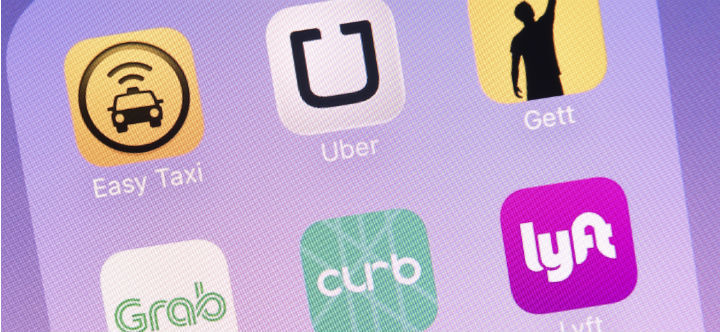 Just some of the taxi apps available ©temizyurek/iStock
Firstly, we must consider the growing number of Generation Y travellers and that their values are influencing other generations. As citizens of the post-recession society, Generation Y travellers generally have an in-built frugality. They are also, generally speaking, far more concerned about the environment than their older counterparts. They are drawn naturally towards 'doing the right thing' and have been brought up to believe that waste is bad. They also enjoy the self-actualisation that reducing waste and increasing efficiency can bring.
They are far more entrepreneurial too. Techniques which enable a small start-up to enjoy a similar cost base to a large multi-national are welcomed.
They come from a world which is wired to share and there is relentless demand for products and services in the corporate world which deliver as they do in the consumer world.
What travel managers could learn from sharing economy providers
Peer-to-peer feedback is of critical importance. Consumers (in a business and leisure context) want to know what people with a similar profile to their own thought of the product or service. Many sharing economy providers also review the users so there is a level of trust on both sides. Travel managers have tried, and often failed, to introduce feedback or performance management within their programmes but are often fearful of what their own employees will say about suppliers.
Similarly travellers, particularly road warriors, have become increasingly tired of standardisation in hotels and suppliers. It's the reason behind the number of lifestyle brands being developed by major hotel chains; IHG and Hilton alone have 20 between them. This helps ensure travellers do not become fatigued with product and go off-brand to try something different.
Additionally, travellers want a personal touch. Business travel can be impersonal and travellers want the ability to interact with real people during their trip. Users want to trust the individual, known academically as 'trust mechanics', which works better if there is a personal connection. Uber does this particularly well, empowering the service provider (the driver) to interact with the consumer.
Technology such as mobile access to information and booking capability is also critical to modern consumers. How many companies truly have this available today in their travel programme? I would argue very few.
Sharing economy providers also fit into an increasingly cashless world. A traveller might reconsider using a taxi when they don't know if they have enough cash to pay the bill and the fret is multiplied when rushing for a flight. Many travellers, particularly middle managers, are denied the opportunity of pre-booked cars with limo companies. So when a traveller is in that situation Uber and the like are a very popular choice regardless of what company policy says because the payment is authorised quickly through their phone.
What we need to do as an industry
- Organisations should adopt sharing economy principles internally within their travel programmes (re-assigning hotel rooms within cancellation periods/car journey sharing etc)
- Buyers should review usage data closely to reveal the truth about current usage levels of sharing economy suppliers; just because your policy prohibits the use doesn't mean it's not happening
- Internal stakeholder engagement should be conducted to identify the root cause, need or driver of demand. This should include multiple generations, departments and traveller types
- Armed with the results, buyers should make a more informed choice about if and how to use sharing economy suppliers, as well as challenging existing suppliers to deliver on the key features so needed by travellers
- Legacy suppliers need to move the debate on from asking for a level regulatory playing field to focusing on the consumer drivers and adapting their service offering
For buyers to simply quote safety and security as a reason not to use a sharing economy supplier is naïve and missing the point.
Consumers don't have a desire to use sharing economy suppliers per se, but a desire for their corporate travel department to select or develop suppliers to satisfy their changing needs in terms of efficiency, cashless, technology, personalisation, peer-to-peer feedback and point of use safety.
Right now the sharing economy, not hamstrung with history and legacy, is just able to do this better. The increase in usage can almost be viewed as a 'cry for help'.
So the question becomes less about 'are you using the sharing economy?' and more about 'how are you adapting to the features demanded by your ever changing travelling population?'