 The debate around negotiated rates still rumbles. Many on both sides are getting frustrated at the RFP process, especially when buyers sometimes find that the rates they spent hard negotiating aren't actually visible or available.
At the pre-Business Travel Show conference for hosted buyers last month the crowd, made exclusively of European travel managers each with travel spend of more than £1 million, were polled on where their programmes sit.
While more than half have seen an improvement or stayed at the same level of preferred hotel bookings, only 38% are confident with an increase across the entire programme. That might not matter depending on the buying model. For example, one buyer says 75% of hotel bookings at her company are in preferred hotels. She negotiates allocation with hotels which may mean a higher rate but guarantees the company has a number of rooms Monday to Thursday. But the firm can struggle with overseas rates and doesn't have a preferred programme in London and New York.
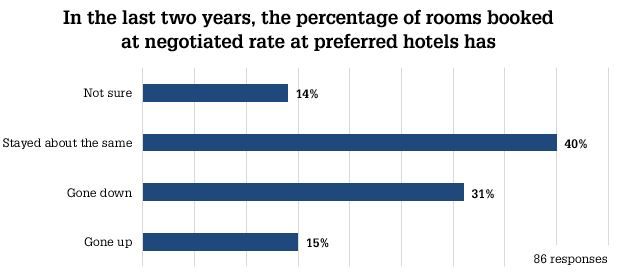
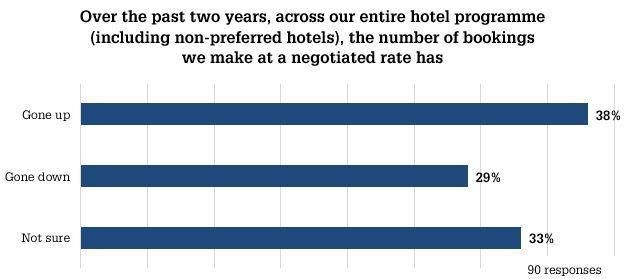
But the results may hint at some issues. One could question the need for these rates if they aren't available, or perhaps aren't in the required room type. Some aren't even sure of the numbers; following the discussion several buyers commented that they want to challenge suppliers and ask for more data. But there are other ways of shaking up hotel programmes, and not doing it just once a year. On stage Jeroen Hurkmans of Advito recommended buyers start adopting a tiered RFP approach and negotiating on top cities but then supplement with a discounted best available rate (BAR) and spot buying.
Buyers, perhaps working with their TMC/s or consultants, could audit rates to build a clearer picture. But the next day a different audience with fewer buyers were dubious of whether they were getting the best rates from TMCs, although a higher percentage say they do audit.
Are buyers untrustworthy or have reason to be suspicious? It would appear the traditional model is throwing up some concerns and isn't fully transparent. There's plenty of new technology and partners that can help.
Several TMCs and suppliers like TripBAM are capturing and rebooking to obtain cheaper rates; others like Traxo or Concur's TripLink bring unmanaged bookings to view. Online travel agencies like Booking.com provide a marketplace for hotels but can build in negotiated rates if required. Providers like HRS work across the hotel management chain, recently signing a contract with Siemens for its hotel programme covering three million room nights in more than 170 countries.
While 69% of hosted buyers said they still value the RFP process, we may see some changes to programmes in the next few years.