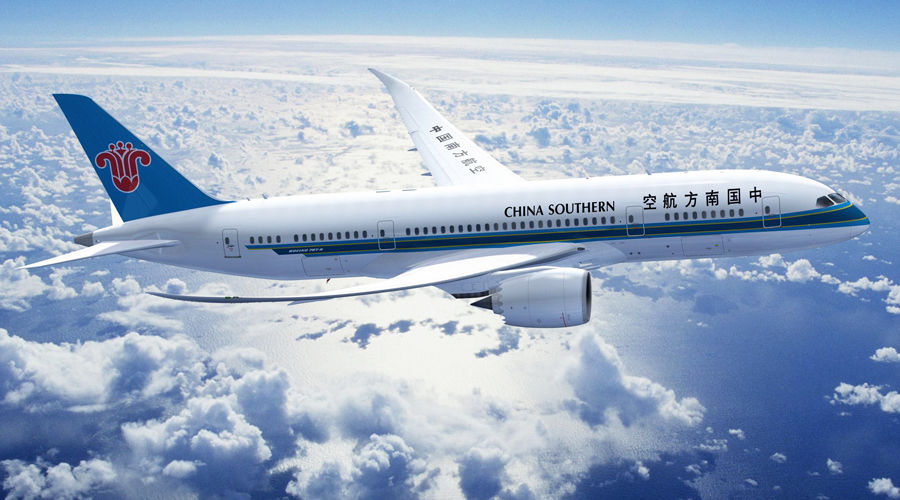
China Southern Airlines, Asia’s
largest and the world’s seventh largest airline, is “Business Travel Ready” –
at least in terms of IATA’s New Distribution Capability.
The carrier has quietly become
the first to achieve a strict subset of requirements of the NDC@Scale
accreditation that single it out as having “the capabilities TMCs have said are
needed to serve the needs of the business travel community”.
IATA first announced the
NDC@Scale accreditation in 2018. It was intended to show the ability of airlines,
their IT providers, aggregators and travel sellers to scale to large volumes of
transactions using the NDC standard and was designed to help speed up NDC
adoption.
Only airlines are currently
allowed to apply for NDC@Scale accreditation and since the new tier was
introduced, ten airlines have achieved it – American, Austrian, British
Airways, Brussels Airlines, China Southern Airlines, Condor Flugdienst, Iberia,
Lufthansa, Qantas and Swiss.
These airlines have
demonstrated to IATA – although the association does not validate these
self-reported claims – that they can achieve 75% of a list of defined
capabilities in relation to shopping for fares, ordering those fares, servicing
them and paying for them.
British
Airways and Iberia announced they had both achieved NDC@Scale accreditation in
December 2019. At the time the airlines said, “This is another significant step
made by both airlines, demonstrating their commitment to, and continuous
investment in, improving and enhancing NDC capabilities for their customers.”
Cliff Trotta, Iberia’s head of commercial distribution and planning,
said: “Our IATA Level 4 certification [in November 2019] was all about
Servicing. NDC@Scale is way more than our ability to exchange messages.
Scalability is key to driving adoption and with this certification label we
certify the robustness of our NDC usage, with millions of shopping requests per
day, as well as our 24/7 support for agencies that have embarked on this
journey to true retailing. It makes sense to invest in NDC and we are committed
to move faster on this.”
BA, meanwhile, said that more than 4,000 agencies were now connected to
NDC and that it would start to offer its Basic fares on European routes only
through NDC channels from the first quarter of 2020.
The two airlines also added that NDC@Scale had allowed them to extend
their so-called Long Haul Additional Price Points (LHAPP) propositions across a
larger number of routes, including North America. It says that its NDC partners
can access three times more price points – essentially different fare
categories – than via legacy distribution channels such as the GDS.
What China Southern alone has
done is gone a further step along the road.
After the NDC@Scale tier was
announced, IATA’s Global Travel Management Executive Council (GTEC) – a group
of 15 of the world’s largest and most influential TMCs – suggested the addition
of a level of recognition for those carriers which had gone even further to meet
the needs of the business travel community.
Pat McDonagh, chief executive officer
of Clarity– one of the members of GTEC – says, “NDC@Scale was based on a long
list of requirements but essentially airlines didn’t have to be able to do them
all. What Business Travel Ready does is outline what we as a business
travel community believe are non-negotiables such as being able to amend or
cancel a ticket.”
Of the 35 capabilities that an
NDC@Scale airline must aspire to, Business Travel Ready is a subset of 27 of
these that China Southern Airlines has achieved.
These include the ability to offer
private fares (such as corporate fares), seat selection and multi-city and open
jaw itineraries (see the full
list of capabilities).
McDonagh says China Southern should
be congratulated on being the first but adds, “It’s not really a surprise that
an airline in a technology-led market is first.”
He also believes it will be
the first of many to achieve that status.
“It makes the servicing of the
ticket so much more efficient which benefits the customer, airline and agency
alike.”
McDonagh says the status means
TMCs like Clarity will be more able “to display content in the same search
return from both the GDS and NDC-style feeds”.
He says, “For the most part,
at the moment, this means that full content and price parity vs .coms is
assured. In future it will open up more merchandising possibilities such
as seat maps for seat selection in online booking tools.”
The status is
another first for China Southern – which is currently the only Chinese airline
to put NDC into production. In April 2018, it was the first to issue NDC
overseas tickets through the Direct Connect sales model.
China Southern left
the SkyTeam alliance in 2019 and it has been rumoured that it is looking at
joining oneworld. It is certainly getting closer to some of its other members.
At the start of
the year, British Airways commenced a new joint business agreement with China
Southern. The agreement allows the airlines to cooperate on scheduling and
pricing and involves code-sharing on all direct flights operated on mainland
routes between London and the Chinese cities of Beijing, Shanghai, Guangzhou,
Sanya, Wuhan and Zhengzhou. The start of this agreement has in recent days been
overshadowed by the outbreak of coronavirus in one of these cities – Wuhan.
2020 is a big year
for NDC. This is the target year for IATA’s 22 NDC Leaderboard airlines, which
include China Southern, British Airways and Iberia, to achieve 20% of their sales powered
by an NDC API.
IATA is
confident of reaching that target; however, business travel bookings will not
be a large proportion of them, with most coming through metasearch engines and
online travel agencies.
China
Southern Airlines may be Business Travel Ready. The rest of the business travel
industry is less so.