The only constant in airline alliances is change, as restless carriers hunt around for the best tie-up deals. Bob Papworth asks what it all means for the business travel community
IN SEPTEMBER LAST YEAR, International Airlines Group (IAG) boss Willie Walsh caused something of a stir when he announced that he had drawn up a list of potential takeover targets.
Quite apart from the fact that the loadsamoney approach was way out of kilter with the recessionary penny pinching prevalent at the time, the former British Airways boss seemed to have overlooked the fact there was nothing on the market worth having.
Months passed, nothing happened, and the industry busied itself with all the other slings and arrows that fortune throws at aviation.
Suddenly, a year later, both the Irish government and Michael O’Leary’s Ryanair announced they were not that bothered about their Aer Lingus shares – between them they hold a 54.8 per cent stake – and might be tempted to sell them if the price was right.
Almost immediately, it seemed, Lufthansa Group appointed Morgan Stanley to advise it on the best way to dispense with Bmi, which just happens to have around 11 per cent of the megavaluable slots at Heathrow.
And then news filters through from across the Atlantic that American Airlines may – some say should – be heading into Chapter 11 bankruptcy protection.
Lumbered with an eye-watering pension commitment, a near poisonous relationship with the unions, and a fleet of aircraft that could soon be booking a place on Antiques Roadshow, American could, in theory, emerge leaner, greener and keener to force through its long awaited amalgamation with British Airways and Iberia.
Typical, isn’t it? Willie Walsh waits ages for a decent takeover target to come along, and then three of them turn up at once.
At the time of writing, IAG had contented itself with authorising BA to purchase a mere six pairs of Bmi’s Heathrow slots, but many suspect this is just an amuse-bouche prelude to an all-you-can-eat feeding frenzy.
GROUPS WITHIN GROUPS
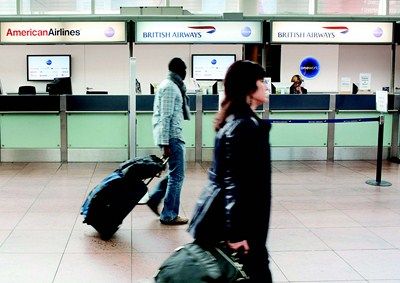
This trend – of alliance-member airlines forming more closely-knit sub-groupings – is relatively recent.
Air France’s 2004 merger with KLM Royal Dutch Airlines remains the role model, but since then other mergers – or near-as-makes-no-difference mergers – have come thick and fast. In addition to Bmi, Lufthansa owns Austrian Airlines, Swiss International and Germanwings, has equity stakes in Brussels Airlines and US-based JetBlue, and owns half of Turkey’s SunExpress.
In the US, United and Continental now operate under the umbrella of United Continental Holdings (see The interview, p32), America West has been eaten up by US Airways, and Northwest Airlines has been absorbed into Delta. To the south, what was once known as LAN Chile now has subsidiary operations in Argentina, Colombia, Ecuador and Peru.
One of the latest manifestations of this trend comes from Oneworld partners Qantas and Japan Airlines which, in a three-way joint-venture with Mitsubishi, are setting up Jetstar Japan.
The ‘traditional’ alliances are still signing up members, with China’s Shenzhen Airlines joining the Star Alliance, Saudi Arabian hoping to follow Taiwan’s China Airlines into the Skyteam camp in 2012, and Malaysia Airlines and Air Berlin due to join Oneworld.
It's not all smooth sailing, though – another Oneworld potential, India’s Kingfisher Airlines, is in financial turmoil, while Air India’s hopes of joining the Star Alliance have been put on ice after it failed to meet the minimum entry requirements, even after nearly four years.
Equally, Willie Walsh’s plans to expand IAG will not be without hurdles. Both Virgin Atlantic and Abu Dhabi-based Etihad are reported to be interested in Bmi, and Air France- KLM is seen as a likely rival bidder for Aer Lingus, although the Irish carrier is saddled with a €344 million pension deficit.
There are regulatory issues, too. British Airways currently owns 45 per cent of the slots at Heathrow, while Bmi owns around 11 per cent – minus the six pairs sold recently – and Aer Lingus 3 per cent. Any merger is likely to win approval only if BA surrenders at least some of those slots.
If American Airlines does go into Chapter 11, it would be unlikely to emerge before 2013/14 at the earliest, and even then would not be a candidate for a full merger – US law has long dictated that no foreign company can own more than 25 per cent of a US-registered carrier, and security concerns mean that is unlikely to change any time soon.
WHY ALLIANCES MATTER
So much for the facts and figures; the question is, from a travel management perspective, does any of it really matter? The answer is a resounding “well, yes, and then again, maybe no – actually, this isn’t my area of expertise, so I suggest you ask someone else”.
In the early days of the alliances, the big criticism from travel management quarters was that the groupings may have created cost saving synergies for the partners involved, but they did little or nothing for corporates.
Companies couldn’t negotiate a single, unified deal with all the partner airlines, and the management information coming back was still being provided – insofar as it was – by the individual airlines. No cost saving, no labour saving, no point.
Another complaint concerned loyalty programmes. Travellers told to use Oneworld’s British Airways across the Atlantic and Star Alliance’s United within the US tried – or would be tempted to try – to find policy loopholes to stick with one alliance and earn more points.
Key Travel chairman Ajaya Sodha, who chairs the Guild of Travel Management Companies’ (GTMC) air working party, and Egencia account director Katherine Cook, remain unconvinced that airline alliances were ever designed to make the corporate customer’s life easier.
“One had expected that the alliances would be groups of airlines with whom to talk as a corporation,” says Cook. “This is not what they are, and we are not sure that is what they meant to be. They care about network and loyalty programmes – essentially for travellers, and to some extent for companies – but their sales teams are still separate.”
Sodha points out: “It is still very much the case that the majority of corporate travel within a company will be on one carrier. Some [groups of] airlines are coming back with a ‘package’, where there is a deal on a particular route or group of destinations, but mostly it’s still down to the individual airline.
“Alliance-wide deals are not a route that most corporates want to go down, because alliances, like Star, have become so huge that it’s almost impossible to provide the volumes across so many carriers.”
Egencia’s Cook is inclined to agree. “Volume deals are possible with airlines acting together as a joint business, as far as competition laws allow it, but the majority of corporate contracts continue to be between a corporate client and an individual carrier.
“We are aware some groups of carriers within an alliance have sought joint deals with corporate clients, but it isn’t common – due to the competition within airline alliances or regulatory barriers – to strike a deal with the alliance as a whole.”
Where Cook and Sodha beg to differ is on the quality of management information coming out of the alliances (as opposed to the individual airlines). Egencia’s account management boss is generally happy with the airlines’ data, but the Key Travel chairman is less sure.
“I think the most amazing thing in all this is that they are always coming back to the travel management companies and asking ‘what have you got?’ – airlines think they have got their act together, and they haven’t.”
BIGGER NOT BETTER

Cue Chris Thelens, chief executive at Chambers Travel Management. “Some of them [the alliances] have got too cumbersome, and haven’t got their reporting sorted out yet. The interesting thing to me is that a representative of one airline will come in and talk about the other airlines [in the alliance] – there’s bound to be a degree of confusion.”
Egencia’s UK managing director Jonny Shingles goes a step further. He argues that the very fact that the formation of “sub-groups” of airlines actually demonstrates that the alliances, at least at the sales level, are simply too big.
On the trans-Atlantic route, for example, there are three such mini-alliances – British Airways, Iberia and American; Air France/KLM and Delta; and United/Continental and the Lufthansa group.
“What happens is that these business units merge their sales forces into one,” says Shingles. “This is done with lots of difficulty in terms of organisation, processes, systems and policy definition – but it could be said to prove that, at a level of an alliance, with many more airlines, this alignment would not have worked.
“The joint sales effort at the alliance levels is now outdated by joint ventures [JVs] and mergers. Airline management is so focused on JVs and mergers that we doubt they spend much time thinking on what they do for corporations at an alliance level.”
If that airline management attention is being diverted from corporate customers, one might expect the travel management community to be kicking up a fuss. In fact, nothing could be farther from the truth.
“The GTMC’s view is that it’s all a question of market forces,” says Ajaya Sodha. “There’s nothing for us to be jumping up and down about – it is for governments and regulatory authorities to take a view when there is a merger.
Overall so far, I haven’t seen any reduction in competition, and in some cases mergers have actually enhanced the travel manager’s ability to sign deals.”
Katherine Cook is equally magnanimous. “Generally, airline mergers can allow carriers to lower costs and drive efficiency, combine to create expanded networks, and ideally deliver seamless services for an improved customer experience,” she says.
However, it is Chambers’ Thelens who takes the most positive position. “In my view, it’s just a case of natural evolution – everyone is trying to cut costs, and in one form or another, this is what they are doing.
“It’s not about filtering the cost savings down to the end-user, it’s about survival, and taking costs out is a very important factor in that. Sharing lounges, sharing check-in points, that sort of thing – it’s all about taking costs out at a time when low-cost carriers are providing really tough competition and the economy is making life even more difficult.
“What the end-game will be, who knows? However, we still rely so heavily on one another that life without one another – well, it just isn’t there.”
Maybe, in the end, it’s not so much a case of loadsamoney as one of loadsapragmatism.
STILL FLYING HIGH
FLYBE’S SHARE PRICE may have taken a hit after its October profit warning – the second in six months – but its novel approach to joint-venture partnerships should reassure investors and travel managers alike.
Already one of Europe’s largest regional airlines, Flybe has now become a major player in the Nordic and Baltic markets, launching a network of services linking Finland, Sweden, Norway and Estonia.
In a joint venture with Finnair, the Exeter-based carrier has taken over Finnish Commuter Airlines (Finncomm). Flybe will operate Finncomm’s 15 domestic and regional routes, plus nine new services within the region.
Mike Rutter, managing director of Flybe Europe, has made it clear his airline’s foreign adventure is far from over, with plans to expand into Latvia, Lithuania and Denmark as well.