Domestic travel throws up an array of options, but do we always have to compromise on cost, time and comfort asks Gary Noakes.
BOOKING DOMESTIC TRAVEL used to be an easy choice, if not an enviable one.
Twenty years ago, business travellers were faced with prohibitively expensive air fares that discouraged all but the most generous corporate purse and often begged the question, "Is your journey really necessary?" Airlines routinely charged several hundred pounds for off-peak flights within the UK, while rail was a less expensive, but equally less reliable journey. Option three was a long, exhausting drive.
Fast-forward to today and things have changed dramatically. The growth of the budget airlines mean flying a few hundred miles and back to do business in a day is now in reach of everyone. Train services on key routes have improved immeasurably, but there is a heavy price to pay for travel at peak times as train companies cash in on the convenience of city-to-city connections.
Meanwhile, the cost of motoring has rocketed and road congestion and environmental concerns means companies are less keen to encourage this mode of transport. New corporate manslaughter laws also mean accidents caused by tired drivers could have serious legal consequences for companies.
Few would disagree that on trunk routes, travelling city centre to city centre, rail is the best and most convenient option, if not the cheapest. But as the railways have neglected, or, in some cases closed, cross-country routes, airlines like Exeter-based Flybe and Humberside's Eastern Airways have tapped into markets equally ignored or abandoned by the likes of London-centric British Airways.
Taking flight
A whirlwind has ripped through the domestic air travel scene away from the capital. In the last three years, Flybe alone has expanded from 36 domestic routes to 82, which now account for 70 per cent of its network. Business travellers now make up 44 per cent of its passengers.
"We have managed to give business travellers options that did not exist before," says the airline's chief commercial officer, Mike Rutter.
The big jump for Flybe and Eastern Airways came early last year, when British Airways virtually abandoned the regions and Flybe bought BA Connect, BA's ailing regional arm.
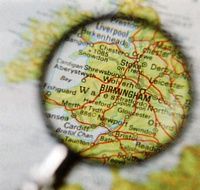
Flybe's smaller aircraft and lower cost base allows it to operate profitably some of BA Connect's routes, particularly from Birmingham.
Eastern Airways, which mainly flies 29-seat turbo-props, also seized the opportunity when BA contracted.
"We virtually doubled overnight," said Darren Roberts, Eastern's communications director. Such has been the success of small aircraft and small gateways, that Eastern Airways now operates over 800 flights a week from 17 airports.
These carriers, plus the likes of bmibaby, easyJet and Ryanair, have changed the domestic travel map of the UK over the last few years in a way few could predict.
Back on track
The fight back by the rail system has been slow, but it is coming.
London-Glasgow services will rise from nine peak trains a day to 13 and journey times will fall from five to four and a half hours.
London-Manchester frequencies will increase from half-hourly to every 20 minutes and some services will take less than two hours. There is, though, a price to pay for this, as our table shows (see page 6o) , with peak fares of nearly £300, almost as much as flight prices.
Virgin Trains is defensive, adding that with advance booking, a Saver return fare falls to £62.40. It points out that air fares do not take into account the price of a taxi to the city centre or the ability to work onboard.
"With train travel, you arrive at your destination fully refreshed and end-to-end journey times are fully comparable when you add in travel to the airport," said a spokesman.
Advantage's director of corporate Ken McLeod travels regularly from Glasgow to London and is a big fan of the train despite the extra journey time: "I can get a First Class single in the middle of the day for £60. With easyJet, it would be something like £40, but in four-and-a-half hours on the train I can plug in the laptop and get a lot of work done."
This ability to work uninterrupted for a reasonable time is something that train companies are rightly quick to promote.
National Express East Coast, which took over the east coast franchise from GNER in December, now offers free on-board Wifi in both classes, a boon to the mobile worker.
Away from the main trunk routes, however, rail services are often not what they should be and, given some of the price comparisons with air travel, are just not a feasible option. Only a few years ago, the alternative would have been a bleary-eyed odyssey on congested A roads, but budget carriers have changed all that.
The right moves
Rutter believes that it is not just business travel itself that has changed - companies are taking into account the rash of convenient new links when deciding where to relocate.
There are now nine regional airports handling more than five million passengers, including such former backwaters as Bristol and East Midlands.
"The moment we opened links to Exeter, the investment profile changed from companies saying yes, we can open a factory or sales office to yes, we can put our HQ there. And that has been repeated around the country," he said.
Budget airlines revolutionised domestic business travel but are also trying to make it more convenient for those that book them.
Although mainly known as internet brands, the major ones have recognised the need to attract business travel buyers, with Eastern, Flybe and, in the last few months, easyJet putting fares on the GDSs. Eastern estimates that 6o per cent of its business comes from business travel agents.
"We recognise that we need to work very closely with the travel trade," said Roberts. GDSs and budget airlines have had an uneasy relationship, but Galileo and Amadeus have managed to produce a low-cost option for easyJet, cementing the carrier in corporate buyers' minds. Be in no doubt, business passengers are very important to easyJet. It estimates that 25 per cent of its traffic comprises corporate travellers.
So much for the ease of the booking process, but one area where rail can surely win over the speed and convenience of air travel is the lengthy wait at airport security.
Train companies have undoubtedly benefited from the chaos at airports over the last 18 months with the restrictions on liquids, limits on hand baggage and the confusion about what will actually be subject to scrutiny. Eastern Airways has tried to overcome the problem by offering all passengers - Economy or Premium - fast track security channelling, but others are stumped and forced to tell passengers to turn up earlier.
Gone are the days when a quick dash from taxi to gate meant business travellers could arrive at Heathrow's Terminal r 15 minutes before flights were due to leave. Only one major airport, London City, allows a 2o-minute check-in and, despite relaxing the restriction on one piece of hand baggage at Heathrow, things are not getting better for those who relish the quick dash through departures.
Even after overcoming its disastrous start, Heathrow's flagship Terminal 5 may still slow things down for the domestic traveller, as its open plan design means domestic and international passengers mingle. Because of this, it was planned that domestic passengers would undergo fingerprint scanning at security and again at the gate, although this is under review at the time of writing due to data protection issues.
Airport security nightmares and improvements in rail services are given as two reasons for a fall in domestic air travel in 2007 - a fact that comes as a surprise given the hysteria about aviation growth and global warming.
Last year, 25.3 million domestic flights were taken, but, according to CAA figures, this represented a drop of 1.9 per cent on 2006 - the only sector of aviation that experienced a fall. However, part of this is due to the drop in domestic connections through Heathrow, which make up a large part of the total. These fell by 10 per cent as the number of direct regional connections to Europe and beyond grew. By comparison, rail travel is at its highest level for 60 years, although much of this figure is due to London's expansion and the resulting increase in commuters.
As for travelling by road, there seems to be little argument in favour other than the cost saving, but then, as any good manager will tell you, time is money.
The environmental case of air travel versus road does not stack up either. It will astonish some, but, as our research shows, the carbon footprint caused by flying domestically is usually less than that of travelling by car.
One man not surprised at all is Flybe's Rutter: "We have been putting out press releases on this for a long time but no-one has expressed any interest," he says. "On the vast majority of longer sectors the carbon footprint is less than it is by car."
Rutter says this means anything a shade over three hours' drive - before any congestion - is taken into account.
Moreover, according to Climate Care, most of the flights researched had a carbon offset cost of only around 80-90 pence, with London-Glasgow the highest at £1.11 - something that will hardly break the corporate travel budget. There is, however, no argument about which has the lower carbon footprint when the train option is introduced.
So what of the future? After such a rapid period of expansion, domestic air travel could be facing a period of uncertainty while rail travel, on some routes, will continue to get more attractive, if not cheaper. Air travel's problem is that despite reaching the US$100-abarrel mark, oil prices still climb.
Advantage's McLeod says: "There is talk of it reaching US$150 a barrel within the next 18 months. There is a huge increase in consumption by China and the Chinese are prepared to pay the money. I don't see the price decreasing."
If it continues, this brief golden age of domestic air travel could come to an abrupt halt, but so will the willingness to jump into the car and drive hundreds of miles. The winner will be the rail network, particularly as the disruption to the system at Easter was part of a two-year, £2.4 billion upgrade of main lines.
Platforms are being lengthened and bends straightened to permit longer, faster trains, with work due to finish in March 2009.
While all this is going on, corporates, their buyers and business travellers themselves can ponder what would be their ideal mode of transport.
The dream ticket for all three would surely be a rail system offering the extremes of the budget airline fare model, great timekeeping; the luxury of a business class cabin with space, a chance to work uninterrupted and a speedy city centre arrival. But that really is a flight of fantasy.
THE COST TO THE CLIMATE
- Flight and rail prices are based on overnight stays booked six days in advance of departure in March, travelling peak time using flexible return fares.
- Rail prices are based on standard class
- Road journeys are calculated from city centre to city centre using Multimap
- Carbon footprints are based on a medium- sized car with a petrol engine
- Car journey costs are calculated on petrol at £4 a gallon with an average consumption of 35mpg.
- Air travel costs and times do not include transfers from city centres. Car journeys starting in London incur £8 congestion charge
ROUTE1: LONDON - GLASGOW
BY CAR
Journey time: 7 hours 11 mins (410 miles)
Return fuel cost Approx £94
Return carbon footprint: 285kg
BY AIR
Flying time: 1 hour
Return ticket cost: £401.50 (British Airways from Heathrow)
Return carbon footprint 150kg
BY RAIL
Journey time: 5 hours
Return cost: £270:50
ROUTE 2: LONDON - MANCHESTER
BY CAR
Journey time. 3 hours 52 mins (211 miles)
Return fuel cost: Approx £48
Return carbon footprint: 147kg
BY AIR
Flying time: Approx 45 minutes
Return ticket cost: £321 plus (Bmi from Heathrow)
Return carbon footprint: 90kg
BY RAIL
Journey time: 2 hours 13 mins
Return cost: £294 (Virgin Trains)
ROUTE 3: MANCHESTER - EDINBURGH
BY CAR
Journey time: 4 hours 27 mins (250 mites)
Return fuel cost: £57
Return carbon footprint: 174kg
BY AIR
Flying time. 1 hour
Return ticket cost: £350 (Bmi)
Return carbon footprint: 100kg
BY RAIL
Journey time: 3 hours 26 mins
Return cost: £93
ROUTE 4: BIRMINGHAM - ABERDEEN
BY CAR
Journey time: 7 hours 58 mins (422.5 miles)
Return fuel cost: £96
Return carbon footprint: 294kg
BY AIR
Flying time: 1 hour 20 mins
Return ticket cost: £369.98 (Flybe)
Return carbon footprint:140kg
BY RAIL
Journey time: 7.5-8 hours
Cost: £186
ROUTE 1: PLYMOUTH - MANCHESTER
BY CAR
Journey time: 5 hours 4 mins (281 miles)
Return fuel cost: £64
Return carbon footprint: 196kg
BY AIR
Flying time. 2 hours
Cost: £310 return (Air Southwest)
Return carbon footprint: 110kg
BY RAIL
Journey time 5.5 hours
Return cost £221.50
ROUTE 2: CARDIFF - NEWCASTLE
BY CAR
Journey time: 5 hours 46 mins (315 mites)
Return fuel cost: £72
Return carbon footprint: 219kg
BY AIR
Flying time: 1 hour 10 mins
Cost: £262.70 return (Eastern Airways)
Return carbon footprint: 120kg
BY RAIL
Journey time: 5.5-6 hours
Return cost: £191
ROUTE 3: EXETER - LEEDS
BY CAR
Journey time: 4 hours 55 mins (284.5 miles)
Return fuel cost £68
Return carbon footprint: 198kg
BY AIR
Flying time. 1 hour 5 mins
Cost: £265.98 return (Flybe)
Return carbon footprint: 110kg
BY RAIL
Journey time: 4.5 - 5.5 hours
Return cost: £349
ROUTE 4: NORWICH - MANCHESTER
BY CAR
Journey time: 4 hours 57 mins (246 mites)
Return fuel costs: £56
Return carbon footprint: 171 kg
BY AIR
Flying time: 1 hour
Cost: £331.98 return (Flybe)
Carbon footprint unavailable
BY RAIL
Journey time: 4 hours 45 mins
Return cost: £109.70
Booking a long-haul holiday flight is often cheaper than buying a simple midweek day trip in the UK by train.
Rail companies are adept at adding the equivalent cost of a night in a city centre hotel to their day return fares, knowing that they will still be competitive when the final costing is done.
However, a good tip when booking rail travel is to buy a package through a leisure operator, thereby securing travel and accommodation at an inclusive tour rate and, if you are an agent, earning good commission.
Travelling by air is no different, as a simple trip of a few hundred miles can work out very expensive on a per mile basis.
For all their plus points, the presence of no-frills carriers often does little to cut the cost of peak time travel between major business destinations - that £10 Ryanair fare magically jumps ten-fold when the website sniffs a midweek day return.
Both forms of transport have a key advantage over motoring, however; namely that the passenger isn't doing the driving and can therefore be productive on the move.