Business Travel iQ
Arguments around whether a new runway should be built at London Heathrow or London Gatwick, if at all, have been rattling around for years. After ruling out other options the Airports Commission has shortlisted the two airports as a recommendation for where the capacity should be added, with both Heathrow and Gatwick engaged in an extremely public campaign to gain backing for their own expansion.
This isn't just a UK problem either. According to the report Amsterdam Schiphol and Istanbul Ataturk will run out of capacity in 2018. Furthermore when it comes to critical 7-9am period Amsterdam, Paris CDG and Frankfurt are 87% or more full, meaning any growth would be in the off-peak period - not ideal for business travel.
When Business Travel iQ attended the National Connectivity Task Force's report launch last week we expected the same points to be shared. However what emerged strongly from the report was a focus on domestic connectivity and potential government intervention.
Domestic connectivity
The report argued that any capacity growth at either airport should take other UK cities into consideration. Around 60% of the UK's population live in 120 cities but only 51% of these have direct access to a UK hub that provides connections to international destinations. Compared to the late 1980s when it had 17 domestic routes Heathrow now only has seven, while Gatwick has increased its share of operating London's UK domestic routes from 10% to 35%. Amsterdam's Schiphol has more links to UK cities than Heathrow and Gatwick combined, totalling 24.
These figures are also low in comparison to other European countries or regions such as Scandinavia, as shown by the figures below.
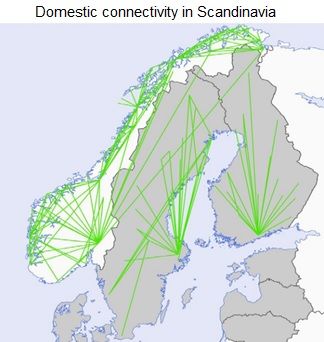
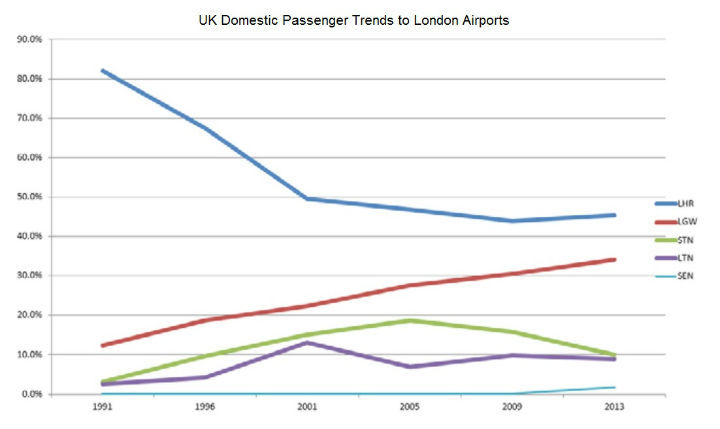
Some routes have been dropped due to a lack of customers or losing slots to 'more important' international routes, particularly as airlines like the regional-friendly bmi and bmibaby were swallowed up by airline groups (bmi regional has since become an independent airline offering point-to-point routes between regional airports across Europe). Recently Flybe dropped flights between Aberdeen and Leeds to the dismay of those in the oil and gas industries due to commercial unviability. Rail has also played a part, with connections between London and Manchester taking some the share of traffic between the two cities.
Chris Cain, secretariat of the Task Force argued all UK residents have a right to an 'equality of access' to routes, with many countries in Europe and the US offering flights that serve as point-to-point and/or a connection to international cities.
European inspiration: government intervention
There is already European legislation that means some routes are obliged to operate or sometimes with financial support. EU regulation is flexible which means it can be tailored to each country.
France and Spain have a strong amount of Public Service Obligations (PSOs) along with airport financial backing and resident discounts to help protect regions and secure select routes. Greece, Italy and Scandinavia also have PSOs in place that link its national hub with regions.
The UK Government considers PSOs 'inappropriate' for new routes but does offer start-up aid through the Regional Air Connectivity Fund. This only applies to domestic flights within the UK flying to or from London, with the funding only offered for three years based on the route ultimately proving profitable. So far this has resulted in flights linking London to Newquay and Dundee, both operated by Flybe.
Another £56 million has been put into the Government's route fund and bids have been taking place ready for a shortlist to be announced soon. Off the back of last week's report, Heathrow has now issued a commitment for its own £10 million fund which will support five new routes. The airport also wants to reinstate some PSOs and will review its charges from January 2016…but these measures will only come into effect if the airport gets its third runway. Whether the Airports Commission responds to being held to ransom remains to be seen.