One of the things that I have learned over the last decade in sourcing is you have to be careful not to be blinded by the light. Major companies have spent a tremendous amount of money on marketing their products for many years. So much so, in fact, that we take for granted what they are and the type of service they offer. Our minds are programmed by the marketing and the sales pitches given by those suppliers.
Since 9/11 the impact of the economic financial downturn has changed which suppliers are considered a good choice for your company. The other blinding factor is the presentation skills of the sales people and the money spent on the marketing materials for these rent-a-car companies.
Industry challenges
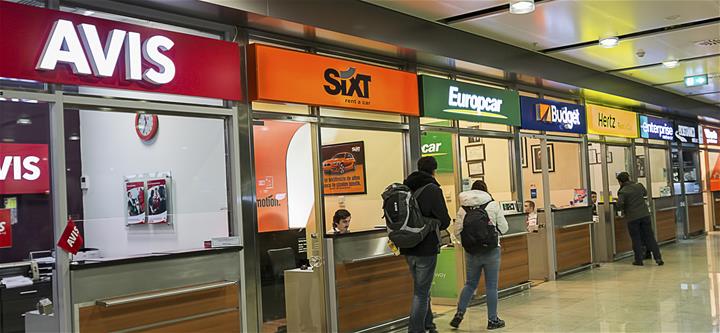
Here are the largest players: Enterprise Holdings (National/Alamo/Enterprise), The Hertz Corporation (Hertz/Dollar/Thrifty), Avis Budget Group, Europcar and Sixt.
Fleet-related costs have the highest effect on the profitability of car hire companies and how they buy and sell their fleet has as a major effect. Enterprise has the largest percentage and number of owned vehicles; the rest have a mixture of programme cars (basically short-term lease vehicles) and owned cars.

©iStock.com/boschettophotography
Profitability can also be affected by how much these companies sell their owned vehicles for. Hundreds of thousands of cars are sold each year and the price they are sold for has a large effect overall on the business. Currently the used car market is soft however no one knows what it will be like three years down the road.
The other factor that affects the industry is the price paid for each company's fleet. Those costs are determined by the number of vehicles purchased; the more you buy the cheaper they are. Then car hire companies must consider the mix of both the make and brand of the cars and vehicle type, followed by the price they pay for the money to purchase their new fleet. Every year these companies spend billions on new fleet.
Put simply, the cost of money they get is based on profitability; the more profitable a supplier is the cheaper the money to buy the new fleet annually. Conversely the least profitable company pays the most to purchase their new fleet. However it is much more complicated than this when it comes to the detail.
Where the players currently sit
The last 10 years have shaken up the players in this space, but here is an overview of the biggest firms currently operating. What all of these companies have in common are large marketing campaigns, good sales people and strong collateral material. They also have large fleets and many locations in many countries. In addition most of the car share brands are owned by the major car rental companies in the US.
Let's start with the company that's been around since 1918, The Hertz Corporation. The firm recently moved corporate headquarters from Park Ridge, New Jersey to Naples, Florida. It has operated in many countries worldwide for many years. Recently it had a major shake-up and change in its senior management in order to improve the direction and the performance of the company. The corporation is also still implementing the integration of Dollar Thrifty and separating out the Hertz Equipment Rental Corporation.
The Avis Budget Group has also been around for many years, since the 1940s. In 2011 Avis bought Avis Europe plc which is now fully integrated and operates in many cities internationally.
Sixt is the largest rent-a-car company in Germany and has expanded its presence internationally including an aggressive expansion in the US.
Europcar's corporate headquarters is in France with locations throughout Western Europe and in many other countries. It was previously the operator of the National and Alamo Rent A Car brands in Europe but Enterprise terminated the agreement in December 2014.
Enterprise (National, Enterprise, Alamo) is the largest car rental company in the US and is privately held out of the US. It is currently aggressively building out its Enterprise locations in EMEA after terminating the Europcar agreement. The National and Enterprise locations in Europe will have dual signage.
A global supplier?
Today with many companies doing business globally and looking for global suppliers, companies need to do their due diligence in order to find the right solution for their travellers' needs. You cannot rely on the marketing or sales pitch or who you think is good or not - you must dive deep into the facts and check the service capabilities.
Let's start with outlining which companies are truly global: none of them. International yes, but not global. So can one company handle all of your needs? The answer to that has to firstly consider where your travellers travel to. If your travel is restricted to Europe and the US then yes a single supplier can handle your needs. However if your spend is more than US$500,000 then it would be wise to have an alternative choice no matter where your travellers go. If your travel includes Eastern Europe and Asia or is truly global then you need multiple suppliers.
So how do you decide?
What is important is to find suppliers that are the best fit for your company and your travellers. Ironically just because a company has locations and fleet where you travel does not mean that they can service your travellers properly. If they are short-fleeted and poorly staffed it does not matter how many locations and cars they have. You need to check factors such as the age of their fleet in a country you travel to.
For example, if you were looking for a service in the UK, all of these companies have a location there so you have some choice. Enterprise is generally considered as the off-airport company in the US but is actually the largest car rental company in the UK. If your company is headquartered in Manhattan and looking for services there then you would find all of the major US car companies have locations in this area of the city. However if you do a lot of business out of a downtown office it will be important to look into the location, operating hours and the service level of the operation. In other markets you may consider a local supplier, for example if your company does a tremendous amount of business in Brazil then you may want to look at Localiza.
©iStock.com/minemero
Do they deliver on service?
Even if a car hire company meets all your criteria on location, it does not mean that they will be able to service your travellers in the manner you want and expect.
The financial strains in the last 10 years have taken their toll on some of the suppliers. In order to be profitable some companies have sacrificed service and capital improvements on fleet and infrastructure. They have been unable to significantly increase pricing especially in the corporate segment.
What's the solution?
In order to see past the hype, you have to undertake due diligence in a way that you previously did not have to do. Here are a few tips to help guide you.
The locations that your travellers frequent most are the ones you need to spend the most time investigating. Start with the incumbent supplier and ask your road warriors how the service has been. If you are investigating a new supplier, first look at where they are physically located and then the hours of operation, especially if it is an off-airport location.
It is important to seek out another source. Ask for a referral from the supplier you're investigating but be careful it's not just any referral. All suppliers have contacts that love them and that's not the company you want to talk to. Compile a list of companies that travel similarly to yours and ask suppliers to give you contacts from those companies to talk to about their experience.
You can ask the TMC if they know of service issues with a particular supplier. However the TMCs do have supplier agreements and that might be a conflict of interest. The other choices are peers in other companies and independent consultants that specialise in ground transportation.
Finally, check the internet. If you do enough searching you will start to see a pattern if there are problems. The issue with this is that is an indicator is not necessarily what is happening currently as far as service levels.
In conclusion do not be blinded by the light, do your homework. These suppliers are changing and evolving; it is a moving target. Some of them are growing and becoming better and some are not. A wise person, my mother, once said to me: 'In time all things will change'.