We hear a lot about duty of care. But we hear very little about duty of care and ground transport. The most dangerous part of any trip is the ground transportation segment. The number one way people die travelling is by ground transportation. That is a pretty dramatic statement, and it is true.
Companies and travelling employees need to pay much more attention to duty of care in this category.
Car rental and traveller safety can fill a whole paper on its own. Let's instead just focus on taxis, limos, shuttles, and the on demand car services (transportation network companies) such as Uber, Lyft and Sidecar.
There are a number of factors which can potentially affect risk.
- There is another human being that is driving you, ie they are in control of your destiny
- The condition of the car
- The level of insurance coverage - this is highly important to protect the company and the travelling employee in case there is an accident, and there will be accidents.
My reference for this article on ground transportation is as an executive in sales and sourcing for more than 30 years. I have been involved with sourcing or consulting with many of the largest global companies in the world. I have also travelled extensively in the United States, Canada, Mexico and Europe. I have had the floor of the taxi fall out in Chicago on Lakeshore Drive, I could see the road below.
In another taxi I was travelling with three other people when the driver ran a stop sign, I turned to him and asked, "Why did you do that?". He then explained to me that his cousin was ill and he was driving for him. So I asked the next logical question, "How long have you been driving?". He said three days. My knee jerk reaction was to tell him to stop at stop signs instead of getting out of the taxi, which we should have done immediately. After I corrected him at the next stop sign, he said, "With friends like you someday soon I will learn to drive". The full story is actually scarier but you get the point.
I have another personal story and it saddens me, but I feel obliged to tell the story. The reason I want to tell it is because no one thinks it's going to be them who will get into an accident. My friend worked for a high-end watch company and the company's travel policy allowed people at his level to use limos to and from the airport. It was a rainy day and the limo was coming out of the airport and a large truck was broken down on the side of the road. The limo sped out of the airport and smashed into the broken down truck. My friend did not have his seat belt on. He was killed instantly on contact. The driver walked away without a scratch.
When it comes to ground transportation, the most important factor is safety, followed by reliability, and then price.
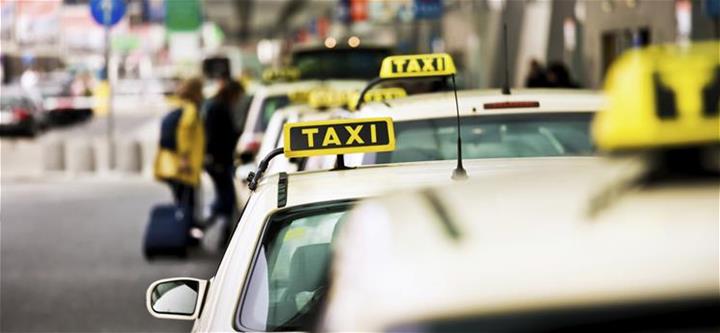
When it comes to corporate travel programmes, the ground category is either ignored or it is one of the last areas to be sourced. The airlines, hotels, TMC, car rental and online booking tools come first. Limos and taxis are starting to get some attention as many large companies are realizing that there are savings to be had, but this article is not about savings, this article is about safety.
When you source for safety, you can also source for savings per ride at the same time. One accident can cost the company a massive amount of money, far more than they will ever save by taking the low-cost provider.
There are a couple of reasons why companies don't source ground.
First, the companies that are sourcing taxis and chauffeur drive are those with locations — usually urban such as New York, London or Paris — where usage is significant.
Second, sourcing taxis is extremely hard to do and chauffeur drive is hard to do and takes time and effort to implement in a programme in any company which does not mandate its travel policy. The perception is that it is too much work and very political. Travelling employees and especially executives who may like a particular driver do not prioritise safety. Many managers, whether they work for travel or procurement, do not want to tackle this. But once you go through the process, it is much easier the next time.
This article is about safety and I am trying to point out that accidents are going to happen. There has been a lot of mixed press lately about Uber, Lyft and Sidecar, they are the new and upcoming segment of on-demand car services. There are also a lot of questions about safety, liability and the levels of insurance coverage and how they apply.
Unfortunately while writing this article there was the first fatality with injuries to passengers in a Lyft car near Sacramento. I don't know all the facts, it is too early and I don't need to because my point is that injuries and fatalities are going to happen. What happens now as it pertains to liability and insurance coverage will remain to be seen and will most likely take months if not years to sort out. This article is about is minimising this type of an outcome for your corporate travelers.
We live in a litigious world, when there is an accident with injuries and you will find out what I mean. My interpretation of "duty of care" for ground transportation is this: a corporation should offer its travelling employees a ground transportation option where the suppliers have been vetted. The insurance coverages should not be at the minimum level required by law; the people who are travelling in this ground transportation segment are very valuable people to the company and to their loved ones. Severe accidents are followed by lawsuits. Therefore your company needs the insurance coverage to protect itself from the large monetary awards that are given in accidents, especially when it involves a fatality.
Most companies who offer a vetted supplier but still allow their employees to do what they want, need to rethink that policy. What happens when you allow your employees to use who they want when instead of the vetted suppliers?
This is a widespread problem, and in most cases it will go unanswered until there is an accident and there are injuries and fatalities. At that point, it will be too late, there will be a lawsuit. It will cost the company a tremendous amount of money. That will be followed by poor publicity, reputational damage and more importantly, injuries and/or possibly death.
The question is whether a company has the legal responsibility to source for safety and make a reasonable effort to make their employees use the approved vetted suppliers. Is it negligence not to provide a safe option and make the travelers use the approved suppliers? I am sure someone will fire back a reason why they don't have to. Then the next question will be "does the company have the moral obligation to protect the employee from themselves?".
A company that takes the time to provide the safest ride which reduces liability to the company (which saves money) at the same time also can save on the price per ride improve reporting, and finally corral the out-of-policy usage, by sourcing this spend for safety, reliability and price.
Accidents will happen, in fact in New York City about 30 per day happen in a taxi. They are not as safe statistically as a limo ride and accidents in taxis are often more severe because of the security wall. It is also a fact, that drivers and suppliers who go through a vetting process have fewer accidents which means fewer injuries and fewer deaths.
No one who is responsible for ground transportation should be too busy to offer a safe vetted ground supplier and employees should not be allowed to choose whomever they want. It is a ticking time bomb and it will go off.
We forget that Princess Diana and Dodi Fayed crashed in a limo whose driver had a history of alcohol misuse. He was intoxicated, his blood alcohol level three times the French limit, and had traces of two different drugs in his system. If background checks and drug testing had been in force, this accident would not have happened.
My friend, Princess Diana and Dodi Fayed would be here today if all the above had been done.