Business Travel iQ
easyJet recently announced some fabulous financial results for the year ended 30 September. The carrier beat market expectations by posting a pre-tax profit of £581 million, an increase of 21.5% from the previous year.
Without doubt easyJet's strategy of wooing business passengers has contributed to its financial success. The media concentrated on the numbers but readers might be interested in what CEO Carolyn McCall had to say in the commentary around the results. They offer some pointers to the carrier's future strategy for this sector.
Business class may be on its deathbed in the European short-haul market but the tussle for business passengers has never been fiercer.
McCall vows that easyJet will continue to be a low-cost carrier. Casual onlookers can be forgiven for being sceptical — after all there has been a very prominent business focus on tactics aimed at increasing the proportion of passengers who are travelling on business.
And no wonder, business passengers generate higher revenue by booking closer to time of departure and being willing to pay for extras such as more legroom or airport fast track usage.
So easyJet is working to retain the business passengers it has and lure the ones it doesn't.
During the results presentation McCall raised two new tactics the carrier will be adding to its business traveller offensive. First of all, it is extending its trial of a frequent flyer loyalty scheme. The easyJet scheme is not rewards-based, offering points for redemption in proportion to, say, miles flown, but instead will offers benefits to members such as a dedicated support line, the ability to change a booking and a price guarantee.
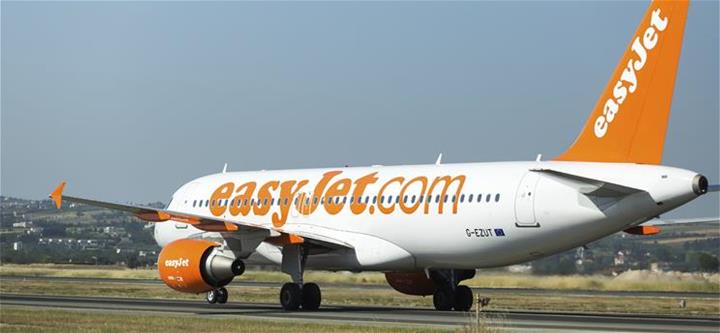
Secondly, McCall also announced easyJet's intention to install in-flight WiFi but it is only an intention as no commitment has been made or schedule confirmed. easyJet is saying only that it is waiting for the service to improve and the price to fall.
Like, lie-flat beds on long-haul flights, in-flight WiFi is quickly moving from a nice-to-have to a must-have for business travellers and that means that a carrier which is serious about luring this segment has, at the least, to show that it recognises the importance of offering such a service.
WiFi has traditionally been more problematic for UK carriers than its US counterparts because flights over land can make employ air to ground technology by using existing mobile masts. Flights over water cannot use such technology but must instead rely on satellites.
Not only does this mean a more inconsistent service but a weaker one. In-air WiFi is not broadband and the speed can be low and connectivity poor.
Flights over Europe could theoretically employ air to ground technology to support WiFi but there is no agreement among European countries about the spectrum that can be used so another challenge for service providers.
British Airways recently announced that it had signed a deal with Inmarsat to launch a dedicated communications satellite. It is understood that the plan is to offer in-air WiFi first on its domestic flights and then European flights but details have not been confirmed.
The point is that carriers believe that the demand for in-air connectivity is inevitable and they need to be seen to be offering it — or planning to do so — if they are to be taken seriously as a business carrier.
easyJet isn't offering a separate business class cabin but it's aiming for a product to attract those short-haul business travellers who still fly on the network carriers of Air France, Lufthansa and British Airways.