The traditional economy sector is experiencing a renaissance as the upmarket brands move in. Bob Papworth finds it means there is even more on offer
The Pensione Hotel has just about everything going for it. It's brand spanking new, bang in the centre of town, has 68 stylish air-conditioned rooms all with cable TV, refrigerator, IDD telephones and data ports, a bar/restaurant, plus - and this is the good bit - rack rates start at around £46 a night.
The bad news is that it's in Sydney. It is a perfect illustration of the fact that there is no longer any real point to the catch-all phrase 'budget hotel' - the term now encompasses so many subsets it has become essentially meaningless.
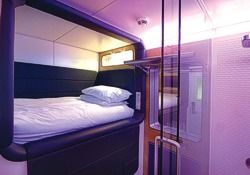
An offshoot of the Eight Hotels Australia group, the Pensiones look more like Malmaison (which are certainly not classifi ed as budget hotels) than Travelodges (which definitely are). They are infinitely classier than, say, a Formule 1, and carry much more cachet than a Holiday Inn or a Courtyard by Marriott. Unlike the Yotels and Birmingham's Nitenite, they have windows.
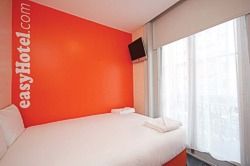
Unlike easyHotels, they're not orange. Best Western rack rates start at £45 a night, but are they really thought of as 'budget' hotels? "The budget concept has a different connotation to every consumer," says Brian Garvan, director of sales for Choice Hotels UK. "The word 'budget' confers the idea of 'price', but for a lot of people it also has implications around service levels. Certainly we like to put the emphasis on service."
Choice Hotels epitomises the conundrum. Globally, the group has close to 6,000 hotels under a plethora of sub-brands - Comfort Inn, Quality Suites, Sleep Inn, Clarion, Cambria, MainStay and Suburban, right down to EconoLodge - and while some of those are most definitely 'budget' hotels, Choice is generally perceived as a midrange offering. And that, says Hogg Robinson Group (HRG), is where the problem lies for true 'budget' hotels.
In its interim 2008 hotel survey, the travel management giant said: "The budget sector continues to grow, with new hotels increasingly opening in city centre locations despite competition from the retail sector for land development opportunities. However, HRG's data suggests that the three-star market is increasingly becoming a threat to the budget sector with its greater flexibility in pricing, enabling it to offer more competitive rates to suit the market's needs."
Average rates in the sub-three-star sector rose faster in the first six months of this year than those of the three-star sector; HRG puts budget rates at around £70, with the three-star tariff just nudging £100.
Tracey Symcox, hotel and conference manager with Capita Business Travel (CBT), is even more specific. CBT's figures show that in the first half of this year, rates at three-star-plus properties have risen by just 5.4 per cent, while budget chain rates have gone up by anything between 8 per cent and more than 17 per cent.
Earlier this year, Institute of Travel Management (ITM) research into corporate accommodation purchasing trends indicated that budget hotels and serviced apartments were growing in popularity as full-service hotel prices continued to rise. More than 70 per cent of the respondents to the ITM poll said use of traditional budget hotels was on the rise, although increased use of 'recent budget developments' - the Yotels and Nitenites of this world - was reported by less than 5 per cent of the sample.
Capita's Symcox isn't so sure, leaning more towards the view that budget hotels may be cheap-ish, but they have distinct disadvantages in terms of traveller satisfaction. "The majority of these properties do not have onsite restaurants, room service or recreational facilities," she says. "After a corporate client has been on the road for many hours, or in all-day meetings, they may want to relax in a lounge, ease the stress of the day in leisure facilities, catch up with work or just escape to their room and order room service. The last thing they want to do in the evening is venture outside for their evening meal."
The budget operators couldn't agree less. Back in May this year, Travelodge questioned 500 PAs about their companies' travel cost-cutting: 45 per cent said air and rail costs were high on the hit-list, 39 per cent identified personal expenses as a major target, and 37 per cent said hotel expenditure was coming under closer scrutiny.
Travelodge chief operating officer Guy Parsons said: "It's clear that business is taking rapid action to control costs. We have secured more than expected corporate accounts in recent weeks and other major corporates want to discuss budget business travel with us."
His remarks were endorsed by Trevor Elswood, managing director of hotel booking agency BSI, who said: "We have seen a significant move to budget and economy brands over recent months as businesses look to squeeze more from their travel expenditure. Eleven of our top 15 customers have now included economy brands within their preferred hotel programmes. This reflects a focus on cost reduction and the heightened quality and consistency of budget hotel offering."
In July, Premier Inn polled 1,500 of its corporate Business Account Card users, 90 per cent of whom said that "due to the deteriorating economic climate, they are now choosing, or are more likely to choose, budget hotel brands". Alan Parker, chief executive of Premier's parent, Whitbread plc, extolling the virtues of his company's 'cutting costs not corners' philosophy, said: "Premier Inn is experiencing significant growth in corporate account usage as business customers rein in on corporate travel expenditure. The smart business traveller is opting for a high-quality hotel room at a much lower price."
Whitbread has also announced a £100 million investment in six new properties in London, with 1,200 rooms, to be opened over the next three years. The company is acquiring the Quality Hotel (Westminster), the Comfort Inn (Kensington) and Purple Hotel (City of London) from the Real Hotel Company (RHC) for £18.5 million, adding 400 new rooms.
Another £12 million will be spent converting them to Premier Inn hotels. Whitbread has also secured first refusal on the 12 remaining Purple Hotels if they go up for sale. On top of that, Premier is developing three new-build hotels in the Greater London area, which together with extension to existing properties adds 800 new rooms. The new-builds are at Waterloo, Ealing and Old Street in the City and are scheduled to open by 2011 at a cost of £70 million. With hardly a week going by without a Travelodge or a Premier Inn opening somewhere, it's difficult to keep track of their expansion.
The same cannot - yet - be said of easyHotel, which has taken its time putting together a UK portfolio consisting of three hotels in London and one at Luton Airport. Next month a fourth London property opens, at Paddington, with 47 'super-budget' rooms, and a flagship Heathrow property. Late last year, easyHotel signed a deal with the Splendid Hotel Group, which operates the London Victoria franchise, which will see Splendid invest up to £50 million developing 10 more easyHotels across the UK over the next three years.

That has since been followed by a similar deal with the Eclipse Hotel Group, operator of the Luton and Heathrow franchises, under which Eclipse will invest up to £60 million developing another 10 UK properties, this time over a four-year period.
Sir Stelios Haji-Ioannou's chain has struck similar development deals in Austria, Germany and Portugal, and aims to have 60 hotels across Europe and the Middle East by 2010, and 200 hotels worldwide within 10 years.
Here in the UK, the two big chains are facing increasingly stiff competition from Ibis, the French Accor group's 'economy brand' which already has more than 50 hotels in the UK, including the recently-opened Ibis London Elstree Borehamwood, the 140-room Ibis Bristol Temple Meads Quay and the 162-room Ibis Birmingham Airport, which opens this month. Accor claims Ibis is the fifth-largest economy hotel chain in the world, with around 770 properties in 38 countries. It is also among the most ambitious, with a target of 1,200 hotels by the end of 2010.
Impressive though that may be, it is not a patch on Holiday Inn Express, which made its European debut in 1996 with the Express by Holiday Inn Strathclyde. The InterContinental Hotels Group (IHG) subsidiary currently has more than 1,800 hotels with nearly 160,000 rooms already open, and a pipeline of 730 hotels opening at a rate of two a week.
Just to make things even more impressive, IHG recently embarked on a US$1 billion (£521 million) global relaunch of the whole Holiday Inn brand family, which includes the Express properties.
In all, 11 Holiday Inn and Holiday Inn Express hotels across Europe, Middle East and Africa - plus 19 in the United States and six across Asia Pacific - are road-testing the new look, which includes new bedding and, in the jargon so beloved by hotel PR people, a new "shower experience" and a "signature scent and sound package".
All 4,000 Holiday Inns will be relaunched with new service standards, redesigned entrance and reception areas, as well as "refreshed" guestrooms. The whole job is due to be completed by the end of 2010.
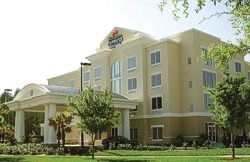
Mariott's lower-end product, Courtyard, has less of an international presence - of the 770 Courtyard by Marriotts currently in operation, only 73 are outside the US, and none of those is in the UK.
That will change next year, however, with the opening of a 181-room Courtyard by Marriott at Aberdeen Airport, followed in 2010 by a 169-room Courtyard by Marriott in Belfast.
Marriott says it has identified more than 20 UK and Ireland locations where Courtyard "will be desirable and successful in serving the needs of business travellers who actively balance the demands of business with their own demands for personal time. These travellers have an optimistic view of business travel and see the experience as an opportunity to get out and do new things."
And so back to Choice Hotels UK, which has more than 70 Comfort, Quality and Clarion properties across the UK, and an extensive spread of properties across Europe, as Brian Garvan puts it, "from Galway to Prague". He will have to amend that soon, as there are plans to take the Clarion brand into Russia, but in the meantime he is happy to plug the fact that free internet access is being introduced in all UK properties this year and that, unlike budget hotels, all have extensive leisure facilities, a "100 per cent satisfaction guarantee", and all are staffed round-the-clock so "there's always somebody there to take care of any issues".
In the light of the so-called credit crunch, will that be enough to fend off the challenge presented by cheaper rivals? CBT's Tracey Symcox certainly thinks so.
"In 2007, budget hotels represented 11 per cent of our overall ad hoc hotel business," she says, "compared with 12 per cent in 2008 to date - not the level of increase that might have been expected.
"With RFP negotiations about to commence for 2009, and in the current economic climate, are we confident that serviced hotels will win the battle to retain their hold on the corporate market? Indications are that, yes, they will."