Carbon emissions due to energy
use, including transport fuel, are set to fall by 7 per cent in 2020, according
to a new report out today.
The International
Energy Agency’s World Energy Outlook 2020 says global energy demand is not expected to rebound to pre-crisis
levels until early 2023 and not until 2025 in the event of a prolonged pandemic
and deeper slump.
“The era of global oil demand
growth will come to an end in the next decade,” said Dr Fatih Birol, IEA’s executive director. “But without a large
shift in government policies, there is no sign of a rapid decline. Based on
today’s policy settings, a global economic rebound would soon push oil demand
back to pre-crisis levels.”
The report also looks at some of the measures
that the world could use to achieve zero
emissions from existing infrastructure.
Replacing flights
of under one-hour duration with low-carbon alternatives would lead to the
biggest reduction in carbon emissions among 11 measures investigated in the research.
The IEA said that this measure
would reduce carbon emissions from passenger aviation by 518 million tonnes of
carbon dioxide by 2030, compared with 340 million tonnes that would be saved if
car users drove an average of 7 km/h slower and 192 million tonnes if they
share rides.
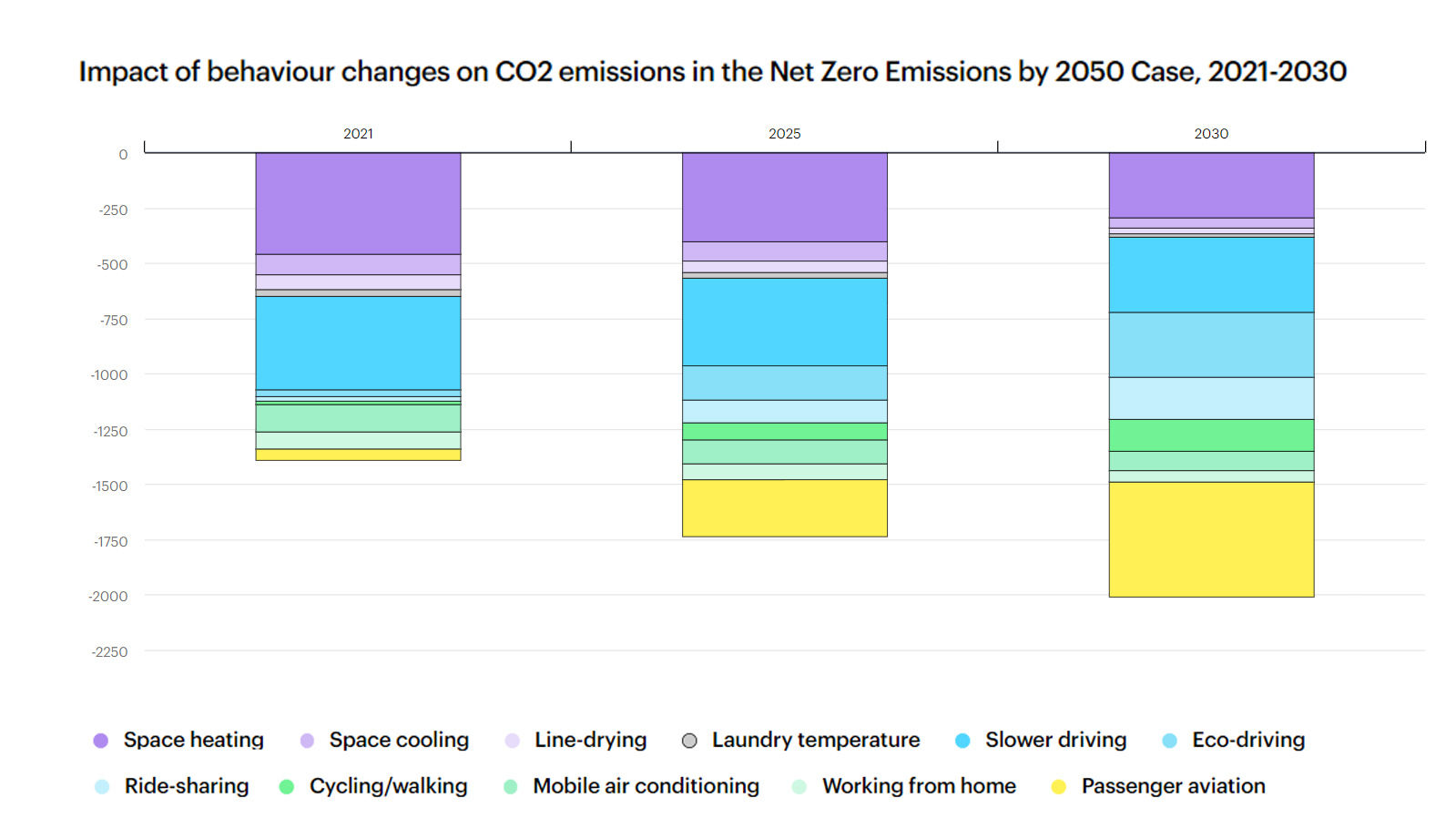 Credit: IEA