The east - they do things differently there, says Jonathan Hart, but daring to dip your toe into this unpredictable and energetic area can reap rewards.
Frequently jumping economic warning lights, the Far East seems to have its foot permanently clamped to a fast forward business accelerator - as delegates to a recent Guild of Travel Management Companies' (GTMC) meeting in Hong Kong no doubt discovered.
As ever amid the lavish salons of this maverick corner of unfettered free trade, risk aversion and talk of caution run a distant second to capitalising on the fresh avenues of opportunity created in the wake of a global economic meltdown.
Profiting from uncertainty is nothing new in a region that is prone to both natural and man-made disasters, and where frequently volatile politics and cross-border squabbles, far from being barriers, inject added impetus to an already raw competitive edge.
Take South Korea, for example. Now hastily preparing to host its first ever FI Grand Prix and a G20 summit against a backdrop of North Korean sabre rattling, being quick off the business grid is the underlying philosophy both despite and because of politics. The same goes for neighbouring Taiwan and China who consistently trade ideological blows yet conveniently shelve their differences for mutual profit.
Weaned on a largely renegade, get-rich-quick culture that treats money as king and supposedly entrenched ideologies, partnerships and reforms as flexible, dealing in the Far East demands quick thinking and adaptability to often different disciplines.
It requires resourcefulness amid the spider-web of state or private family hierarchies where personal profit is paramount and negotiations can, at best, be opaque, with the side-stepping of bureaucracy or swerving of compliance being part of the everyday, whatever-it-takes mix.
Doing business in the region also favours the brave because, while the potential rewards are big, the political flashpoints are permanent and the markets unpredictable. Elements of racketeering survive, long-term stability is anything but a given and joining the development fray frequently can mean taking an equally big gamble, akin to walking a tightrope without a safety net - with or without your hosts' World Trade Organization (WTO) credentials.
For travel buyers, the basics for facilitation in the Far East couldn't be better, thanks to the abundance of airline frequencies from the UK, a lion's share of the world's top airports and advanced ground transport systems. The huge choice of international business hotels and in-bred regional service culture add to the come-hither, if potentially costly, chance-your-arm corporate appeal.
Less appealing is the fact that, like most the rest of the world, the region has also been tightening its economic belt. Overall, it remains a less than strait-laced partner in global programmes and, for all its pedal to the metal bravado, is no longer able to provide the bountiful low-cost labour forces - or opportunities - on which much of its early success was built.
"Corporate activity in the region may be improving but caution remains the watchword," says James Stevenson, executive vice president Asia Pacific for HRG (Hogg Robinson Group). "There is a renewed energy and vibrancy across the region but it certainly is no easy ride.
"Margins are being squeezed, clients are demanding more for less and we need to ensure we are lowering our costs per transaction as well as optimising additional income streams, be it from suppliers or selling in ancillary services."
He says organisations that introduced quick fix, cost-cutting measures last year are trying to get the cycle moving again but are reluctant to let go of the savings on premium flight cabins and hotels.
One area of growth in the region has been the uptake of online booking tools, adds Stevenson. "This channel has proven its strength in the face of challenging economic conditions and I see this as a key growth area for 2010 as technology adoption across the region continues to increase."
Other notable trends include a growth in regional bids, as well as traveller tracking tools in the wake of recent earthquakes and incidents such as the riots in Bangkok.
"Travel managers are starting to recognise the importance of risk management as part of their overall programme," says Stevenson. "They are educating their travellers on the importance of staying within their company travel policies."
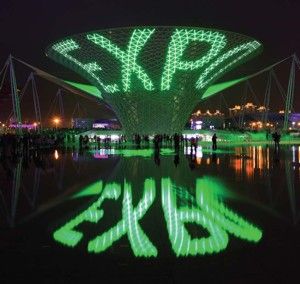
Despite suffering from the back-draught of world recession, the region's economy in general continues to show healthy upward growth, according to Asian Development Bank figures. This has been thanks to China, host to this year's World Expo in Shanghai and whose supportive tentacles stretch to every corner of the region.
Yet with China's economy - which grew a further 12 per cent in QI this year - now in danger of overheating and due for a stand-still, restorative cooling off period, other areas in the region are poised in the interim to steal prospective interest, according to analysts.
Arguably one of these is South Korea, whose ostensibly open doors to foreign direct investment via its membership of the Organisation for Economic Co-operation and Development (OECD) marks a sea change in formerly restrictive and protective national work practices for the export-dependent economy.
The promise of reforms and a switch to a more Western-style corporate governance is buoyed by the country's emergence as a major player on the world geo-political stage, with a leading role in the United Nations (UN) and host status for the G20 summit in November. South Korea is also hoping that the staging of its first F1 in October, on a newly-built track in the remote south-west of the country, will help cement its ambitions to become a primary international travel and events hub of the future.
The success of this combined open intent and charm offensive on outsiders rests very much with conglomerates, such as Samsung, LG and Hyundai, freeing up their stranglehold on an economy said to be thirsty for fresh input and expertise. These conglomerates (known as chaebols in Korea) are cast as both heroes and villains. Thanks to its diversity in different sectors, South Korea barely felt the recent credit crunch, yet its protectionism has also been blamed for past financial disasters and holding back progress.
With a predicted four per cent growth this year, South Korea, meanwhile, continues to show a clean pair of heels to its former colonial master Japan, still struggling to emerge from a decade of economic woes.
Elsewhere, while Thailand re-establishes its business-as-usual fundamentals, Singapore, Taiwan, Indonesia and the Philippines all report growth and fresh opportunity. Jump the lights if you dare.
Airlines and airports
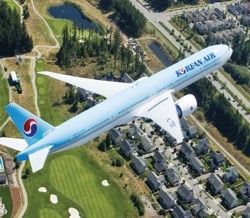
Probably nowhere beyond North America is better served by airlines from the UK - a choice of up to four direct or connecting flights daily by most airlines serving the key Far Eastern hubs or the wider Asia-Pacific region. A glance at any global distribution system (GDS) also confirms that UK-Far East routes comprise a primary launch pad for new aircraft and in-flight services or innovations.
Early A380 customers Singapore Airlines and Qantas operate the aircraft from London, and Korean Air has earmarked its daily Heathrow-Seoul route for its new delivery of the type from next year. Alongside its B777-300ERs, Korean Air's A380s will be fitted with its newly-upgraded in-flight product with enhanced food, wine and entertainment across all cabins, including the Kosmo Suite in First, lie-flat Prestige Plus seat in Business, and New Economy seat in Economy.
Other customers expected to deploy their A380s between the UK and Far East include Qatar Airways, Thai International Airways and Malaysia Airlines.
In May this year, capacity on flights to the Asia Pacific region grew 9.3 per cent to 14.3 million seats, according to Official Airline Guide (OAG) figures. Year-on-year monthly capacity within the region increased 10 per cent to 89.8m and, overall, there was an 11 per cent increase in flights to 596,608.
Far Eastern airports experiencing double digit growth over recent months include Shanghai (+30 per cent), Incheon (+22 per cent) and Taipei (+21 per cent), according to the Centre for Asia Pacific Aviation (CAPA). Top for international growth were Jakarta (+33.5 per cent), Kuala Lumpur (+26 per cent), Beijing (+25 per cent), Singapore (+19.5 per cent), Bangkok (+13 per cent) and Manila (+11 per cent).
Judged on passenger criteria, South Korea's Incheon has been ranked as the best in the world from 118 airports surveyed by Airports Council International (ACI). Singapore Changi and Hong Kong International are ranked second and third best, respectively, while Beijing's revamped Capital Airport has jumped from eighth to fourth place in the rankings.
Far East hotels

Flexibility and product delivery have been key to hotels surviving recession in the Far East, according to Richard Hodges, vice president business development for Regal International Hotels and general manager of the Regal Airport Hotel in Hong Kong, winner for nine consecutive years of Business Traveller's Best Airport Hotel in Asia-Pacific award.
"The market is always cyclical so it's a question of tailoring your product when times are tough," Hodges says. "The market is crowded, so you don't hang about. You adapt to the demands of the moment, strip back non-essentials, ensure that what you offer is what you deliver and then ride it out.
Regal International operates five other properties in Hong Kong and three in Shanghai. It is opening the Regal Kangbo in Dezhou this summer and two hotels in Chengdu during the next two years.
Hodges says Hong Kong hotels generally were underpinned by regional and mainland Chinese guests during the worst of the credit crunch, keeping average occupancies at about 75 per cent. "The signs are good that the international markets are now returning in significant numbers."
This year sees another seven hotels opening in Hong Kong, pushing total availability to nearly 200 properties with 64,000 rooms. They include the Cosmo Kowloon; Crowne Plaza, Causeway Bay; Dorsett Hong Kong; Hyatt Regency, Tsim Sha Tsui; and Upper House.
In mainland China, Marriott is adding another seven properties to give it a total of 60 by the end of this year. Radisson, with 43 properties under development and Kempinski, with seven, are among other international chains in expansionist mood.