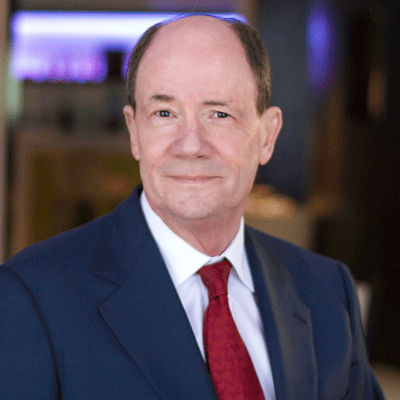
BBT talks to Wayne Pearce, who was appointed as CEO of Oman Air in January this year. He has previously worked at Etihad and Qantas, and was group managing director for Gold Medal Travel in the UK 10:50:00
What attracted you to the position with Oman Air?
I’ve always liked Oman. When I worked in Etihad I came to Oman on holiday a number of times and I thought it was potentially an exciting place to live and work. I also knew the airline was expanding quickly, but with a very different approach to the other carriers in the area – its USP is that its home country is Oman, which is much larger than the UAE and has a greater geographical and natural diversity. I’ve also joined at a time in the airline’s history when it’s possible to make a big difference and, of course, that’s attractive.
What stage are you at now?
Peter Hill [the previous CEO] took Oman Air from a regional airline to an international one with the introduction of the A330s, so we’re trying to work on the execution of that. It’s about how we make the hub in Oman work very well, how we deliver a high consistency of product and how we make more of the financials. It’s well publicised that we have lost money, so we will address that and prepare for the next phase of growth.
In the last financial year, Oman Air lost £180 million and there was a 38 per cent increase in the cost of your fuel. What can you do about that?
Well, you can’t control the cost of your fuel, and if you hedge it you can lose even more. When you go through a rapid growth phase you can’t keep your revenue performance on a level. New destinations and frequencies don’t perform like existing ones, and an airline would normally take three years to see them get there. When we get to the 40-to-50 aircraft stage it will give us more connectivity, more resilience, more choice and more frequency. And that will bring with it a better yielding market, give us more access to the business travel market and give us a chance to drive our seat factors higher in all cabins.
If we go ahead and add more aircraft it will be for frequency on existing routes – increasing Zurich from four times a week to daily, for instance, because then you don’t need another advertising campaign, or introductory offers, or another country manager, so that’s the sort of thing I think is a great opportunity: not increasing your costs but seeing the advantages.
A lot of the routes we have introduced are seeing improvement, and our load is increasing. The fastest growing part of our business is our business class travel, and it’s something I am particularly focused on. Our sales force is under clear instructions from me that this is our number one priority. The aim is within a reasonable amount of time to significantly reduce the loss, and I’m pleased that this year the strategy is going according to plan.
So the way out of the present trouble is not to cut costs, but instead increase revenue?
Yes. I will get more volume on to the aircraft, because I have spare seats in both economy and business and I am also evaluating the fleet size to see how extra critical mass will help and give us access to higher yielding traffic, whether it’s corporate or leisure.
How do you compete with the likes of Qatar and Emirates when they have greater frequencies?
Our customers have room for manoeuvre. Corporate travel managers might have deals with those airlines, but there’s no reason we can’t make deals with them as well. If you are going on a business assignment to [Oman capital] Muscat, your preference would be a direct service. From London we are the only direct one. If you go on a competitor you will stop at another point on the way out and the same on the way back. In addition, when corporates travel within the GCC [Gulf Cooperation Council] states they come into a point, travel around and then either return to that point to fly out or go out of another point.
Either way, we work for them because of our geographical position at the end of the GCC area on the way out, or the first point on the way in. If you fly with our competitors you will be going back on yourself. So along with our excellent product think we have a real means of competing.
It depends on Muscat working as a hub...
You need quick connectivity, yes, and that’s the advantage of having a bigger fleet, so it’s important to grow our narrow-body fleet along with our wide-body. If we just buy narrow bodies, we go back to being a regional carrier. If you go wide body, you need to make sure you’ve got the feed for them. We currently have seven wide bodies and 19 narrow bodies and the answer is to increase them in that sort of proportion. We have to increase both. We get the first two B787s in 2015, and the B787 has three things going for it: superior economics – its cost of production is much less than an equivalent plane; it has extraordinary range; and it’s a different passenger experience.
As far as the airport is concerned, if you fly in from Europe, most people are stopping off here first to do business; but on the way back, we need to make sure there’s an excellent lounge, which we’ve now got, and we fly them back to Europe with only a five or six minute walk out to the gate from the lounge. We also have a new terminal, with piers, coming on in 2014. We currently put through seven million passengers, which is about capacity, and when the new terminal comes on that will rise to 12 million passengers per year. The airport has its busy periods and quiet periods. We have a European bank that goes out at 2am and another at about 2pm northbound. They are busy because you have to keep adding flights – the feeder flights add connectivity. You really want a flight being fed by 15 or 20 other flights.
Our drive is for Muscat as a sole destination, so we’re not there yet, but we want people to come to Oman, so we work closely with the tourism ministry here in Oman, and we’ve introduced a stopover campaign.
You want consistency of service. Is that a challenge when you have to employ so many of your staff from Oman rather than recruiting from all over the world?
‘Omanisation’ is a stated aim of the company so that’s where we are, but we are rated very highly for service. The challenge is to be very consistent. To get that, you really need to put in a lot of processes and training, and that’s where we will be going.
Wayne Pearce started out as a management trainee with Qantas,in his native Australia. Having fulfilled roles that covered strategy, planning and revenue development, he became a senior manager in his mid-20s. Later, following a period as group managing director of Gold Medal Travel in the UK, Wayne moved on to become Etihad’s chief strategy and planning officer, where he oversaw fleet and cargo expansion, and created the carrier’s alliance strategy. He was appointed CEO of Oman Air in January 2012.