Online booking tools have now been around for two decades and, if figures released by travel management company HRG this week are to be believed, will soon be the predominant method of booking.
In its half yearly interim report for the financial year 2015/16, the company said that online adoption among its clients rose from 46% in the first half of 2014/15 to 49% in the same period in 2015/16.
But how does this affect the finances of the company?
Our chart this week shows the company's top-line figures.
The red areas indicate the company's operating profit while the combined green and red areas represent HRG's turnover in the period.
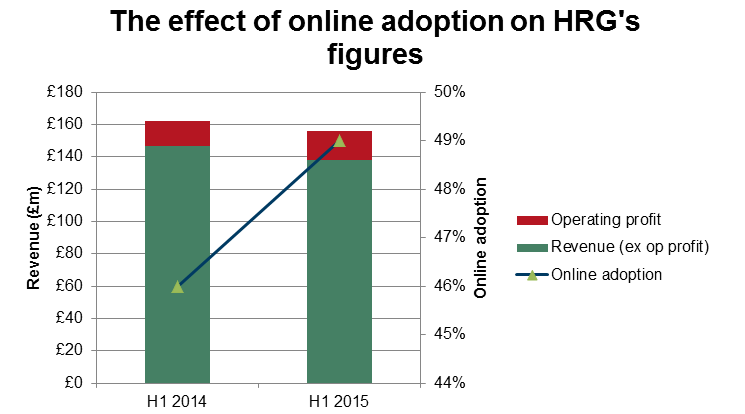
It can be seen that as online adoption among clients, total turnover has fallen; in real terms, revenue from travel management activities fell by 1%, the company says, not helped by "strong competitor pricing".
Yet at the same time operating profit has increased, mainly due to cost reductions associated with restructuring but no doubt because online bookings do not have the same costs associated with them that offline ones do.
In the commentary with the report, the company said: "Tight cost control and maximum value for money continue to be the mantra for a majority of our clients. As part of our cost saving recommendations, we continue to advocate to our clients a move to self-booking, particularly for the more simple types of itinerary...It is worth remembering that whilst revenue to HRG may reduce in the short term as a result of this shift, once the cost associated has been re-directed or lost, we expect our margin to increase."
Worth bearing in mind when you are negotiating online TMC fees.
- Don't forget to download our benchmarking report on TMC fees here