The importance of ancillaries to low-cost carrier revenues was highlighted this week with the announcement of Ryanair's results for the third quarter of fiscal 2017.
While passenger numbers and revenues were both up, profits fell by 8% to €95 million for the three months ended 31 December 2016, down from €103 million in 2015.
The fall in profits was despite good news on key costs. The carrier announced that fuel costs were down by 20% per passenger in Q3 while non-fuel unit costs were down 6% as the airline took delivery of new B737-800s, negotiated further airport growth incentives, increased load factors, and benefited from the relative weakness of sterling in the wake of the Brexit vote.
Average fares were down 17% to €33, spurring the airline to say, with only a hint of irony, that its "prices are falling faster than we initially planned but this is good news for customers".
While fares were down, revenues from ancillaries were up. Our charts this week show how revenue is broken down between fare and ancillary revenue. Year-on-year, ancillary revenue has jumped by 15%. As a proportion of overall revenues, ancillaries now account for 29%, up from 26% in 2015.
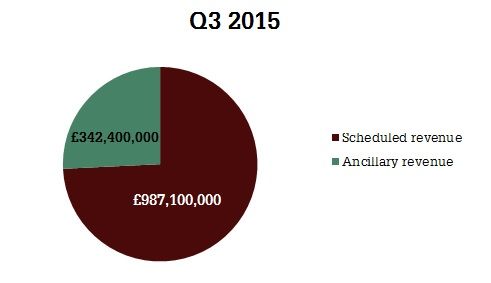
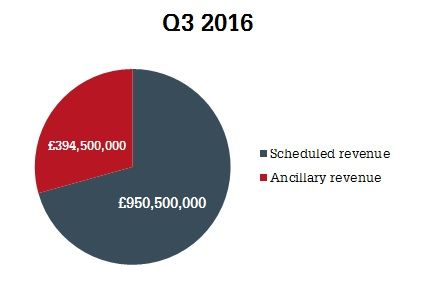
The airline made its intention to grab firm hold of the customer relationship with the news that it has made membership of "MyRyanair" mandatory. The airline said, "We believe that MyRyanair will enable us to better design exclusive benefits for our customers, while helping to eliminate unlicensed, mis-selling OTAs and screen scrapers."
Like other suppliers, Ryanair is recognising that it needs to own passenger relationships in order to drive higher revenues.