Qatar Airways CEO Akbar Al Baker was in Seattle recently to accept delivery of two more 787-8s. Qatar now has 22 of the aircraft in service and 38 on order (including the two about to be delivered) and all are configured in two classes, business and economy, and Al Baker insists that that's the way it's going to stay.
Indeed no Middle Eastern carrier has a premium economy cabin which leaves a stark choice for travel managers who want to use one of these carriers on long-haul routes between Europe and the Far East.
Qatar has opted for the same 3-3-3 configuration in economy that other big long-haul carriers such as United and BA have opted for in their 787s. An economy seat has a seat pitch of 30/31 inches and a width of 17" with a 6-degree recline. Business class seats, on the other hand, have a seat pitch of 50 inches and a width of 22 inches with a 177 degree-recline.
It also needs to be pointed out that the IFE (in-flight entertainment) boxes under the seats take up space so tall travellers are going to have a real problem in Qatar's 787 economy cabin.
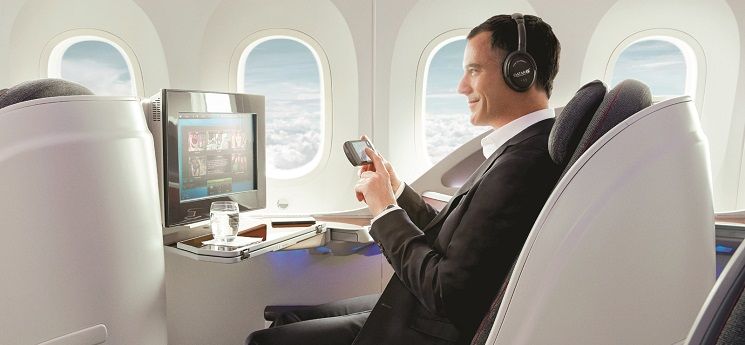
Al-Baker is quoted as telling a journalist that travellers from the Gulf are generally smaller than those from the US or northern Europe and so the relatively restricted spaced of the economy class seats are not a problem for carriers based in the region.
This may be true. However, at present travel policies which allow larger employees of the same seniority or with the same journey objective to fly business in circumstances where travel policy is otherwise economy are not common in Europe.
Travel policy entitlement is no doubt complicated by the fact that there are no international standards for defining classes of travel so there can be wide variations in the same class in personal space and flight amenities among carriers. However, policies typically prescribe class of travel without specifying it on a carrier-by-carrier basis. Some organisations may only include those carriers that, say, offer flat beds in business class in their travel programmes but that is still very different from specifying policies on a carrier-by-carrier basis. Although policy, of course, may stipulate that only preferred partners may be used.
A strategy of making the gap between classes large and clear could very well push companies towards a business class policy. It could also push them towards other carriers.
Duty of care responsibilities and concerns about employee welfare are becoming more prominent within companies. HR usually has input into travel policy. It might only be a matter of time before HR representatives have input not only about class of travel but about which carrier's business or economy class cabin is acceptable and which is not. And that definition may be based on more than duration of journey.