Much has been written about Lufthansa's intention to surcharge those who choose to use the GDS channel for bookings since its announcement last week. Indeed, people are even querying whether the initiative is really intended or merely being used as a negotiating tool.
We all know that politicians now regularly use the press to test public opinion before taking action. Are publicly quoted businesses now doing the same?
The authors of Business Travel iQ Analysis are not privy to insider knowledge but we have tried to sit back and would make the following observations.
- Lufthansa is a German group
- The announcement includes Brussels, Swiss and Austrian but the biggest market is undoubtedly Germany
- The airline business gets passengers from different segments and channels, only one of which is corporate business
- The margins from corporate business, however, make it one not to be sniffed at
- The initiative is not intended to be anti-indirect distribution, merely against distribution via the GDS
- So let's look at this as a business issue rather than a travel issue
The travel industry has been quick to look at this as a business issue and identify that it is an issue between direct and indirect distribution and that indirect distribution is usually cheaper. In fact, as our chart of the week last week showed air distribution costs as a percentage of total operating costs is low and have remained relatively static.
However, as is the case with travel in a corporation, it is important to remember that some costs get more attention than their size warrants. Labour contracts (including pension fund obligations) in traditional carriers are burdensome — there is a reason why Iberia, Air France and Lufthansa have all launched new low-cost brands for their short-haul operations. After all, new subsidiary brands — and more importantly, companies — mean new contracts of service. Fuel is about 10 times the cost of distribution. But both fuel and labour are seen as costs which are difficult to control.
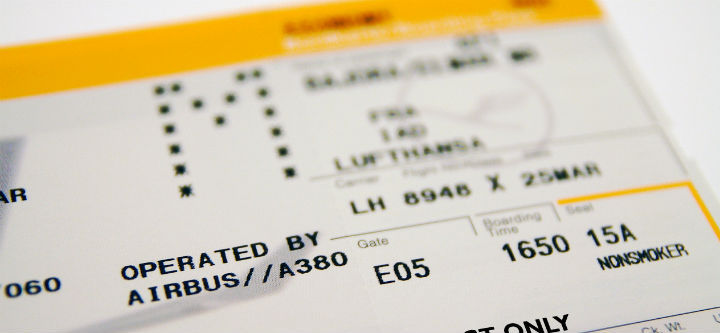 Lufthansa's announcement has rattled GDS but what about other technologies? Photo courtesy of Elmar Bajora
Technology and new ways of working are sending different messages about distribution.
In Germany about 90% of air bookings are made with Lufthansa so it is important for those of us in other parts of Europe to look there.
Leisure bookings increasingly come from the direct channel and that is purely down to brand awareness and changing consumer behaviour.
Corporate travel is being arranged with TMCs but not necessarily through TMC terminals. Every bit of research points to an increasing use of open booking (direct) corporate self-booking tools. At present self-booking tool (SBT) content is via the GDS and therefore subject to the EUR16 surcharge.
But to those who book domestic rail, budget hotels and some car rental know not all self-booking tool bookings are also GDS bookings.
Direct connects are more expensive to implement than to take content from the GDS. But just as focus is often mistakenly on the TMC fee rather than the content, one needs to bear in mind that the cost of the pipe is not constant and is not the only cost involved.
We on the outside know that Germany is Lufthansa's largest market and therefore Amadeus is the main GDS affected.
We know that Amadeus has protested vigorously. We also know that Amadeus is a travel technology company that is careful to specify that its customers are suppliers, agents and corporate customers.
We also know that Amadeus not only owns the e-Travel Management self-booking tool but has now completed a €67 million deal for iFAO which allows self-booking and expense management.
Only a true cynic would think that Lufthansa might be facilitating content going to self-booking channels such as Amadeus's iFAO which is very big in Germany which happens to be Lufthansa's largest market for passenger bookings.
Amadeus could receive fee income as a tech provider just as it does as a GDS. The only difference could be the absence of having to pay incentive fees to travel agents and management companies.
Of course, we don't know. We only know that sometimes things don't look logical to one segment of the market but are blindingly rational and strategic to another.