A new report shows how airfares change as departure date approaches in different ways according to route.
The 2018 Air Travel Outlook Report from ARC and Expedia has identified eight different models of price fluctuation for economy fares and shown how air routes around the world fit into these models.
The report says that a model called deep slope-flat tail fits well what happens on routes between London and Frankfurt, Amsterdam to Paris, Zurich to Rome, Oslo to Amsterdam and Stockholm to London.
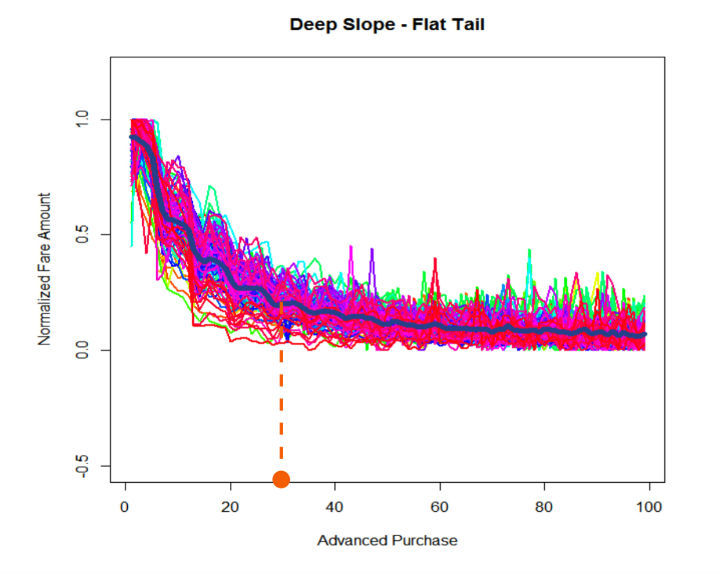
In this model, the lowest average ticket prices (ATPs) can be found 30 or more days ahead of the flight departure date and rise sharply from that point as the departure date approaches. Beyond 30 days ahead of travel ATPs remain relatively stable
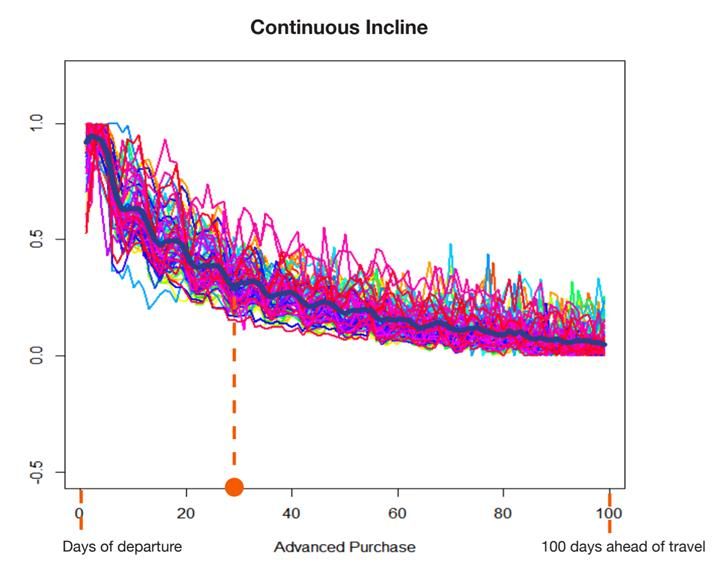
On routes such as Brussels to Madrid, Frankfurt to Vienna and Edinburgh to London, advance fares tend to follow a continuous incline, where ATPs follow a steady and continuous increase as the departure date gets closer.
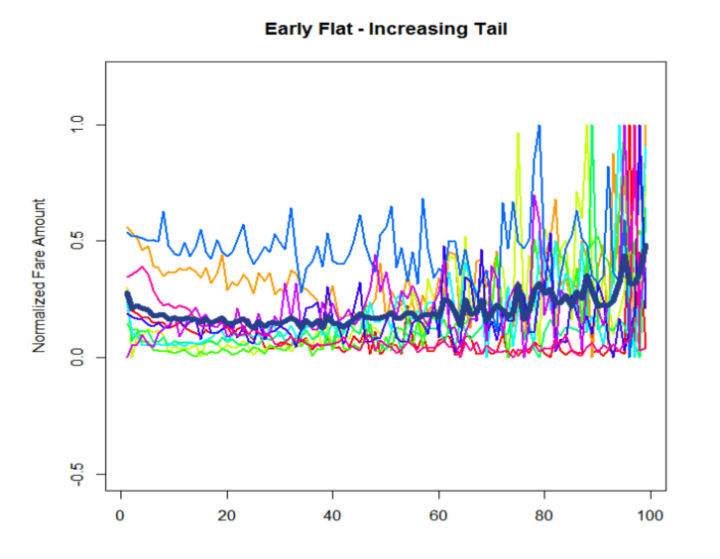
A model called early flat, increasing tail is generally unusual, but more likely to be found in emerging markets. It is, however, common on flights from Nordic countries into Helsinki.
With this model, the best time to find a low fare is as close to the departure date as possible, noting that a great deal of price volatility occurs during the days and weeks ahead of flight departure date.
The report also looked at the best days of the week to book and to travel to get the cheapest economy air fares.
It found that Sunday is the best day to book international economy tickets from all European countries in the survey while Friday is the best day of the week to start the journey.
Meanwhile, tickets in premium classes issued on Saturdays and Sundays tended to have the lowest ATPs across geographic region, reflecting the fact that corporate travellers are unlikely to be working at the weekend while departing on Friday on Saturday also leads to lower airfares.