Hilton recently announced a digital check-in (avoid that queue at the desk!) and "choose your room" facility. But it's available only to those that book directly. And it's not the only hotel introducing incentives for travellers to do so.
Price is an incentive but it's not the only one. Many of these properties and chains are in rate parity agreements with the Orbitzes and Pricelines of this world. But hotels have found ways of incentivising bookers other than a lower rate. They're giving more value.
Hilton is not alone. Others are employing free meals, WiFi or loyalty programme points — some hotel groups will give points only on direct bookings.
Like the airlines, the challenge to hotels is historic. And, again like the airlines, the hotel fightback is pure 21st century.
And this affects corporate hotel programmes as much as leisure travellers.
Hotel distribution has always been a complex and expensive business. There was no international trade organisation such as IATA to create a standard platform and hotels never turned their own CRSes (computer reservation systems) into platforms that could also host other suppliers' data a la the GDS. Big hotels would distribute through their own systems and via TMCs' preferred partnership programmes; smaller ones might join consortia such as Leading Hotels of the World or Relais & Châteaux and independent properties would rely on location-led business. All would pay for their route to market via either an intermediary or by employing direct sales and marketing, probably both.
Continued below
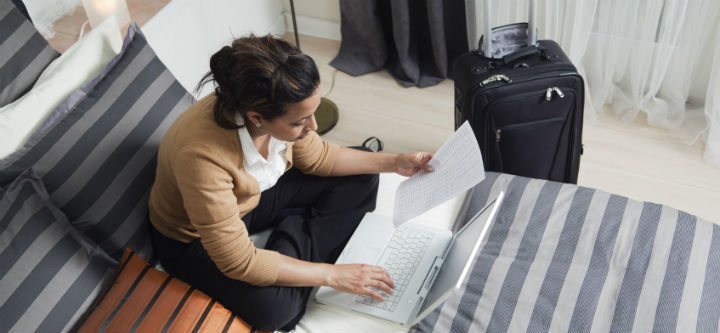 Offering free WiFi is one way hotels are targeting corporate traveller loyalty ©YinYang/iStock
Any way you cut it, commission rates are high. But intermediaries would argue that the rate also includes those who use their sites for information and then book direct so that they also provide some unremunerated benefit to their partners.
For corporates with managed hotel programmes OTAs and their commission rates (as opposed to the hotels' commission rates) have never been too relevant as only those properties with whom deals were struck would be on the hotel programme and be booked for an organisation's travellers.
But as travellers have become bookers and corporate programmes have become more flexible to include per diems and price ceilings, travellers are increasingly booking direct or through intermediaries such as Expedia, Priceline (Booking.com) and Orbitz.
But the hotels prefer direct business not only because the distribution cost is less (OTAs charge commissions far in excess of comparable air distribution costs) but because they become closer to 'owning' the customer and then being able to employ personalisation to devise special offers and pricing and, importantly, client retention.
It's also not just OTAs v direct booking, as hotels are increasingly able to identify their customers and incentivise them to book direct.
Earlier this year Sabre entered an agreement for Google for the latter to begin to take hotel bookings as well as just be an information portal.
As many of the OTAs customers come via a Google search this too could add pressure to using an indirect channel.
There are other tactics too. Marriott is now allowing bookings through TripAdvisor. TripAdvisor may be a third party site but its commission rate is typically lower than that of the standard OTA.
As travel managers increasingly employ a policy of city-specific rate ceilings and travellers do more of their own bookings, it is important to understand the choices and pressures that their travellers face.