The expansion of Europe's busiest airport moved a step closer this when British Members of Parliament voted overwhelmingly in favour of plans to give Heathrow a third runway — except for the Foreign Secretary Boris Johnson, who was conveniently out of the country at the time of the vote.
The vote in favour of the Airports National Policy Statement was carried by 415 votes to 119.
The vote means that Heathrow can now submit a formal planning application for the government's preferred option of a new runway to the north west of the airport.
Barring any delays — not a given considering the challenges that hampered Heathrow's Terminal 5 - the Government says building work could start in 2021 with the runway operational by 2026.
Transport Secretary Chris Grayling said: "This marks a critical step towards ensuring future generations have the international connections we need, as well as strengthening the links between all parts of the UK and our global hub."
He added, "There is still much to be done, including defending this decision against the potential legal challenges, but we are absolutely committed to working closely with local communities and ensuring Heathrow stick to their promises on addressing the local and environmental impacts of expansion."
So what will a new runway do for Heathrow, which is chronically overcrowded and where delayed arrivals and departures are commonplace?
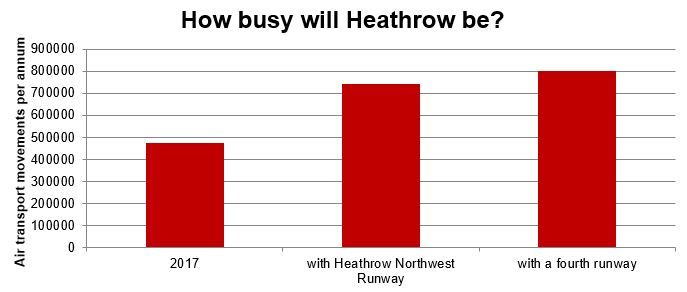
Our chart this week looks at air transport movements at the airport. The left bar shows how busy Heathrow is at present in terms of the number of aircraft movements. When the Northwest Runway is completed, the Government anticipates that the number of annual movements will rise to 740,000, 56% more than in 2017 - surely enough to fix Heathrow's overcrowding problems.
Or is it? The question that some might be tempted to ask is whether a third runway will enable enough capacity for the foreseeable future.
It is a question that the government has chosen to address in the Policy Statement. The Airports Commission, which produced the report on which government policy is based, says a fourth runway would only add a further 60,000 transport movements at Heathrow. At the same time the increased traffic would reduce movements at other London airports. It also said that physically accommodating a fourth runway would be challenging.
In its statement, the Government say it "agrees with the Airports Commission's recommendation and the analysis that underpins it, and therefore does not see a need for a fourth runway at Heathrow Airport".
Of course, the cynics might say that it was only a few years ago that the UK Government said there was no need for a third.