This week's terrorist attack in Berlin continues the worrying trend of targeting cities that have traditionally been considered safe, joining a list which also includes Paris, Nice, Brussels and Istanbul.
As with the other attacks, there will have been an immediate effect on travel to the city, as those on journeys which can be considered non-essential reassess their plans while assessing the flexibility of their travel plans.
The initial reaction will be of horror and nervousness as the police hunt the perpetrator of the attack, if indeed that person has managed to evade the security services as seems to be the case.
In the longer term, Berliners will worry about the attractiveness of their city as a place to do business.
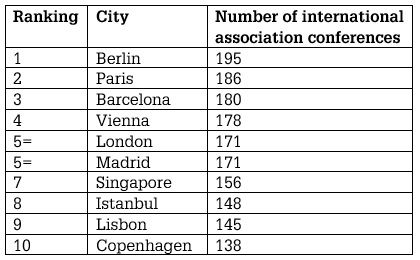
Berlin tops the ranking of cities in which international associations hold their meetings. Our first chart this week shows the most recent listing from ICCA.
So are meetings planners concerned about the risk of terrorism?
The recent Trends Watch Report 2016, released at IBTM World in Barcelona, reported on research carried out by the Union of International Associations. The research asked planners what their specific concerns were regarding the effect of the current global economic situation on their current and future meeting activities.
Their responses are shown in the chart below:
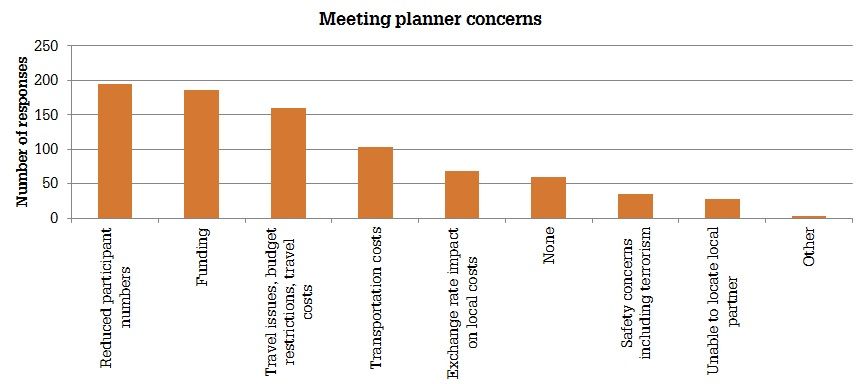
Concern over terrorist attacks appears to be relatively limited, according to this research. Perhaps meeting planners understand that despite the huge media coverage of such events, the number of people involved is generally very small in comparison with the number of visitors to any destination. Business destinations that have been attacked often also become far more secure in the aftermath of an attack.
Although Berlin will almost certainly suffer in terms of short-term cancellations, the city's reputation seems unlikely to be affected too much in the long-term. A lot will depend on the speed and level of response from Angela Merkel's government.