The success of any business depends greatly on understanding your travellers. However, traveller needs and preferences are evolving constantly, making it difficult for travel buyers to ensure that they are offering the products and services they need, at the right time and in the right way.
In particular, today's consumer is accustomed to having access to anything they want at the click of a button or the swipe of an app. Rapidly increasing access to information is having a knock-on effect on purchasing behaviours and altering customers' expectations about the level of service they want to receive. Yet on the other hand, this situation is offering travel providers more and more information about customers from search and booking data, as well as via external sources such as social media.
Rail traveller expectations
Ultimately, traveller care means meeting customers' expectations and developing strong relationships. However, to secure growth in today's competitive marketplace, rail companies and travel providers need to go beyond simply meeting traveller expectations — they must exceed them. Today's digital age offers an unprecedented opportunity to better understand travellers and offer them truly personalised experiences that will unlock new revenue streams, or savings, and drive customer loyalty or compliance.
There are numerous opportunities to embrace customer care in the rail industry, not least because technology has made it much easier to engage with travellers at each stage of the rail travel lifecycle - from the planning stage and the time of booking, through to post-trip follow up - to create an enjoyable overall travel experience.
However, using technology effectively to create an exceptional traveller experience involves a departure from traditional methods of segmentation and a move towards understanding the unique motivation and preferences behind a rail journey.
The "business or leisure" division typically used in the travel industry is no longer relevant. A blending of business and leisure has been spurred on by trends such as flexible working and by employees having greater input into when and how they travel for work. Instead, travel buyers and rail companies need to identify travellers' motivations and behaviours to pre-empt and cater to their various needs.
Recognising new traveller motivations
Let's take a couple of examples, examining what customer care means to each kind of traveller. Business travellers have always wanted fuss-free travel solutions, but in today's 'information overload' environment, simplicity and limited decision-making are becoming increasingly important factors. Straightforward, user-friendly interfaces and packages that bundle rail travel with other offerings such as hotel stays will appeal strongly to those that value ease and transparency in travel planning.
Continued below
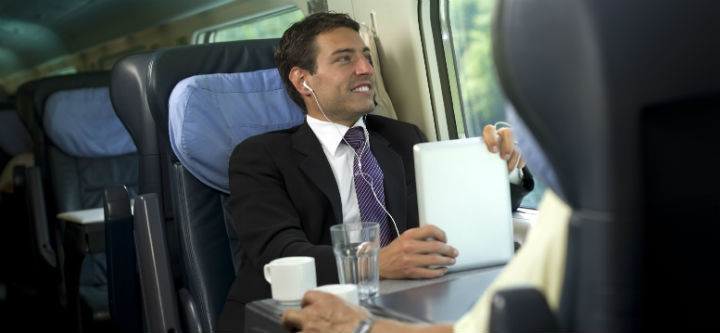 Technology is changing the traveller experience ©poba/iStock
Secondly, in parallel with the consumerisation of the corporate travel world, we are seeing a greater desire among business travellers for indulgent and luxurious experiences. Tailored offerings that provide unique and memorable experiences such as door-to-door service combined with first-class carriage tickets are a great way to appeal to this group. Extras such as cashless payments and HD video streaming directly to personal tablets via in-carriage WiFi will also 'treat' passengers, ensuring they feel well taken care of.
Similarly in line with the rising consumerisation of business travel, we are seeing a trend towards business travellers seeking to immerse themselves in the local way of life. These cultural travellers will want to experience the local lifestyle on the ground - something that travelling by rail certainly offers. Offering authentic local food and drink, as well as tours with native guides and real-time translation apps are a great way to add an extra cultural dimension to business trips, and break down cross-cultural barriers.
One final example of traveller motivations is those people that are travelling for a specific purpose, applying to all business travellers. As they must be in a specific location at a prearranged time, this group are often willing to pay more to book their entire journey at once and eradicate any doubt about arriving on time. These travellers will appreciate extras that show travel providers are committed to helping them meet their commitments such as real-time smartphone notifications about any delays or change of platform.
As evidenced by some of these examples, travellers can no longer be placed in a certain box and often spread across multiple categories.
Achieving customer satisfaction across multiple groups
Responding to traveller-led trends such as multi-modality is a good way to ensure they feel that travel providers or corporate travel programmes are working to provide them with the best service possible. In the rail industry are already seeing booking options that integrate rail with other modes of travel such as airlines, bus and coach operators, taxis and car share companies to create a seamless door-to-door journey. Cross-industry collaboration is increasingly crucial as rail companies stay agile to address the evolving needs of the consumer, while keeping rail at the centre of this multi-modal travel future.
There are also simple steps that travel buyers and rail companies can take that have a big impact in showing that the traveller is at the heart of their business. Suggesting an aisle or forward-facing aisle seat for someone who has chosen one in the past, or a quiet carriage for someone who needs a calm space to work are good examples. Ensuring that the traveller can book through whichever channel they wish and that the booking process is as efficient as possible also help to drive customer satisfaction.
Finally, traveller care isn't just relevant to the time of booking, but needs to continue throughout the journey, something that technology can help immensely with. Keeping travellers informed of up-to-the minute platform changes or delays in real time via mobile apps for example is crucial. Maintaining a relevant and constant stream of communication with passengers ensures they feel cared for and have a superior travel experience, even in times of disruption.
Requesting feedback once the journey is complete also allows buyers and providers to build a clearer picture of what might inspire or appeal to the individual in the future to help them tweak their programme or market rail journeys with the same provider. Making use of a CRM system and social media to shed light on customers' perceptions and to contact regular customers with the suitable deals and promotions is also a good way to improve traveller care.
Rail operators and corporate travel buyers can no longer rely solely on the business and leisure traveller demographic to succeed in the current market: they must recognise that travellers are individuals with their own specific expectations. Personalisation and linking offerings with specific needs is already providing new ways to encourage loyalty and compliance among business travellers.
Going forward, gathering and analysing data will help companies understand the factors influencing traveller behaviour and motivations. As a result, they can provide tailored packages and not only enhance their customer care in doing so, but also encourage further bookings.