Given their dramatically different cultures, can West and Middle East find ways to consolidate business practices? Jonathan Hart reports
IT’S ODDS ON YOU’VE already learned, to your cost or frustration, that fast-emerging business destinations can be slow to adopt the seamless connectivity of uniform corporate demand.
Take the BRIC countries (Brazil, Russia, India and China), for example. To a greater or lesser extent, each has presented business travel planners with online barriers, investment hurdles or cultural idiosyncrasies in the course of migration to automated global programmes. In short, the US-inspired consolidation model has been adopted in Europe, but does not always immediately gain root elsewhere.
The Kingdom of Saudi Arabia is the latest case in point. Controversial politics, social strictures and the knock-on effects of the Arab Spring aside, this is an aspiring global player with ambitions to be a key regional hub. Combined with geographical size and strategic influence, it ticks the boxes for foreign organisations who want to expand into the country – but the UK’s leading travel management companies (TMCs) say that, at the moment, it lacks the maturity, integrated expertise and tools to implement globally mandated travel policies.
HIGH GROWTH MARKET
Saudi is designated as a high growth market by UK Trade and Investment (UKTI), which cites the country’s diversification from oil, economic reforms, market liberalisation and a growing private sector as primary ingredients for growth in multiple sectors.
Moreover, led by hotels, an airport, transport and education, the fiscally liquid state is spending lavishly on an infrastructural makeover. With UK exports already worth an annual £3 billion, plus an estimated £260 million currently earmarked for capital projects, it is said by UKTI to be offering investment opportunities at all levels against the backdrop of a depressed Europe.
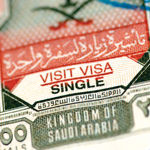
Such enticements, however, are tempered by two drawbacks, according to travel managers and TMCs. Allied to a myriad of visa, security, legal, banking and zonal complexities, the first drawback revolves around the changeable reforms and limitations imposed by a traditionally insular, devoutly Islamic and autocratic monarchy. The second hinges on the ability of Saudi to get up to speed with corporate travel advances, virtual accounting and cost containment methodologies since the kingdom’s accession to the World Trade Organisation (WTO) in 2005.
More recently, a report by market research company Phocuswright ranked Saudi as ‘low’ in readiness for the adoption of globalised travel management. It said although technologically competent, the country was largely lacking in sophisticated management processes and generally ill-prepared for the implementation of centralised purchasing, use of company credit cards or uptake of self-booking tools (SBTs). The report pointed to a local travel market that, in common with the rest of the Gulf, requires highly personalised service built on long-established relationships with (locally-based) corporates. At the same time the region remains predominantly a transaction-fee market dominated by point-to-point travel and online travel agency (OTA) sales. These are set to double from £1 billion in 2011 to more than £2 billion in 2014, according to Phocuswright.
CULTURE CLASH

The result is that local corporates and their TMCs have been questioning the return on investment for globalised convergence, says BCD sales vice-president Ivan de Lantivy. “They have their own culture, cheap labour and contracting methods to fulfil most of their corporate travel requirements,” he says. “So they question the need to employ additional processes or platforms. It’s a market requiring specifically tailored management rather than a one-size-fits-all approach.”
FCM Travel Solutions Middle East managing director Andrew Boxall adds: “Although the travel industry in Saudi is well established, it has not embraced some of the progressive changes the industry has experienced in other global markets. A fear of changing conventional practices, combined with a lack of initiative from the traditional travel companies, has left clients wanting more.”
For global travel buyers whose companies do business in Saudi, the solution is often to rely heavily on their TMC. As a buyer for an aerospace multinational puts it: “Dealing directly with travel arrangements in Saudi can throw up all kinds of curve-balls. Although we operate a relatively small part of our programme there, I leave the details to our TMC.”
Andy Taylor, head of UK accounts for HRG, says there is a now a divide between local corporate cultures based on high-touch, high-service expectation and the demand for globalised programme delivery. “We’re finding that large multinational and global clients, in particular, are trying to drive consistency across their programmes and no longer accept local traditions as a reason for a programme not to work.”
It’s that elusive consistency global buyers want to maintain smooth-running travel programmes. Bernadette Basterfield is global head of corporate travel and events at Credit Suisse. She says: “We run an exceptionally tight data-reporting global programme with Amex, and it can be an administrative pain if the set agreement criteria can’t be met – in Saudi we had to switch payment methods because the system we had in place was not acceptable there.”
HIGH END, HIGH COST
Together with the high-end expectations come high costs, but corporates today also want an element of cost containment in their programmes, adds HRG’s Taylor. “It means we’re having to work hard with clients and suppliers to find an acceptable balance and tackle traditional offline methods to provide that consistency.” He says the deployment of online booking tools has been poor to date. “This is partly because of the complexity of visa requirements for travellers across the region, but also due to a reluctance to rely on technology – as opposed to the classic methods used for a high-touch service.”
However, advances are being made. “Very recently, some businesses in Saudi have made themselves ready to be consolidation centres for the region. This suggests an absolute appetite in that particular market to compete,” says Taylor. He reports that in the past six months a number of corporates have announced more aggressive plans to roll out online booking in the region.
FCM Solutions is planning to open a partner office in Saudi within the next year. This is because local corporates wanting to integrate industry developments and technologies to better streamline and improve their processes have neither the knowledge nor skill sets to introduce the changes themselves, claims Andrew Boxall. Sourcing reliable information on the market and various laws governing the travel industry in Saudi are the primary challenges, he says. Opening a business there will allow the immediate transfer of expertise and guidance for clients through the implementation of new processes.
“We feel confident we can re-energise the market and lift the expectations and delivery of travel services by introducing new technology solutions and global sourcing of suppliers,” says Boxall.
Taking into account advancing technology, BCD’s De Lantivy reckons it could be at least five years before the market matures to suit global parameters. “In the meantime, there is no real barrier to prevent corporates employing individual processes or online infrastructure tailored to their needs,” he says.
All of which begs the question: how long will it take a comprehensively high-touch market to bite the inevitable bullet of virtual no-touch travel programming?
SAUDI SNAPSHOTS…
- Saudia has increased frequency to daily flights from London Heathrow to Riyadh, in addition to daily to Jeddah in current winter schedules. Major Gulf carriers and British Airways also serve the Kingdom from the UK.
- The country ranks 22nd out of 185 countries for ease of doing business in this year’s World Bank economy rankings. In contrast, it ranks 78th for starting a business.
- Jaguar Land Rover has signed a new agreement to manufacture an aluminium-coated Range Rover at a plant in Saudi.
CHANGE OF FACE
THE GLITZY SHOULDER-TO-SHOULDER skyrise properties that have almost overnight altered the ancient face of the Holy City of Mecca speak volumes about unprecedented new hotel development in Saudi. Despite average main city occupancies nationwide hovering around 60 per cent, few new projects are deemed too large for a mooted massive increase in international business traffic and (mostly domestic) tourism.
Mecca alone is to get another 1,000-plus rooms this year for an expected 6-8 per cent growth in (religious) visitors in the next few years, according to consultants TRI Hospitality. Hilton Worldwide is among the major international players investing here. Additional hotel construction close to the holy site of Madinah is expected to benefit from the re-development of Prince Mohammad Bin Abdulaziz International Airport.