John Wagner, Co-founder of Cycas Hospitality 
When the extended-stay concept was first created in the US in the early 1970s, the intention was to find a way to turn hotels into homes. Several decades on, not only has the concept become more firmly established in Europe but it is also one of the fastest growing sectors of the global hotel industry.
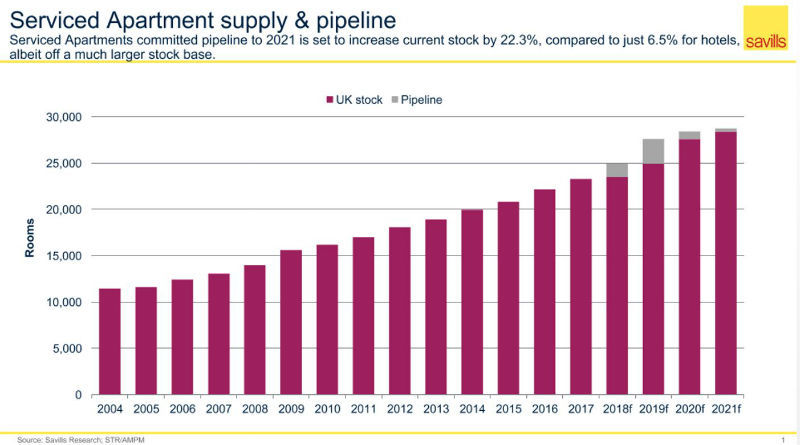
In fact, while much has been made of 2018 marking the ten years since Airbnb first came on the scene, few realise that it also marks the 10th anniversary of branded extended-stay accommodation crossing into Europe. Given Savills' prediction of record growth for this sector, 13.8% across the UK in 2017 and a 52% increase in global stock by the end of 2018, it's good to see a growing demand for serviced apartments and aparthotels among travel managers and TMCs. And, with the current serviced apartment pipeline set to increase current stock volumes by 22.3% by 2021 versus just 6.5% forecasted growth for hotels, this is clearly a trend that's here to stay.
How is this accommodation different?
Extended-stay is a phrase that is banded about a lot but, as this is still a relatively new yet fast-evolving sector, it's important to recognise that it does still mean different things to different brands. Essentially, we're talking about people who are looking to stay for three or four nights upwards, although guests are of course always welcome to stay for just one night.
Serviced apartments tend to provide some of the same services as a traditional hotel, including housekeeping, access to a gym, meeting facilities and the security of having a 24hr reception. Added to this, they introduce greater flexibility by providing facilities such as private kitchens and separate living spaces that, according to the Association of Serviced Apartment Providers (ASAP), are 30% more spacious than the equivalent standard of hotel.
Where the concept really comes into its own is the pricing strategy, with apartment-style accommodation tending to be the most cost-effective option for longer stays. Most properties will offer tiered pricing levels to ensure they remain competitive for anyone looking to book a couple of nights but even more economical for guests staying a week, a month or even longer. ASAP's research indicates that serviced apartment prices are typically 20% less than hotel rates of the same standard, with the fact that VAT reduces to 4% after 28 nights offering further savings. And that's before you factor in the cost-savings that having your own kitchen and not therefore being obliged to dine out every night brings.
Developing Europe's distinctive extended-stay personality
I was lucky enough to work with the man who helped pioneer the all-suite hotel concept in North America during the 1970s. As a real estate man, Jack DeBoer was one of the first to identify a growing market for business travellers who were regularly relocating for projects but would benefit from the addition of facilities and homely touches that traditional apartment letting couldn't offer.
His insights were channelled into creating the Residence Inn all-suite hotel chain in 1975 (sold 12 years later to Marriott), the upscale all-suite Summerfield Suites in 1988 (eventually brought into Hyatt House division) and Candlewood Hotels in 1995 (now part of IHG's portfolio). So, with these international brands alone currently operating more than 1,100 extended-stay properties between them and many more companies having entered the global market since, it's clear how DeBoer has influenced the way business travellers stay all over the world.
Staybridge Suites Liverpool was the first branded extended-stay hotel to make its way across the pond and give European business travellers a new option when it opened in summer 2008. It took a further three years before the first of DeBoer's brands (Residence Inn by Marriott) debuted in Europe, arriving 36 years after it originally opened its doors in America.
Interestingly, the research I undertook with IHG before Staybridge Suites came to the UK identified a gulf in the needs and expectations of extended-stay travellers in this region, resulting in us 'translating' the brand for the European market. This means that business travellers might notice a number of differences, from design and quality to size and location, when staying with brands with the same logo in the USA.
How the extended-stay essential, the evening social, was born
One thing that remains central to the concept of extended-stay wherever you are in the world is the evening social. When I first started working in extended-stay I was struck by how critical the connection between hotel employees and long-stay guests was when it came to making guests feel at home. After all, if you're working away for weeks at a time, nothing hammers home the loneliness of life on the road than spending every evening on your own. And there's only so much Netflix someone can take.
Having successfully overcome initial resistance from stakeholders for whom the idea of giving away free food and drink was unheard of, midweek evening receptions have gone on to become one of the fundamental pillars that distinguish extended-stay properties from traditional hotels; as much as extra square footage and your own fully-equipped kitchen.
When it comes to staffing, many people are surprised to learn that all-suite hotels tend to use audition days to help them recruit people with the right personality rather than just the most impressive CV. The thinking here is that life experience and confidence are two of the most valuable assets needed to build a genuine connection, whether you're chatting at a guest social, sharing a joke or welcoming back regular temporary residents, as I like to call them. Again, this approach is very much tailored to a European audience, with the intention of creating the kind of relationship with guests you might have with your neighbours — close enough to care about someone's wellbeing without being intrusive.
How extended-stay is tapping into travel trends
As travellers increasingly value authentic experiences while away, the extended-stay sector has tapped into the opportunity that having your own aparthotel gives to live like a local. There's little doubt that Airbnb has played a substantial role in making people more aware of the existence of alternative forms of accommodation while highlighting the advantages of more self-sufficient travel.
Unlike Airbnb, however, serviced apartments can be relied on to combine space, flexibility and classic hotel facilities with a more central location than the sharing economy pioneer typically offers. Some aparthotels may even provide a grocery-shopping service to avoid any hassle factor, meaning guests come home from a busy day to find all the ingredients they need for dinner waiting in the fridge.
For many travel managers, the reliable 24hr customer service and consistent standard of accommodation is enough to steer employees towards branded extended-stay providers to help safeguard their duty of care. Throw into the mix the growing trend towards dual-branded properties that combine an extended-stay brand with a full-service hotel under one roof, so business travellers have easy access to bars, restaurants and room service, and it's easy to see how aparthotels might be seen to bridge the gap between hotels and home, combining the best of both worlds.
With millennials forecast to account for half of business travellers by 2020, the demand for alternative styles of accommodation will continue to rise as they expect the same conveniences they would opt for on their own leisure travels. The expectations from younger executives is already influencing many of the biggest brands in this sector, who are responding to a more social generation by creating larger, more homely lobby areas and providing opportunities to connect with the local community.
Also with PwC predicting that a 50% increase in overseas assignments undertaken by 2020 and increasing evidence that millennials are extending business trips for 'bleisure' purposes, it seems the extended-stay market has hit on a formula that both business and leisure travellers can increasingly identify with.
The rise and rise of extended-stay in Europe
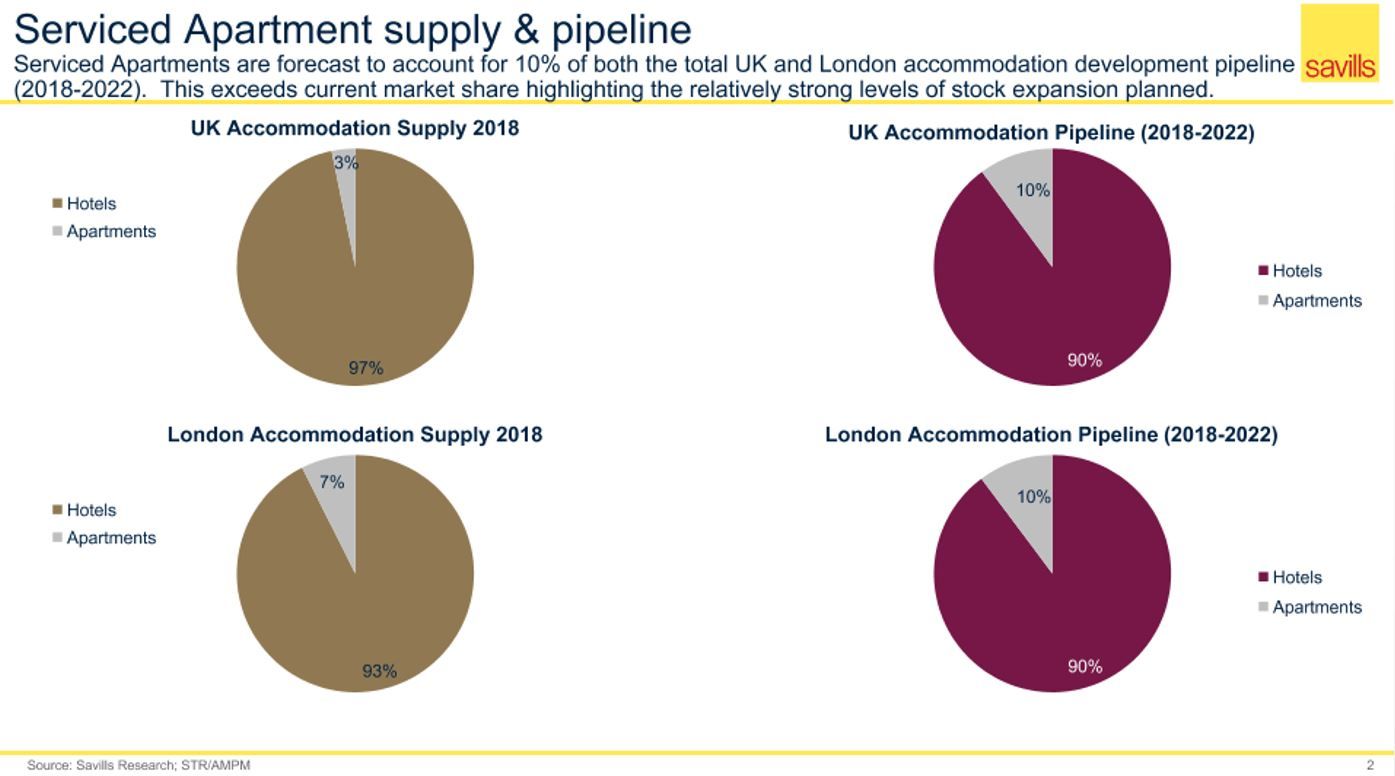
While the UK and Europe may have lagged behind Asia and the Americas for several decades, it looks like we're wasting no time in catching up on the benefits of extended-stay accommodation. After the first Global Serviced Apartment Industry Report came out in 2008, the estimated 401,997 apartments in 6,722 locations more than doubled in just eight years. Since then Savills estimate that serviced apartments have increased their stock by 6% every year, compared with 1.9% for hotels. And whilst the current supply of serviced apartments currently makes up just 3% of the UK's total accommodation in terms of room count, this category's pipeline makes up 10% of the total accommodation pipeline between now and 2022.
In 2015, one Savills report said the UK's extended-stay sector — including serviced apartments and aparthotels — was set to be the fastest growing hospitality segment over the next two years, outpacing the growth in hotel supply. Last year Savills predicted that the UK's serviced apartment sector was set for record growth, with more than 2,600 units scheduled to open and much-needed expansion in key cities across the UK, including Manchester and London — a figure that considerably exceeded the 10-year average of 6%.
So, at a time when market reports demonstrate how the supply of serviced apartments continues to outpace hotels, it seems having the chance to live life on the road as guests do at home is certainly resonating with European travellers.