India is undoubtedly a complex business travel market. It has several unique operational needs that make it difficult, if not, impossible to import a global programme into.
Despite operational and cultural differences there are several myths that surround business travel operations. There are areas of improvement but there are still several examples of global 'best in class' implementations and programmes.
Please keep in mind that this article covers are a very large, disparate and heterogeneous market that is more than US$29billion in size.
Myth 1 - India is unique so only Indian solutions can work here
When contending with a global programme migration to India, this is one of the most often heard statements.
Yes, there are some areas of Indian operations and service needs that are unique. However, if these conditions are recognised and incorporated in your operational plans, they can be efficiently managed.
Visas
Indian nationals require a visa for nearly almost all countries they travel to visit or in transit. The consular visa requirements are complex and can vary by consular location within India, so there is a need to plan international travel better. One needs a robust capability to ensure that you don't have travellers who land at the airport and are denied boarding or entering.
A strong operational support mechanism is required for visa management. This is generally a standard operating condition for all TMCs in India. In addition, there are specialist visa processing companies that integrate with your TMCs.
If you are implementing a self-booking tool-led solution for international travel, your TMC will need to up-skill their operational processes to ensure that these tools have the visa requirements in place.
Continued below
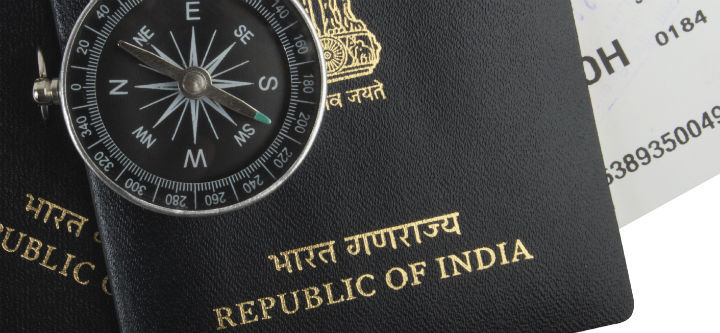 Visas and foreign currency are India-specific issues ©Akhilesh/iStock
Foreign exchange
Given that most companies in India don't equip their employees with corporate credit cards, it's general practice to provide foreign currency advances to support local expenses when abroad. This requires a full operational set-up to manage advances and reconcile expenses once the employee returns.
This is a relatively simple operational process to implement. Most TMCs in India offer travel-related foreign exchange services as a part of their menu of services. There is some documentation that the company has to provide and the relevant advances are given to the employee.
Apart from these two specific operational needs that relate to international travel, there is nothing distinctly Indian that requires to be considered.
Myth 2 - Indian employees require high touch/low technology operational solutions
This myth stems from several legacy standards that have developed over time. Many of these were addressed in 'Demystifying Travel Management in India'.
Most Indian companies are accustomed to the standard full service call/email to book operation from their TMCs and travel agencies. It is very common for TMCs to offer free onsite/implant staff at the customer location to support client operations, sometimes at multiple office locations.
When clients have implemented some form of self-booking, the actual operations are largely still agent-assisted and not fully automated. There are multiple reasons for this.
- TMCs prefer the current model. With the exception of the top TMCs, most agencies don't want to invest in new systems of automation that require retraining and up-skilling staff and upgrading operational processes. The legacy model allows TMCs to have total operational control of the travel programme. Some unethical operators prefer legacy practices as it allows for malpractices like 'creative ticketing', 'refund management' and pushing the suppliers with whom the travel agency has preferred airline and hotel contracts.
- A significant part of the perpetuation of legacy-operating models stems from the Indian travel buyers. Given that there are very few education opportunities in business travel, there is a perception held genuinely by many travel managers that the legacy operations are essentially sound and operationally stable. By default TMCs will bid for an account with the legacy operational model and rarely offer a technology-led solution. The Indian buyer is then hesitant to accept new models because they are more the exception than the norm.
Myth 3 —"Our travel agency gives services for free, why should we pay for service?
Take a standard Indian corporate travel implementation with air spend between US$500,000 and US$1million.
The standard travel agency pricing would be a fee of less than US$1 per domestic air transaction and less than US$5 for an international air transaction. Free, or included, services include
- Onsite/implant staff deployed at client site
- Implementation
- Account management
- Reporting and MIS
- An invoice-led payment system, as credit card implementations, are limited. Invoices would generally be raised fortnightly and payments made within 15-20 days from the date of submission
- Services charges generally waived except for visa services which may be priced under US$5.
It is not surprising to find that in larger implementations transactions fees can drop to almost zero with absurdly low fee structures.
Any basic cost-benefit analysis will find that most of the travel agencies operate their business at a loss. Travel buyers must get a clear understanding on how the travel agency's service makes a suitable margin from the operation. If this is not clear and unambiguous from the start, clients must use basic business sense to determine how such ridiculous commercial offers are delivered.
Don't be surprised if you receive strong push-back from these firms when you want to make the transition to a globally integrated travel management programme with best in class TMCs with strong technology and operating standards.
Factors that need to be understood
- Most Indian travel managers have been conditioned to focus on 'fee minimisation' as the primary criteria for programme success so they sometimes disregard all other factors, especially optimising other costs. The multiple, manual operating processes require significant investment of internal resources which build indirect operating costs.
- Most travel agencies are equally conditioned to focus on fee negotiations because their operations do not offer any significant qualitative difference when compared with others. They also find it difficult to verbalise value and uniqueness.
- There is a significant element of opaqueness in basic implementations, based on TMCs' sticking to the legal model and the fact that contracts lack basic ethics and compliance clauses. Creative ticketing, fare upselling, refund management, etc. are common aspects that we have seen across multiple clients.
- It is rare for a client to audit their travel agencies. The travel agency contract generally does not allow it to be conducted. A lot of the client-agency operations are based on subjective assessments and perceptions.
Travel buyers also need to understand that to deliver a quality programme with adequate focus on all aspects, including technology, there is a basic cost that needs to be paid.
Continued below
 Each country has its own unique quirks but some things remain the same. ©szefei/iStock
There are no free lunches! Unless each travel buyer expects to be spend their entire time inspecting and watching over their travel agencies, it's important to build partnership models of collaboration and trust which creates equitable value combined with very strong compliance managements systems.
Myth 4 — That everything is working as well as your supplier says
If you ask your Indian leadership team on their perceptions of the travel programme, you may come across some of these general comments.
- Our users are very happy! They have no issues
- There is a lot of noise in the team and frequent escalations to the leadership on bad service
- General dissatisfaction but no statistics available
- The travel team manages the process and gets things done in an emergency
- We don't get involved. The travel team solves the matter with the vendors
- It's very difficult to get data
We received this feedback from different layers of the executive management at one of the 'big four' large consulting firms during a recent project. How is opposing feedback emanating from different stakeholders of the same organisation?
Generally Indian travel leaders don't focus a great deal time on spend optimisation, yield management from preferred vendors and other functions that could be regarded as key to a successful travel programme. There is limited focus on reporting systems and data analysis to deliver some of the aspects mentioned.
Vendors are rarely tracked through automated employee satisfaction (CSAT) tools; this is generally left to manual feedback forms that may be filled out by the travel agency on an infrequent basis. Tracking the net promoter score (NPS) is even rarer. In the absence of both these key matrix, the service delivery standards of the vendors are based largely on perceptions.
One of the single biggest lacuna with travel agencies in India is the quality of reporting and management information (MIS). Other than top end TMCs, reporting is limited to a monthly billing statement that accounts for all transactions that the client needs to make payment for. Analytics of spend by class of travel/vendor type/sector/destination is not common.
On the other hand, many corporations have a whole reporting menu available to them and do not really spend any time reviewing reports and parameters. They seem to have an information overload and get so lost in the huge volume of data that they choose to ignore what's coming to them. The client would then jump at the vendors to put together some data for an internal analysis or discussion. This also stems from an absence of structured training available to Indian travel buyers.
In summary
Each market has its inherent uniqueness and complexities. Perhaps India has a couple of more factors compared to other markets but such differences do not imply that Indians live on another planet.
Getting an unbiased and clear understanding of the operational issues and other challenges will allow for objectives to be simply synchronised and ensure a seamless transition.