For organisations of all sizes, collecting, consolidating and reconciling travel and entertainment (T&E) expenses can be costly and labour-intensive. If done manually, it will likely involve paper expense forms, tedious reports, slow approvals and human error–creating a significant burden on the organisation.
A corporate card programme can help optimise T&E reconciliation by replacing many manual processes with automation and standardised reporting. In addition, easier access to transactional data can enhance visibility–freeing up time and resources while boosting cash management. Maximising these benefits requires employees to buy in, and here's how to make it happen.
Understanding the benefits
Today, many employers treat T&E spending as an out-of-pocket expense to be paid in petty cash or by personal cards. This places a burden on employees, and creates pockets of poorly controlled funds for the organisation. Corporate cards can alleviate the employee burden while shedding light on purchasing, since they provide comprehensive spending data–which can in turn aid reconciliation and reporting.
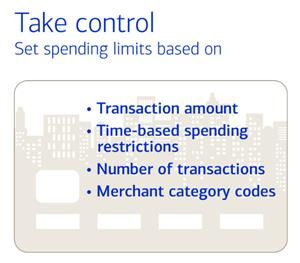 A corporate card programme can also simplify expense reporting. There are solutions that can extract data directly from corporate cards and populate it into a standardised reporting template, saving time and eliminating human errors. This can in turn enhance travel policy compliance, since policies are embedded into the reporting system.
Lastly, analysing corporate-card data and spending patterns can help your organisation make better strategic purchasing decisions. Together with hi gher compliance rates, this can enhance your leverage to negotiate deals with travel and commercial providers. Employees using non-standard payment methods to cover their T&E spend are likely to make discrete purchases. This means the full amount of business with a particular supplier will not be captured, reducing leverage to negotiate more aggressive deals.
The corporate card system offers both the organisation and the supplier a trusted option with transparent expense data and the added benefit of shorter payment timeframes. Furthermore, the transaction data can make it easier to evaluate supplier compliance, while increasing dispute rights and enhancing protection when suppliers violate agreements.
Last but not least, organisations can benefit financially from mandating corporate card usage. There are often cost savings from adopting more efficient processes and reallocating resources away from monotonous tasks. And many card providers offer rebates for specific spending thresholds, which can add up to significant cash injection.
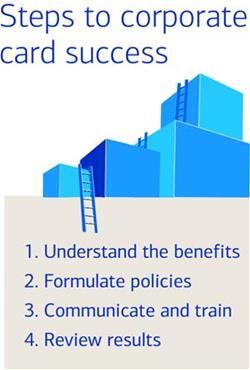 Formulating policies
Early on, it's crucial to deeply examine reporting data and formulate comprehensive T&E policies. This must be an on-going process, since policies may need to be adjusted as business, employee and non-employee needs change. Clearly defined policies and compliance monitoring can prevent unwanted spending, and create an audit trail that makes it easier to analyse to out-of-policy exceptions.
Communication and training
After establishing T&E policies, senior management support is essential to drive awareness and adoption. Cascading the message down the organisational hierarchy can greatly increase the likelihood of a successful implementation. With senior management leading by example, employees will be more willing to follow. Posting policy terms on a central web portal can help employees know what types of purchases to make with their corporate cards.
Showing employees how they can benefit personally and financially can also help speed implementation. Send regular emails highlighting how employees can expect to benefit, including less time spent on expense reports and reimbursement.
A training session that introduces the corporate card programme–and outlining the potential negative repercussions of not using it–can also be helpful. During training programmes, employees will also have the chance to experience the simplicity of how to incorporate corporate cards to manage their T&E expenses. Holding the training regularly can make the lessons self-reinforcing.
On-going review
Once you've launched your programme and gotten employees on board, it is important to review payment patterns and flag non-compliant transactions. Regular purchase reviews are useful for enhancing visibility on the types of payments made using alternative payment methods. If it is concluded that purchases should have been made using corporate cards instead, cardholders should be reminded of how the organisation benefits from corporate card use.
The "nudge" approach is an effective tool for converting non-complying employees, since it reminds them they are among the organisation's few "holdouts". Nudges may be communicated as gentle email reminders containing a generalised statistic about how employees compare against their co-workers, which can dissuade further potential misuse without explicitly calling employees out. In addition, consider reinforcing that using alternate payment methods can harm the organisation's ability to improve its deals with suppliers and is therefore a reason to act by directly notifying employees that they have misused their card.
An added benefit of holding on-going reviews is to monitor supplier compliance, since a corporate card programme can make it easier to see whether suppliers are upholding their side of the deal.
Taking action
A mandatory corporate card programme can offer benefits to both your organisation and your employees. Senior management should lead by example to raise awareness and drive adoption, while treasury staff must devise clear policies that reinforce supplier deals and ensure compliance.