Organisational-level strategies
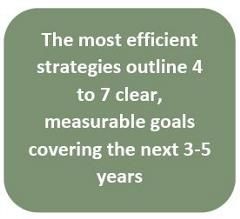
It is essential for effective organisations to have an over-arching 3-5-year corporate strategy; providing structural direction and a designed path to success through defined measurable goals. This corporate-level strategy outlines actions which the company intends to tackle to achieve its long-term goals including topics such as growth, profitability, competition and the changes/actions required to achieve success.
These high-level plans require input and involvement from all company business units and levels and can take up to a year to formulate.
Travel management strategy
As all of us involved in this fabulous category of travel management know; business travel fundamentally supports the efficiency, growth and success of our organisations. Therefore, it is important to have a business travel strategy in place which supports both the goals of the business unit stakeholders and the over-arching goals of the organisation.
 Business travel can potentially have both a positive and negative impact on the sales, productivity and success of an organisation. You do not need me to tell you that travel is necessary to power the cogs of industry. Travel programmes are there to support the business to operate with greatest effectiveness and efficiency. The negative impact on the business happens when travellers cannot efficiently book travel, cannot get to their meetings, or are not in a fit to state represent your company and do business when they arrive at their destination.
Each business unit within an organisation will have its own operational strategy and objectives, and the travel strategy should take these into account. Business partnering within organisations is critical and a modern travel programme should be 'personalised' to the differing needs of its users.
For those of you who may not have specifically written a travel strategy before, there is a 'cart and horse' order to this. Although it is essential to have a business plan, the development of your strategy should always come first. Do not fall into the trap of trying to fit your strategy around existing business plans. The strategy should drive your business plans to meet your goals — not the other way around.
A good travel strategy will take into account the upcoming challenges over the next 3-5 years, and how your available resources — people, suppliers, budget etc. will be used to meet those challenges and achieve success.

Starting to write a travel management strategy
Firstly, take a step back and take time to think. As we all know, travel management is knee-deep in the weeds of details — however to write an effective strategy, you have to allocate thinking time, get away from the everyday tasks, and allow your mind to go into visionary mode! Here are seven steps which could help you to formulate your strategic vision for travel management:
- Map out where your current programme is today
- Evaluate how travel can support your company to achieve its strategic goals
- Plan out your vision for business travel — what will your programme look like in 3-5 years?
- Write a short statement outlining the fundamentals of your vision
- Decide what are the main factors you will need to achieve your goals
- Break down each factor into a plan with tangible, tactical actions and clear responsibilities
- Plan how you will measure performance and success
The practicalities of writing a travel strategy
From a formatting perspective, the first advice is to dovetail into the overall format of the over-arching corporate strategy. In saying that, travel is a unique category so your travel strategy will need to be customised to incorporate all relevant travel-related elements and factors. The time factor of your travel strategy should be the same as that for the organisation, which as stated before is usually 3-5 years. Frankly, due to the current speed of change in the travel industry, it would be quite a task to accurately pinpoint a travel programme's features beyond a five-year time period.
Business strategies use a variety of tools such as: SWOT or PEST analyses, Porter's 5 forces etc. Any of these can be used when creating a travel strategy, whichever is most relevant to the business. Personally, I find both the SWOT and the PEST analyses very effective to stimulate thought.
As we all know from experience, the devil is in the detail when it comes to corporate travel programmes. However, there is a clever balance to be made between explaining the strategic direction of the category, versus making the strategy document too detailed and too complex; which loses the interest and understanding of its audience. Yes, corporate travel is complex, it is full of acronyms, it is undoubtedly going to significantly change over the next five years, and yes, it touches many functions within organisations. But it is our job to make it simple for others! Keep your strategy simple in format and content; make it easy to understand by those who are not experts in the field. Over-simplify if necessary, because the level of detail which a travel manager is expected to understand is not necessary for C-level executives and other stakeholders.
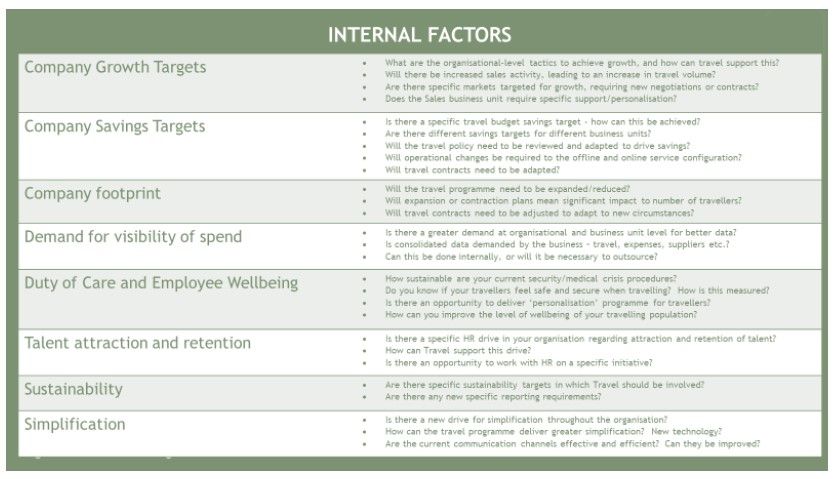
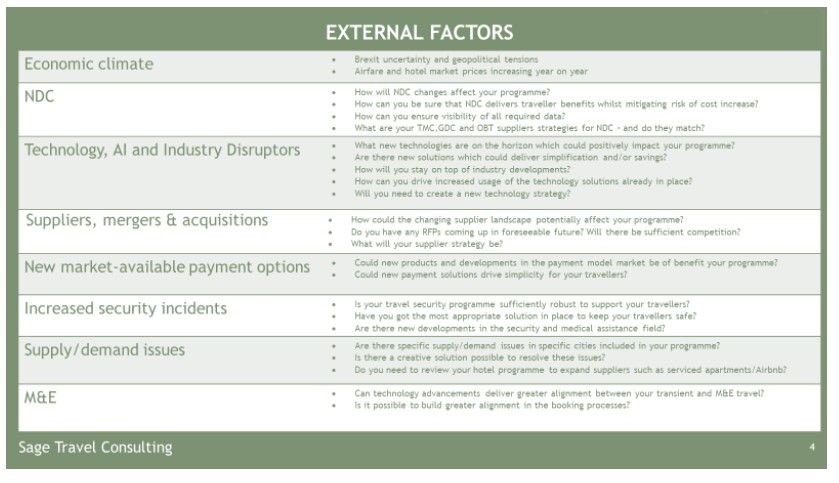
It is critically important to think about the internal and external factors which are going to affect the travel programme over the coming years. A few potential examples and their impact are laid out below. Of course, this list is not exhaustive and there are bound to be many more which could affect your programme on either a national or international basis.
Turning the vision into reality
Once your strategy is written and validated by your senior stakeholders, it is time to turn it into a functioning business plan — to be delivered and measured by you, your team, and your suppliers. It is important to share the relevant elements of your strategy with strategic supplier partners, because they have a significant part to play in the delivery of your vision. Sharing your strategy and vision can also help your suppliers to shape their own product and service roadmaps.
You must also consider the level of resource and support required to deliver your strategic vision.
- What do you need to achieve your vision?
- What are the timeframes/responsibilities required for each element of your strategy?
- What is your supplier strategy? Do you need to run any RFPs?
- Do you need senior management support, or budget?
- Do you need additional resources — people, outsourcing etc.?
- Do you have all the data you need?
- What events/associations are of benefit?
- How will you gain benchmarking knowledge from your peers?
- Do you have the appropriate governance structure in place to achieve your goals?
- Do you have the appropriate governance structure in place to achieve your goals?
In summary, your strategy should provide a clear path to determine your travel programme's performance over the next 3-5 years. It is not enough to stand still; the objective must be to perform better and smarter in the future.