Load factor — the measure that airlines use to show how full their planes are — is a good proxy for how sophisticated and successful an airline's yield management and scheduling technology is.
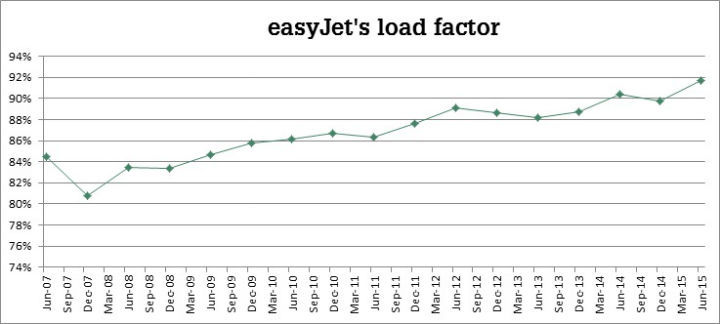
This week's chart, looking at easyJet's Q1 and Q3 average load factor for the past few years, shows that the airline's technology is working very nicely.
Last week, easyJet announced its Q3 results for the current financial year and although revenues were down by 1% to £1,228 million, the airline's CEO Carolyn McCall was upbeat about profits.
She said, "Our Q3 performance shows that easyJet's strategy continues to deliver, in particular with good performance in the UK and beach routes across Europe. With 77% of second half seats now booked, easyJet expects to grow profit before tax from £581 million for the year to 30 September 2014 to a range of £620 million to £660 million for the year to 30 September 2015. Our Q3 performance means that for the full year easyJet will grow revenue, profits and dividends."
Those increasing load factors are clearly helping. Since 2007, the average load factor at the airline has improved from just above 80% to almost 92%, meaning that the company's planes are full to bursting.
The downside of this is that as load factors increase, the chance of people getting bumped is also likely to increase.
The problem does not affect all carriers equally. Ryanair, for example, does not overbook. It knows that passengers have (largely) paid for their seats and they will get their money even if they do not show up. On a carrier like British Airways, flexible tickets mean that a proportion of business travellers will fail to show up for any given flight, safe in the knowledge that their ticket is still valid.
As you move from one model to the other, as easyJet is doing with its focus on business travellers, the bumping issue starts to need addressing.