Apple Pay has just taken one big step towards revolutionising how business travellers pay for their expenses with the announcement last week that it is now available for use with American Express corporate cards in the US.
Apple Pay uses NFC (near field communication) which enables consumers to use their phones in the same way they now use cards for contactless payments for small value (under £20 in the UK) purchases. At present the Apple Pay payment solution is available only to those who use an iPhone 6, an Apple Watch, an iPad Air 2 or iPad Mini 3. It is also available only for use with the same merchants (understood to be 71) and mobile apps (millions) as are currently available to consumers.
This is now the situation for corporate card holders in the US but new payment solutions are a fast-moving world.
The merchants currently equipped to accept Apple Pay may be few in number now but having the facility work for a corporate card will be a big spur for traditional travel suppliers to accept payment.
But there are some other factors at work which are probably much more significant.
Continued below
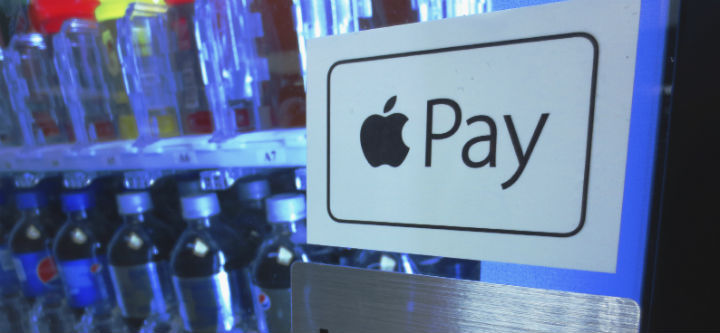 Apple Pay can be used for items less than £20 ©tillsonburg/iStock
Firstly, a merchant terminal adapted for NFC may be necessary to use the card to purchase a coffee in Starbucks or some apples from Whole Foods. However, most travel purchasing and fulfilment is done online so the mobile app figure is far more significant when it comes to purchasing services for which your location at the time of confirming the purchase is immaterial unlike, say, walking away with a skinny latte in hand from Starbucks. So payment via an app should be fine for, say, air bookings.
But for business travel transactions commonly conducted with a terminal such as payment on departure from a hotel, Apple may have a competitor.
Samsung Pay, which is scheduled to launch shortly, uses not only NFC, which therefore makes it usable at all terminals adapted with this technology, but it will also have MST (Magnetic Secure Transmission). This means it will work with the traditional magnetic strip terminals so businesses, such as a hotel, will not have to adapt their terminals (ie their hardware) at all to become acceptors — or merchants — under the scheme.
But does this matter for the travel manager? After all, the phone will act exactly as the card does now so the same and data will be collected. That means there will be no change to expense and data collection and management.
Except that it will be a different user experience. It will be another use of mobile and that means more impetus for the default traveller culture to be mobile. The phone — or the tablet — can be used for information, for changing bookings, for payments. Mobile will move from heavily used to the industry standard.
No wonder, as Kevin Iwamoto reminds us, laptop usage is falling.