In his annual Budget, UK Chancellor of the Exchequer George Osborne confirmed two changes to Air Passenger Duty (APD). This is the levy that was introduced by the UK Government in 1994 at a rate of just £5/10 and which was originally supposed to be a green tax to discourage travel. That idea was quickly abandoned and it is now recognised as a key tool in the Government's fiscal toolbox.
The rate of APD charged is now calculated on the basis of four geographical bands, based on the distance between London and the capital of the country to which a passenger is travelling. Now, a business class passenger travelling to Australia does not pay £10 but a hefty £194.
As a result, there have been calls from airlines, travel buyers and travel management companies to slash or abolish APD and some believed that these calls had been answered when the Chancellor announced in the 2014 Budget that APD bands would be reformed and cut to just two – one for countries whose capital was less than 2,000 miles away and one for everything else.
This sounded like a huge giveaway by the Chancellor and was greeted positively by those who had been complaining.
In this week's Budget, Osborne confirmed that the change would go ahead from 1 April. Rates of APD will now be £13 in economy and £26 in business in Band A and £71/£142 in Band B.
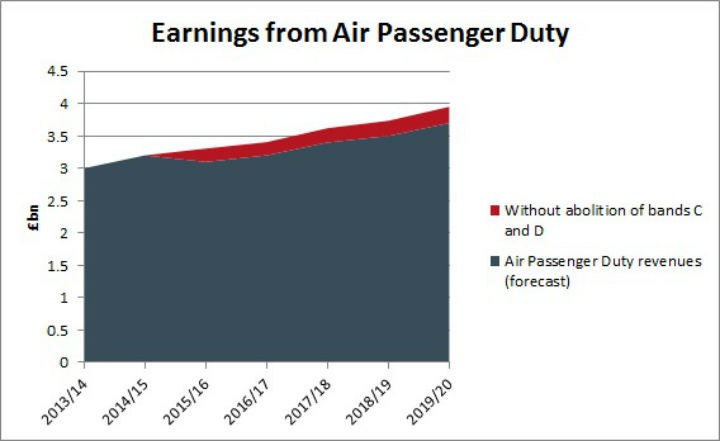
But it is actually fairly cosmetic. Our chart this week shows how much the UK government will raise from the Duty in the coming years. The difference between what the Government predicts it will earn in the coming years (blue) against what it would have earned had it been left unchanged (red) will amount to just £250 million by 2019/20.