Airlines will have to raise fares to make good €8 billion of anticipated penalties for failing to hit unreachable European Union alternative aviation fuel targets by 2030, a senior executive for British Airways and Iberia parent International Airlines Group has warned.
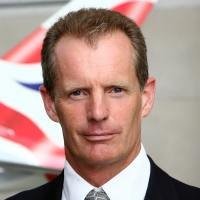 IAG group sustainability officer Jonathon Counsell
Speaking at last week’s Global Business Travel Association and VDR European conference in Vienna, IAG group sustainability officer Jonathon Counsell said the EU’s ReFuelEU Aviation regulation requires 6 per cent of jet fuel supplied at EU airports to be sustainable aviation fuel, as Counsell termed it, by 2030, up from 2 per cent today. One-fifth of the 2030 target must be third-generation fuel, also known as e-fuel, produced by mixing CO2 extracted from the atmosphere with green hydrogen.
“The problem is the timing,” said Counsell. “1.2 per cent [of total fuel supply] doesn’t sound a lot but it’s 600,000 tonnes of third-generation SAF. Today there is zero. Most industry estimates are that, best-case scenario, we can get to 20,000 tonnes.
“What happens if you don’t meet that mandate target? You pay a penalty of €13,000 per non-compliant tonnne. Fuel is about €1200 [per tonne], so it’s ten times more than jet fuel. That all comes to the airline. In 2030, [carriers are collectively] looking at €8 billion alone in one year in fines. That’s going to massively put up air fares.
“What are we saying to the EU? Adjust the SAF targets to meet available supply. We support e-SAF, but the industry can’t supply this. Be flexible so we can avoid these huge penalties and increased fares.”
Counsell added that airlines assume SAF will account for 70 per cent of aviation fuel consumption by 2050 in order to reach net zero. However, he warned, a mandate “creates demand but it doesn’t create investment. You don’t get plants built just because you have a mandate.
“We have always said to the regulators you need to complement mandates with incentives, both for investors and for airlines because SAF today is three to five times more expensive than jet fuel. Fuel is up to 40 per cent of our costs as a business, so it’s not sustainable unless we can close that price gap between jet fuel and SAF.”
The EU operates a SAF allowance scheme to finance the bridging of the fuel price gap. However, a European Commission report published in September 2026 stated that by the end of 2025 airlines had already consumed 6.5 million of the 20 million allowances allocated for the period 2024-2030.
Allowances “help but they are nowhere near enough,” Counsell told last week’s conference. “The industry has asked for 500 million allowances, not 20 million, and that still won’t make prices comparable. It will close the gap by about 50 per cent.”