

CAUTION PREVAILS
As we emerge from the Covid-19 crisis, managing risk and duty of care for travellers has rarely been more critical
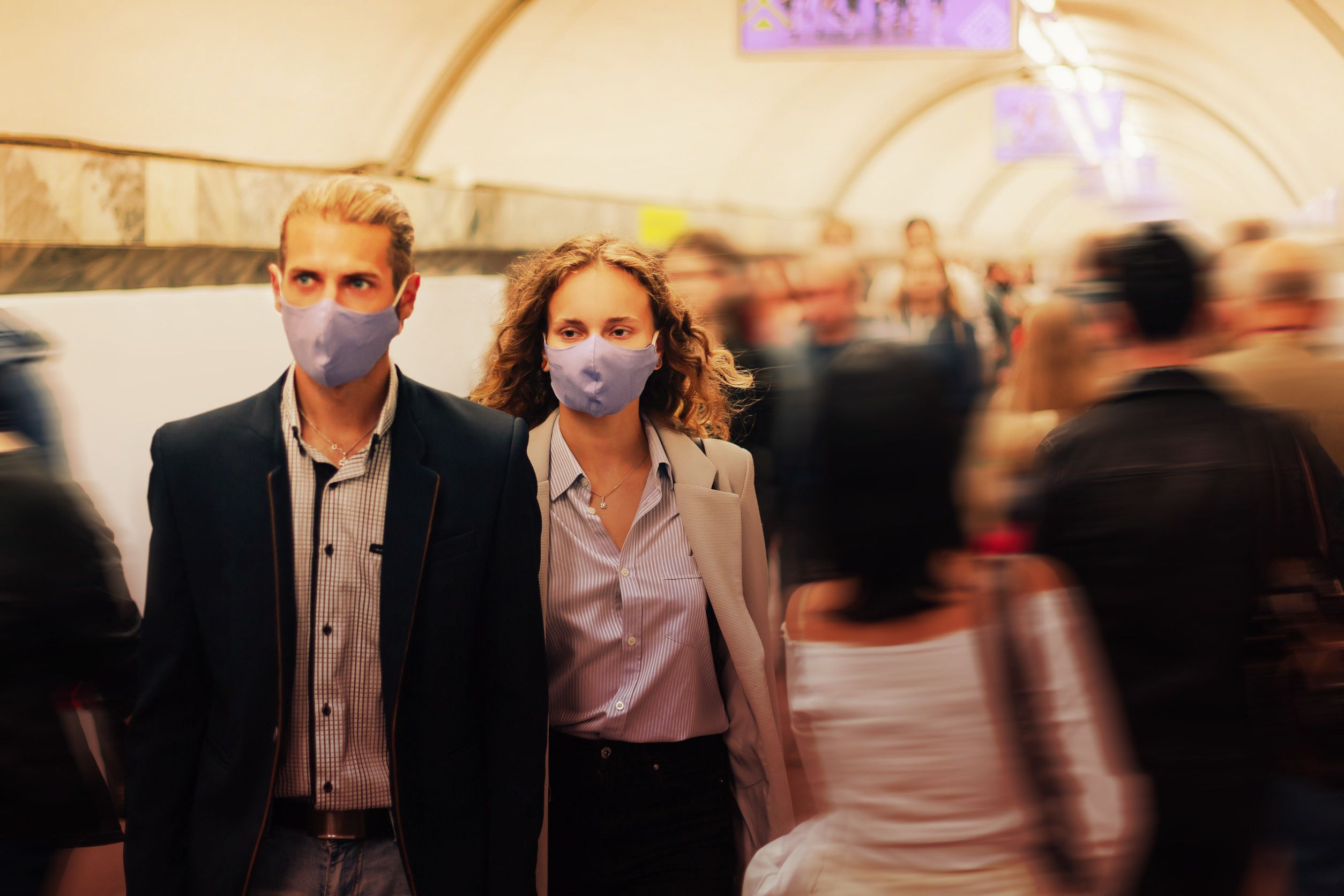

Duty of care and managing risk have been key elements of travel buyers' jobs for many years. But this focus has become even more acute during Covid-19 - particularly as organisations step up business travel at a time when the pandemic is far from over.
But, of course, Covid and other diseases are not the only risk as the recovery in global business travel hopefully gathers momentum - natural disasters, civil unrest, terrorism and other dangers have the potential to create serious disruption, or worse, for travellers and their organisations.
So, what lessons have been learnt from the pandemic and will it fundamentally change how organisations manage duty of care and risk once the Covid crisis starts to fade?
EMERGING FROM THE PANDEMIC
Talk to pretty much anybody in the corporate travel world and there is unanimous agreement that organisations have put traveller wellbeing at the top of their priority list - ahead of issues such as costs and savings, at least for now.
Jorge Mesa, co-chair of GBTA Europe's risk committee, says: "Just as 9/11 changed the awareness to security risk, the Covid-19 pandemic is doing the same for health risk and given a renewed attention to duty of care, which is now the top travel programme priority.
"As clients resume business travel, awareness of and addressing travel risk will be more important than ever - to both address the organisation's legal obligation of duty of care, but also to restore employee's confidence in travel."
Covid has "brought into sharp focus the legal obligation to research, plan and implement a strategy to mitigate the risks", adds Suzanne Sangiovese, commercial and communications director at security specialist Riskline.
"Keeping up to date with the latest restrictions, regulations and travel requirements can be challenging, with countries around the world delivering various levels of response," says Sangiovese.
"Despite a global pandemic with the same science and research available to all, each country has made different decisions to address the situation with regulations even changing between regions within a country."
POLICY EVOLUTION NOT REVOLUTION
Pre-Covid, most corporates had travel policies that addressed duty of care and risk management, including pandemics, so it has largely been a case of tweaking policies rather than ripping them up to manage the specific risks created by Covid.
Christophe Carnier, president of German business travel association VDR, said most companies already had policies in place before the pandemic, so it was mainly "small wordings that needed to be changed" during the crisis.
The fact many organisations stopped almost all business travel for long periods, particularly during the numerous lockdowns across Europe, also allowed time for corporates to evaluate existing policies and procedures.
Brewing giant Heineken, which is now working with travel management company TripActions, has taken this approach during Covid.
"The pandemic gave us the opportunity to review our duty of care approach. With very little corporate travel, we had time to align teams internally across the organisation to collaborate and build a robust travel programme with duty of care at the core," explains Thomas Bey, Heineken's global procurement category leader, business services.
Lotten Fowler, general manager of Swedish business travel association SBTA, adds: "Some buyers have taken the opportunity to rewrite their entire policies now there's less travel, but restrictions concerning the pandemic would still be temporary."
APPROVALS PROCESSES
One of the clear trends during the pandemic has been the requirement for travellers to gain approval for any business trip at a much higher level within their organisation than pre-Covid - often from very senior executives. But this is something that will have to be loosened as more travellers get back on the road.
"The use of approvals has been very prevalent as companies wanted to control who was traveling due to safety concerns," says Festive Road consultant Katie Virtue. "As more restrictions ease, some approval procedures are following suit and being lessened.
"Companies have found that it's not feasible to manage every trip individually as volume increases and the time for approvals can be cumbersome if multiple levels are needed, especially for simple trips deemed safe."
But this still presents potential problems for travellers who face ever-changing entry requirements or even outright bans when travelling overseas.
"We're seeing two angles on travel approval," adds Jim Ranney, director of global business consulting at American Express Global Business Travel. "The first, and most important, is driven by traveller wellbeing, ensuring that the employee won't be put at undue risk on any trip, given the Covid dynamics at the destination.
"The second angle is approval driven by 'business-critical need' - many companies have struggled financially through the pandemic and have approvals in place to ensure travel is for revenue-generating trips only, such as customer visits."
Covid has again highlighted the importance of traveller tracking and booking through approved corporate channels, stresses Belinda Hindmarsh, CWT's senior vice president, head of global market management and development.
"We have seen an even greater focus on organisations mandating the booking of travel through the correct channels," says Hindmarsh. "We expect an increase of booking in-policy as companies subject more - or all - of bookings to formal, hard-stop approval processes."
VACCINATION QUESTIONS
One of the most vexing challenges facing corporates is the potential of sending unvaccinated travellers on business trips, says VDR's Christophe Carnier, with vaccine hesitancy or opposition still a significant factor in some countries.
"The challenge is how to deal with travellers and employees who don't want to get vaccinated," says Carnier. "Every company will recommend their travellers get vaccinated to reduce the risk before going on a business trip but it's not mandatory.
"It's personal data, so if they're going to countries that are not at high risk or don't have variants, you would not ask the travellers if they are vaccinated. But if we're talking about people going to more high-risk countries, it's probably acceptable to ask them."
Giving clear pre-trip advice to travellers on the latest risks and recommended health precautions is already a crucial step to reducing the risks of a traveller falling sick while on a trip.
Simone Buckley, vice-president of marketing at TripActions, adds: "Continuing to review duty of care policies and protocols in response to changing situations and unexpected events is crucial for an organisation to mitigate risk and keep travellers safe."
Most agree that the roll-out of Covid vaccinations across the world should help to fuel business travel's recovery but it's not the only issue.
Paul Cronje, CEO of Clyde Travel, part of Focus Travel Partnership, says: "Vaccinations will feature, but it will also come down to the increase of supplier services - air and rail - and the consistency of safety protocols. Ultimately it will be consumer confidence that determines the recovery."
While Scott Davies, CEO of the Institute of Travel Management (ITM), stressed the continued importance of Covid testing: "Vaccination status will continue to be a factor in the allowance of travel but rapid, robust, cost-effective testing is the critical element to allow travel to facilitate commerce once again."
RISK AND RECOVERY
It can be tempting to just concentrate on Covid but the chaotic Afghanistan evacuation and a host of natural disasters have highlighted the complexities of managing risk and duty of care.
"Covid-19 has been all-encompassing and there's a risk that travellers are in danger of developing a blind spot when it comes to other travel risks - the risks travellers contended with before Covid are still out there such as other medical and security risks," emphasises Jorge Mesa, from GBTA Europe's risk committee.
Recovery could also be held back by individual country or regional Covid restrictions, even if corporates want to resume business trips to these destinations.
"We actually see many companies starting to ease their restrictions compared to early in the year, but travel is not always at the company's sole discretion," adds American Express GBT's Jim Ranney. "Given the number of country-level restrictions still in place, there remain many barriers to travel."
Companies are already facing potentially tricky decisions about the risk of sending people on trips, says CWT's Belinda Hindmarsh.
"Risk and opportunity go hand-in-hand; companies are making qualified risk decisions related to travel and finding a path that works for them to get back on the road," she says.
"In the next two to three years the focus of travel managers, risk departments and HR teams will be guided by the rules and regulations put in place of the governments around the world."
The pandemic may also have reshaped how organisations think about duty of care - going beyond compliance and safety to encompass wellbeing and mental health more widely.
"As business leaders themselves also face the same health challenges as the rest of their employees, conditions such as stress, anxiety and burnout have started to form part of the lexicon when it comes to business continuity," says James Wood, International SOS's head of security solutions.
"This in turn has led to the realisation that duty of care goes beyond compliance and is business critical."
So many things are out of organisations' control that having the right policies to reduce risk and enhance duty of care for employees is one of the few things they can get right as these uncertain times continue. Be prepared for the unexpected.


 Built with Shorthand